 Listen as the pages of the magazine come to life in the Storytellers podcast showcasing the voices of six Our State writers. Each podcast episode features a writer reading their column aloud, allowing each distinct voice to shine. Click below to listen to Sheri read her column aloud.
I was a late bloomer when it came to homegrown tomato love. It wasn’t from lack of exposure. It seemed that my family ate fresh tomatoes all season long when I was growing up. They stacked fat slabs of ruby-red and sunny-yellow tomatoes between perfectly square slices of flimsy, pillowy white bread laid thick with mayo. They plunked juicy, bite-size chunks atop bowls of creamy cottage cheese dusted with black pepper. They rolled cherry tomatoes — which we called “tommy toes” — into garden salads. They swung platters of sliced tomatoes around the supper table as though heeding square dance calls. At the time, none of that tempted me.
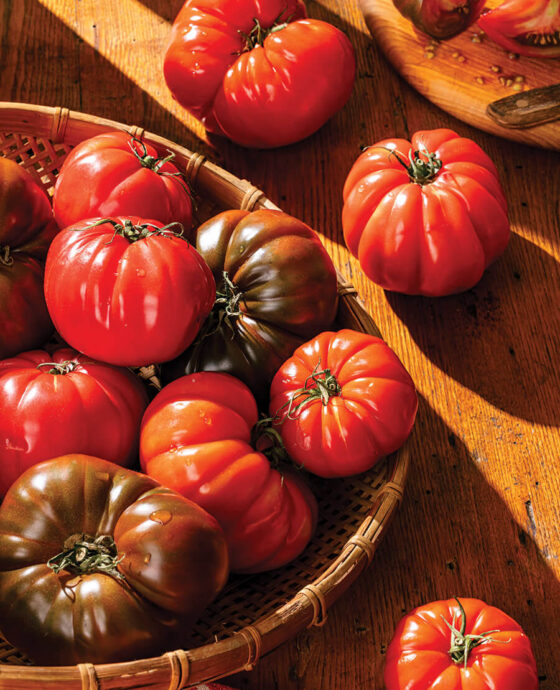
I first flirted with tomatoes at the Carrboro Farmers’ Market in the mid-’90s. I met farmers who grew tomatoes in sizes, shapes, and colors that I never knew existed. Some were as tiny as garden peas and others too hefty to hold in one hand. Some were smooth and firm, while others were gnarly, bumpy, and beautifully ugly, prized for their flavor over appearance. There were plenty of red ones, but also yellow, orange, purple, green, and white in solids, stripes, speckles, and what looks like cross-sections of sunsets. I discovered that tomatoes have fanciful names, family trees, and origin stories. Most importantly, I learned they don’t all taste the same, and some are delicious in ways that require all of our senses. At the time, all of that tempted me.
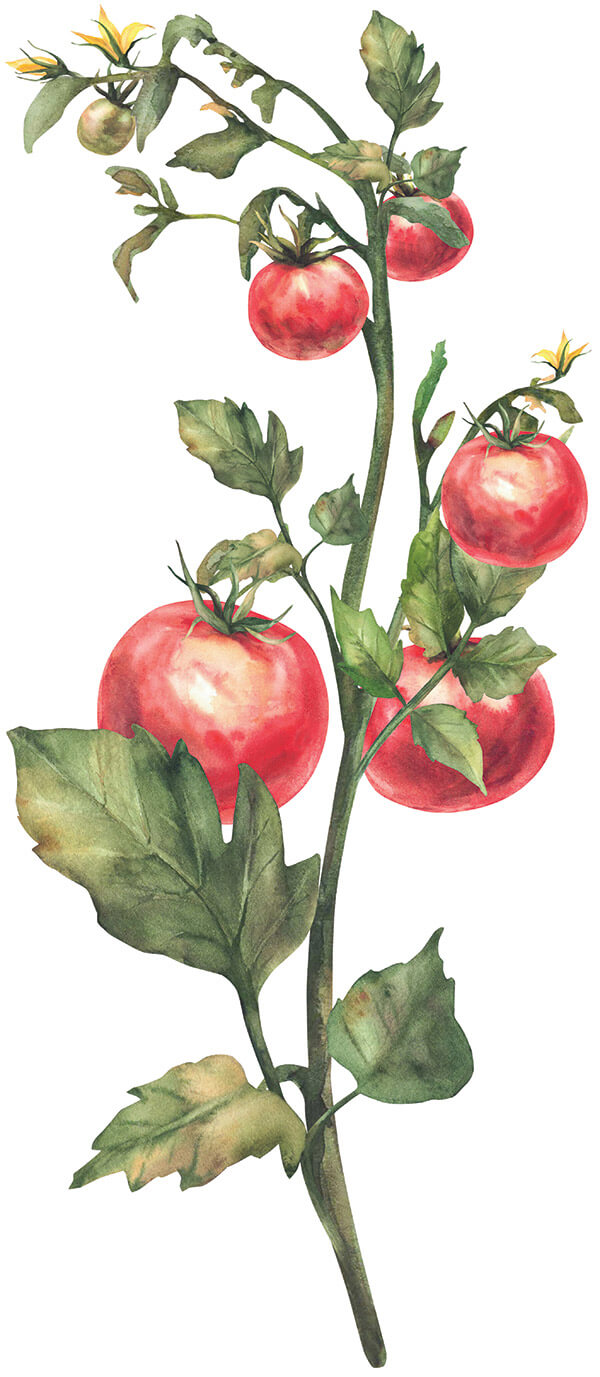
illustration by bartol_art/iStock/Getty Images Plus
As that fabulous Guy Clark song goes: “Only two things that money can’t buy / And that’s true love and homegrown tomatoes.” He’s not wrong. There are more than 10,000 tomato varieties in the world. Hundreds of different types can grow somewhere in North Carolina, but some flourish here, including heirloom varieties such as Cherokee Purple, Red Brandywine, and German Johnson. One spring, I bought seedlings of each of those, plus a Sungold, a spectacular cherry tomato that’s the color of marigolds and sweet as candy. I felt affectionate toward tomatoes, but I didn’t fall in love until I grew my own.
Lacking a proper garden plot, I planted each one in its own large plastic bucket so that I could move them around the yard, chasing sunshine, yet not exceeding the reach of my watering hose. As the plants grew, I ruthlessly pinched off suckers yet gently tied up tender stems with lengths of soft, stretchy pantyhose that were vestiges of my last corporate job. I veiled them with netting and sprayed them with organic potions, hoping that munching critters would view the scene as a Mission Slightly Less Possible. I made countless trips to the garden supply store. I fed, fussed, and cooed over those four plants, and in due time, I picked my first homegrown tomato grown at my home. I ate it like an apple. The flesh was sun-warmed, umami-laced, sweet, tangy, slightly earthy, and herbaceous. Its juices ran down my arm and sent me scurrying to the sink to lean way over. All told and tallied, it’s possible that one tomato cost me 40 hours and 50 bucks. Friends, I am bragging, not complaining. It was worth it. Come time the following year, I was tempted to do it again.
That’s the persuasion of a perfect North Carolina tomato, hybrid or heirloom, homegrown or via someone generous enough to leave a paper sack of theirs on your doorstep. Or handpicked by farmers at one of our many markets and produce stands. Local tomatoes know when to make their move to win us over. At those times, there’s no resisting temptation.
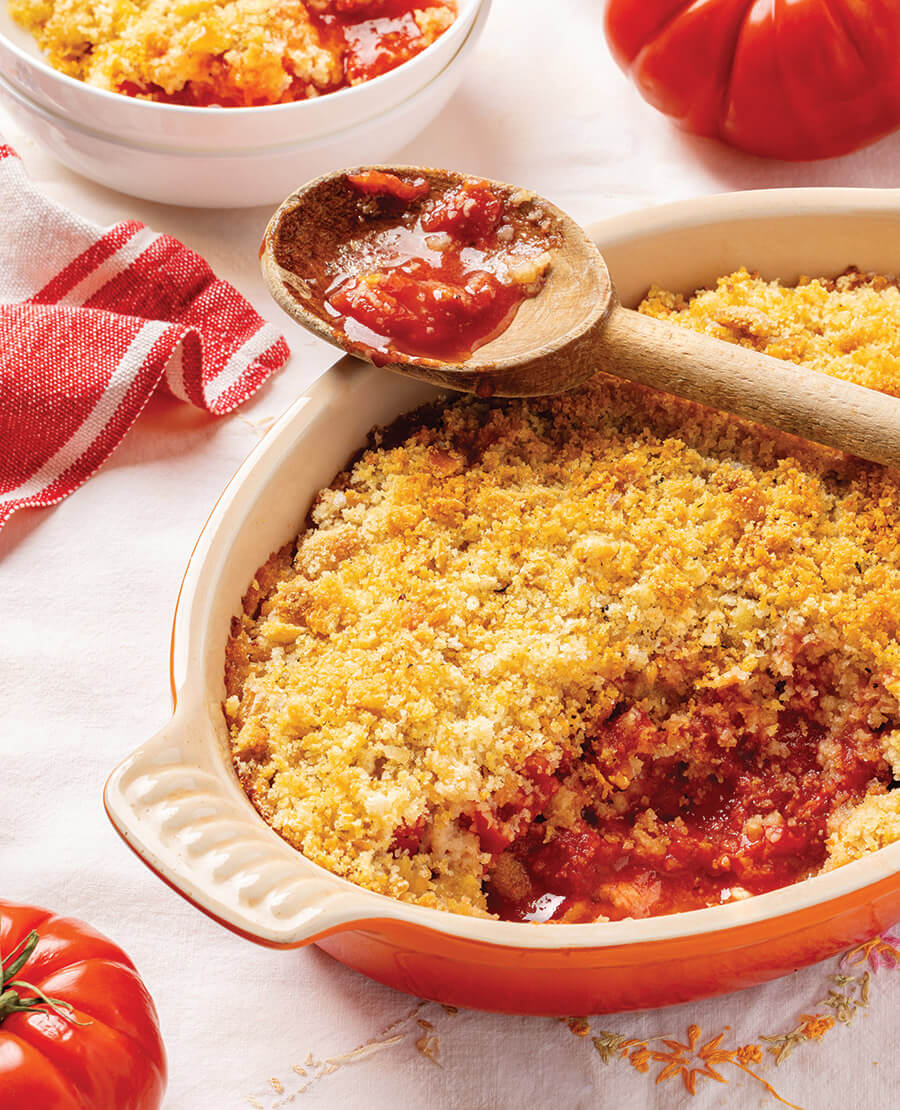
photograph by Tim Robison
Scalloped Tomatoes
This old-fashioned casserole is perfect for high summer, when juicy, dead-ripe tomatoes are in abundance. Tomatoes that are too soft to slice are ideal. The trick is to taste the tomato mixture and adjust the seasoning to enhance the pure tomato essence rather than overshadow it. Some tomato varieties need a little sweetness for balance, while others benefit from acidity. But all tomatoes love salt.
Soft breadcrumbs made from stale bread absorb the tomato juices without dissolving, plus add a satisfying buttery crunch on top. A baguette or crusty country loaf works best, but many Southern cooks once used toasted leftover biscuits. Store-bought breadcrumbs will not work in this recipe.
Makes 8 servings.
2 to 2½ pounds dead-ripe tomatoes
2 tablespoons sugar
1 tablespoon fresh lemon juice
2 teaspoons kosher salt
2 teaspoons garlic powder
2 teaspoons onion powder
½ teaspoon ground black pepper
¼ teaspoon apple pie spice or cinnamon
4 cups fresh breadcrumbs from stale baguette or country loaf, torn into ½-inch pieces or processed
4 tablespoons butter, melted and divided
Heat the oven to 375°. Generously butter a shallow 2½-quart baking dish.
Core and coarsely grate the tomatoes with the shredding disk of a food processor or on the large holes of a box grater, or finely chop them by hand, collecting both the tomato pulp and juices. Transfer 4 cups of pulp and juice into a large bowl; discard the rest or save for another use.
Stir the sugar, lemon juice, salt, garlic powder, onion powder, pepper, and spice into the tomatoes. Taste and adjust the seasoning, if needed.
Stir 2 cups of breadcrumbs into the tomato mixture. Pour into prepared baking dish and smooth the top.
Toss the remaining breadcrumbs with half of the melted butter and scatter over the casserole. Drizzle the remaining butter over the top, and sprinkle with a little salt and pepper.
Bake until deep golden brown on top, about 45 minutes. Let stand for 20 minutes before serving.
print it