Put ramekins on a baking sheet. Bake for 25-35 minutes, until puffed and golden. Remove from oven, and let stand for 5 minutes. With a flexible spatula, remove strata to
Listen as the pages of the magazine come to life in the Storytellers podcast showcasing the voices of Our State writers. Each podcast episode features a writer reading their column
Listen as the pages of the magazine come to life in the Storytellers podcast showcasing the voices of Our State writers. Each podcast episode features a writer reading their column
Listen as the pages of the magazine come to life in the Storytellers podcast showcasing the voices of Our State writers. Each podcast episode features a writer reading their column aloud, allowing each distinct voice to shine. Click below to listen to Eleanor read her column aloud.
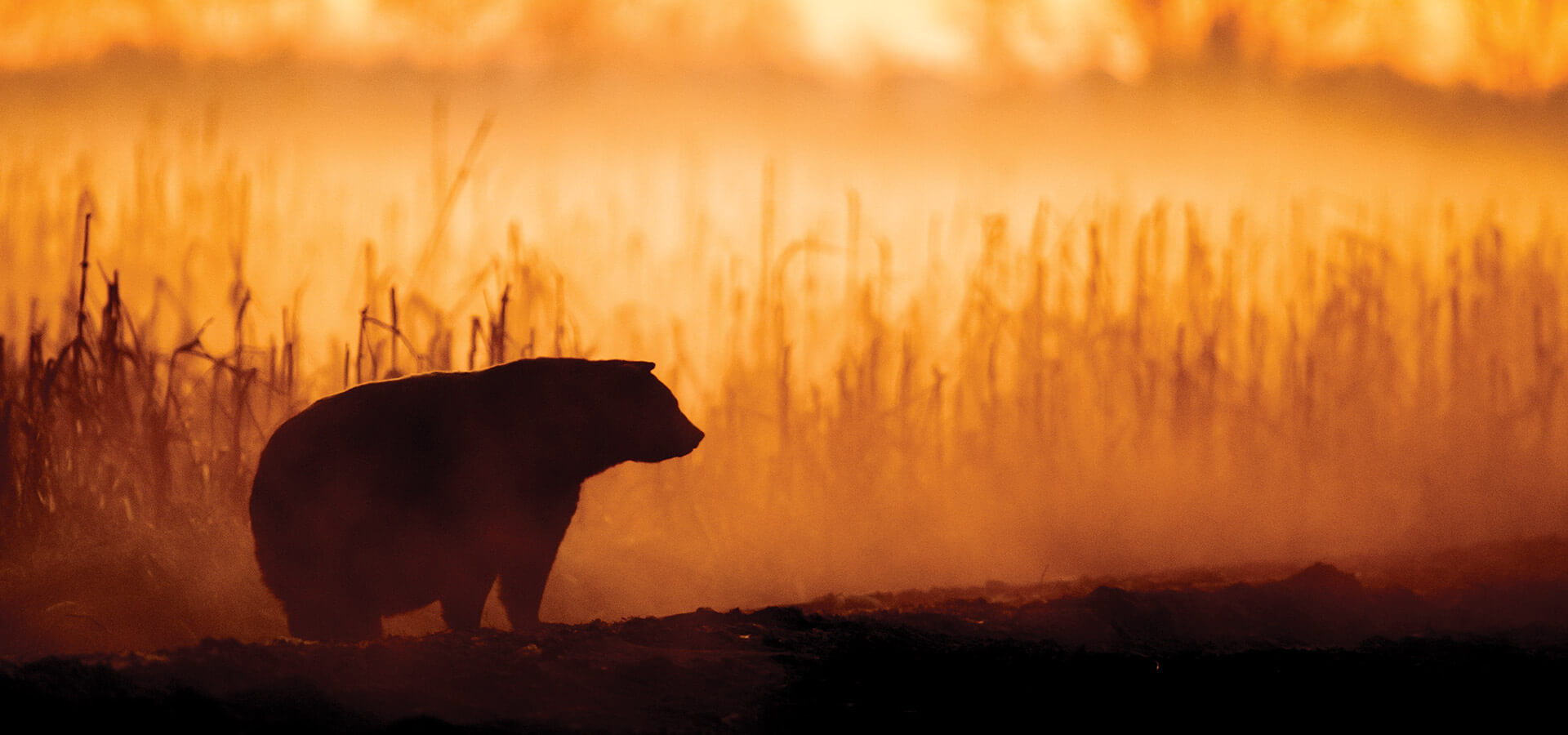
A black bear, one of our state’s largest mammals, usually weighs several hundred pounds, about as heavy as a good-sized refrigerator. A good-sized refrigerator, that is, placed on four broad, five-toed, well-padded paws and covered with layers of fur. Even so, when these behemoths move, they move silently as thick shadows in the underbrush of the dawn light and gloaming hours they prefer.
Colleen Olfenbuttel, a North Carolina biologist who studies furbearers, monitors black bears for work. She knows that watching, rather than listening, is the best way to find them.
“Their silence is amazing,” she says. It’s a silence that comes from eons of evolutionary practice, as their size, though out of place today, once fit with their original purpose.
“Bears evolved in a landscape where they were prey,” Olfenbuttel says, “so their quiet is their camouflage. That’s also why they run up a tree when they sense danger.”
She’s referring to the early days of North Carolina’s black bears, when wolves roamed these lands in abundance. So did big cats, and humans with spike-tipped spears. Today, in the eastern U.S., the wolves have dwindled and big cats have become legends, but humans remain as black bears’ biggest predator. Around here, many fill their bellies with our state’s giants.
“Black bear meat is on more than 600,000 plates for North Carolina families each year,” says Olfenbuttel.
• • •
We eat them, but we also keep them safe. Black bears used to live in every North Carolina county. Now they thrive largely on our eastern and western margins, and are expanding into the Piedmont. Olfenbuttel says the northeastern part of the state, where pocosin swamps seep in and out of low-lying woodlands and corn-packed farmland, likely has the highest density of black bears in North America.
In return, black bears tend the earth the way only walking, furry refrigerators can. They gobble enormous amounts of seeds from berries, tree nuts, and farm fields, and plant them around our land. They fertilize the earth. They clear the land of carcasses and the insects they snack upon like potato chips. Then, they take their winter naps, tuck into our hollows, and slow down.
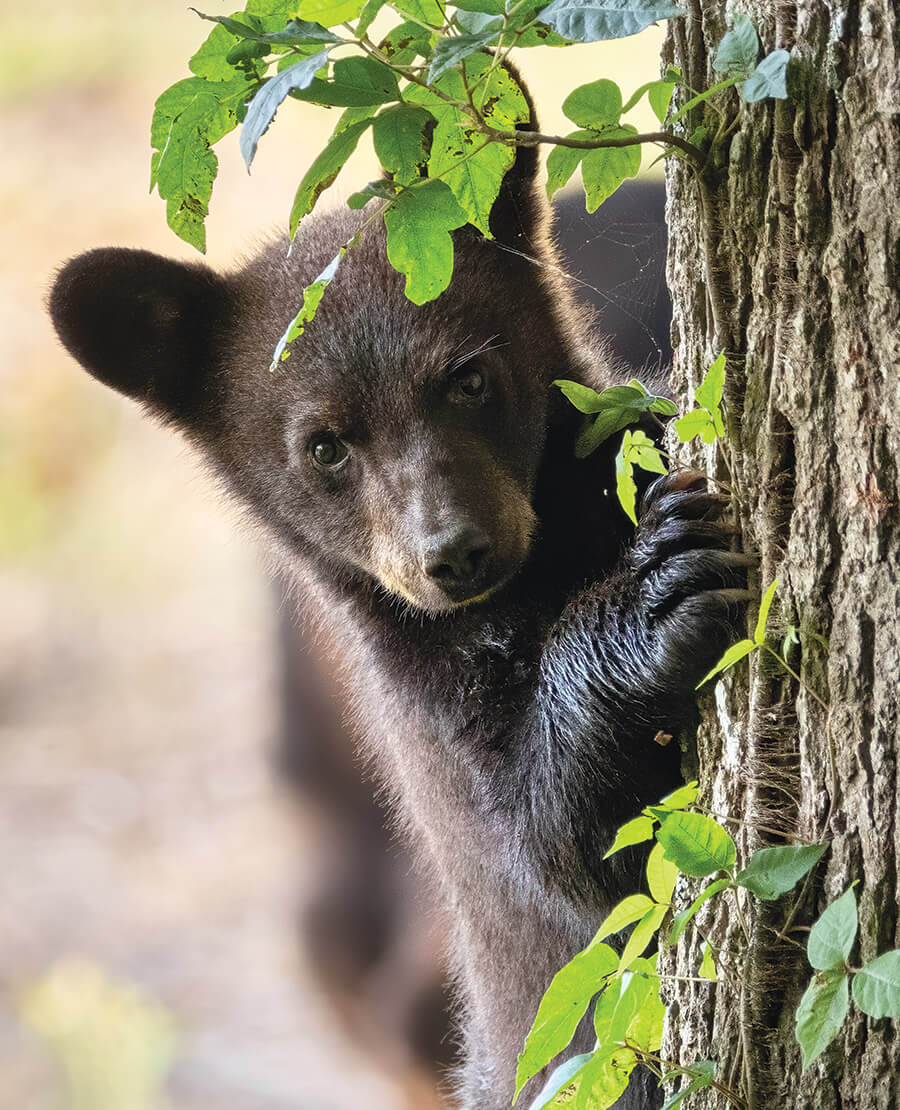
No need to worry about black bear cubs climbing in poison ivy: They’re not only immune to the vines’ rash-inducing chemicals, they actually snack on the leaves and their tasty — to them — berries. photograph by John Mauser
The females can give birth then. Between their moments of slumber, they have kitten-sized cubs, open-mouthed and mewing, weighing a half pound. By the time spring comes, these cubs will have grown 10 times their weight, turning the richness of their mother’s body into their own bodies. They become furred and curious, and by then will have lent their mother the undercurrent of fear mothers have for their children, a fear built of wild love bound with heartache, refined by a relentless watchfulness, by excessive caution.
How, in this world of roadways and hunters, in the dwindling woods and foreboding swamplands, a tiny cub can grow to become a refrigerator feels nothing short of miraculous. How these refrigerators can creep soundlessly through the muck and dry leaves feels supernatural.
Olfenbuttel insists bears do not operate by magic, though. They use a force that’s more sturdy, one built from the milk of a sleeping mother, acorn husks, and bones of fallen deer. It’s built of the fierce, unrelenting drive of mothers who can forge goliaths from powerless, blind cubs. They will grow to shape our land, these cubs, from their places in the shadows. This force straddles the line of universally natural and uniquely bear — at once ordinary and extraordinary.
Get our most popular weekly newsletter: This is NC
At both the turn of the century and today, Beaufort’s waterfront has attracted a hum of commerce and community. At its heart, a historic avenue tells that history, from the stately double-porched homes to the sound of ships announcing their arrival at port.



 Listen as the pages of the magazine come to life in the