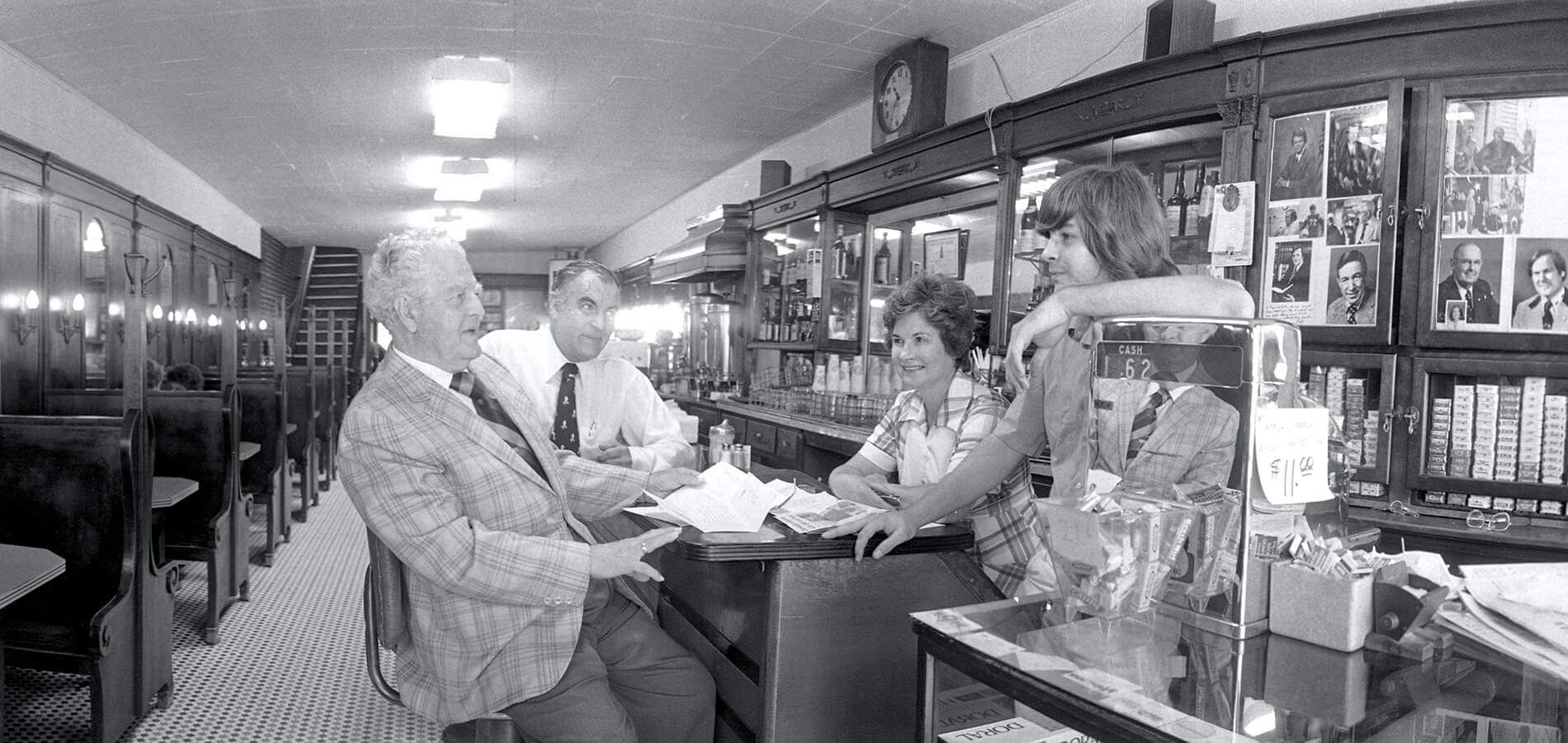
Their arrival is reliable — ritualistic, even. The woman at table No. 2 who returns each Tuesday for the fried chicken special, and the judges who come in a pair on weekday mornings before hearing courtroom debates. They slide into dark wooden booths with tall mirrors rippled by time and flanked by dim, decorative sconces. They sit across rust-red tables or at the bar on swiveling, high-backed stools. They order meatloaf or barbecue. They converse or fall silent with reverence. And, like most of their fellow diners, they come back.
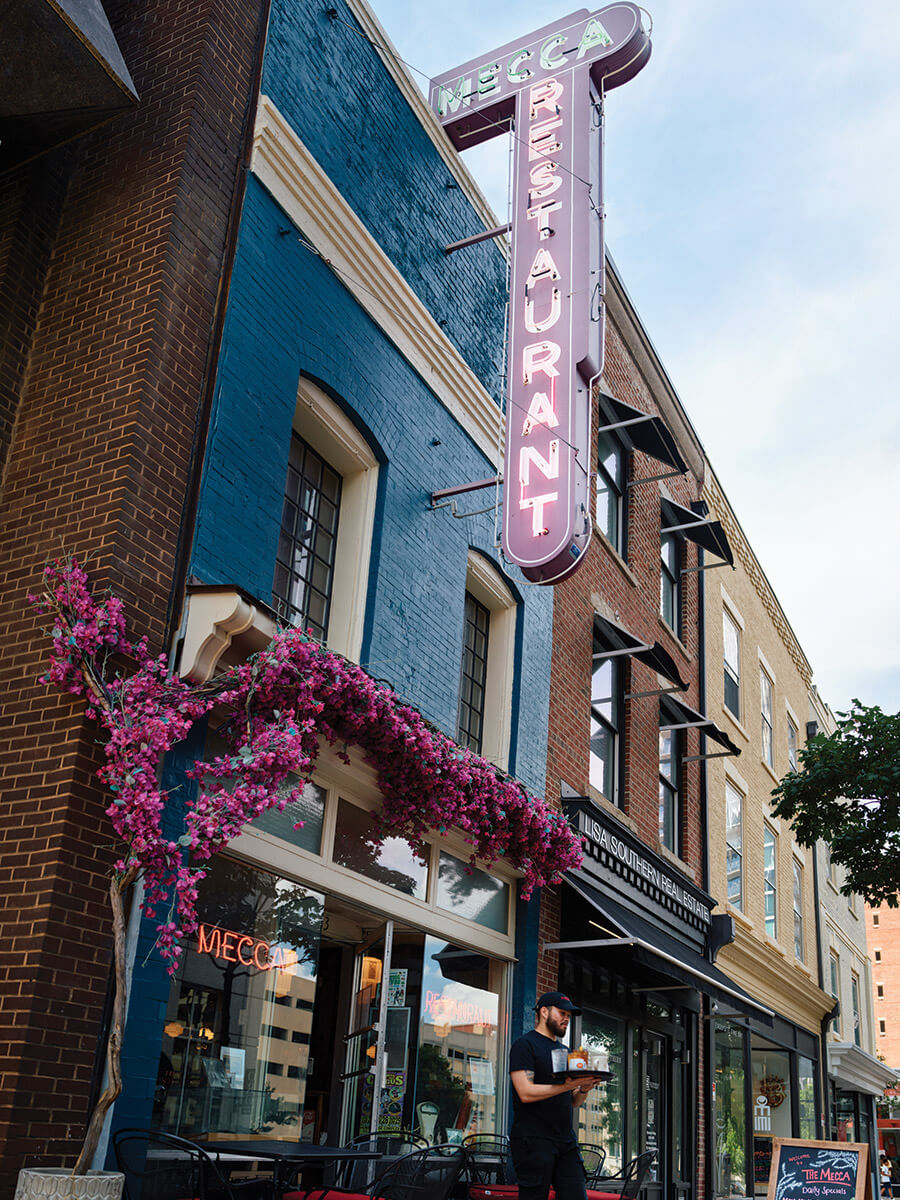
In 2014, the building that houses the iconic spot was designated a historic landmark. photograph by Joshua Steadman
This routine is a sort of pilgrimage to their own kind of mecca, just like the lawyers who practiced before them or the lawmakers who won their elections a generation prior. Because in Raleigh — a city that has undergone countless rebirths and transformations — few things are as unchanging and dependable as the domed State Capitol, the oak trees, and The Mecca Restaurant.
For nearly a century, the Mecca has stood as a testament to the timeless appeal of homestyle cooking, with dishes ranging from roasted lemon-herb chicken to fluffy stacks of chocolate chip pancakes that draw repeat customers. That loyal following, coupled with the abiding love and unfailing work ethic of three generations of the Dombalis family, kept the doors open at this narrow, no-frills destination as nearly all its contemporaries vanished.
• • •
Opened in 1930 by Nick and Helen Dombalis, the Mecca has been through several revisions but has remained at 13 East Martin Street — a block west of Moore Square and two blocks south of the Capitol building — since 1937. At one time, the ceiling was replaced. At another, late-night hours were extended, or lasagna was introduced, or the second floor was opened for dining. The changes have been so few, they’re easily recounted.
The biggest change occurred in 2018. After 47 years of working at the restaurant, third-generation owner Paul Dombalis had worn himself to the bone. He needed to step away.
“When I started working there, it was a big family thing,” he says from his retirement home in Kure Beach. “People started passing away: my grandparents and then my dad. Then it was me and my mom for quite a while. She went up there well into her 90s, but she couldn’t do it anymore. Then I was kind of by myself.”
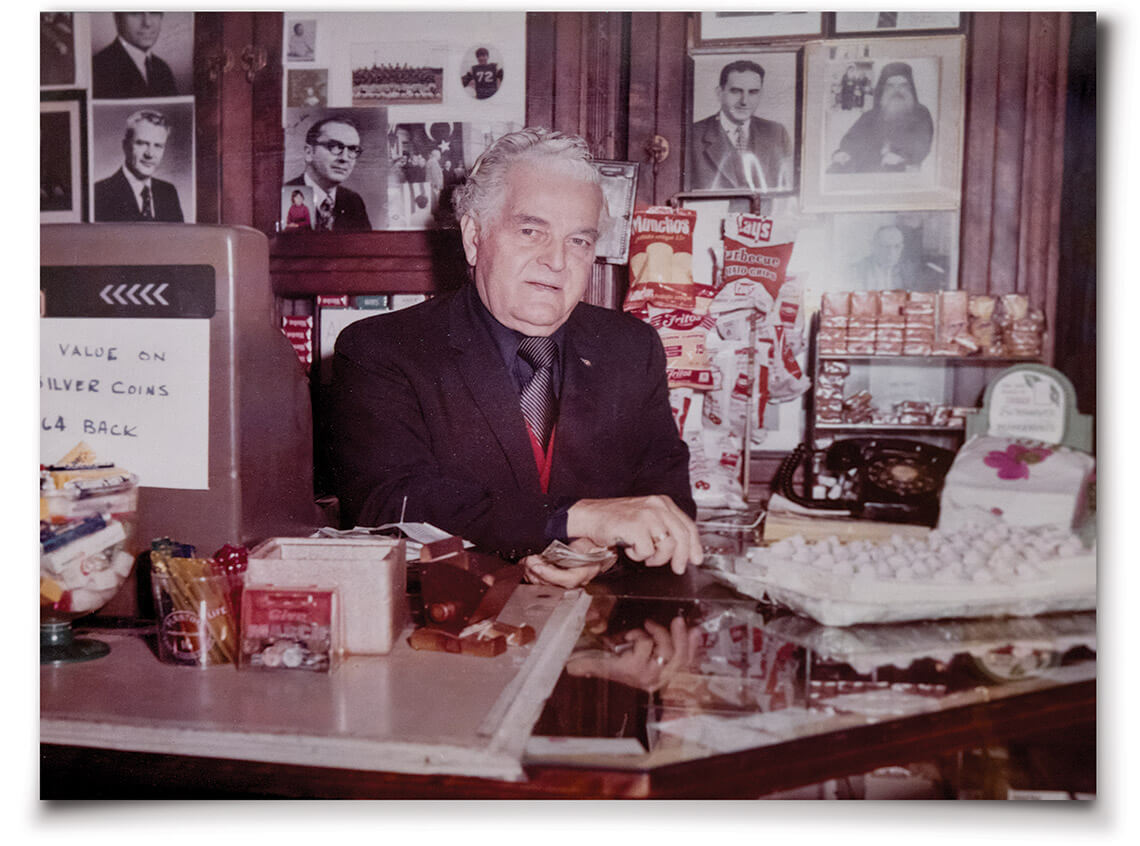
Nick Dombalis photograph by The Mecca Restaurant, Photographed by Charles Harris
Paul had it drilled into him from an early age that to run the restaurant, you had to be there in person. He took the message to heart. In his final years running the Mecca, he spent seven days a week there. His grandfather Nick had been the same way. The Dombalis family tells a story of the time the patriarch fell asleep in one of the restaurant’s booths, having worked himself into a slumber.
“The blood, sweat, and tears that my grandparents and parents put in there — it’s very important to me,” Paul says. “That’s why I stayed longer at the Mecca than I probably should have.”
Luckily for the restaurant’s faithful, one among them was willing to step up. Greg Hatem had been coming to the Mecca since the ’80s. As an NC State student from Roanoke Rapids, he frequented the restaurant with friends whenever he could scrape together a few dollars.
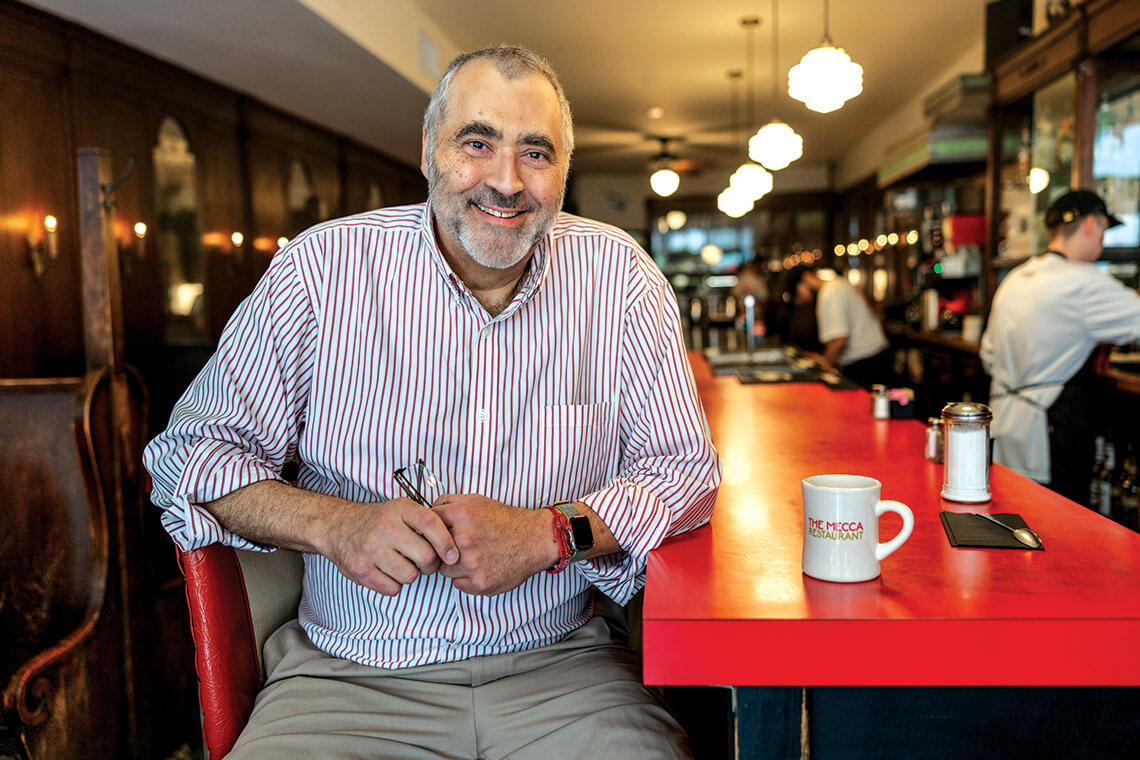
Greg Hatem photograph by Charles Harris
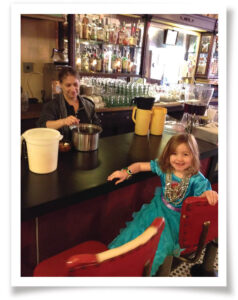
Greg Hatem discovered the Mecca in college and later shared meals here with his son, George, and daughter, Salma Kate (pictured on her third birthday). photograph by Greg Hatem
He consistently returned for signature dishes like the fried chicken, decades later bringing his children and establishing rituals of their own.
“I am no different than thousands of other people. [The Mecca has] just been that really wonderful, safe place to go visit with the community and have a great lunch,” Hatem says.
Except he is different. Hatem is a real estate developer and preservationist. By 2018, he had founded at least five downtown restaurants, bars, or cafés, including The Pit Authentic Barbecue and Sitti, a Lebanese restaurant whose name means “grandmother” in Arabic — a nod to his heritage. The Mecca would be the first under his Empire Eats banner that Hatem hadn’t founded himself, but his strong emotional ties to the space made this step feel necessary, he says.
“Our promise to [regulars] is we’re going to keep it the Dombalises’ Mecca,” Hatem says. And he has: Hatem pulled up new flooring upstairs to return to the original hardwood, kept the menu intact, and insists that regulars have barely detected the shift.
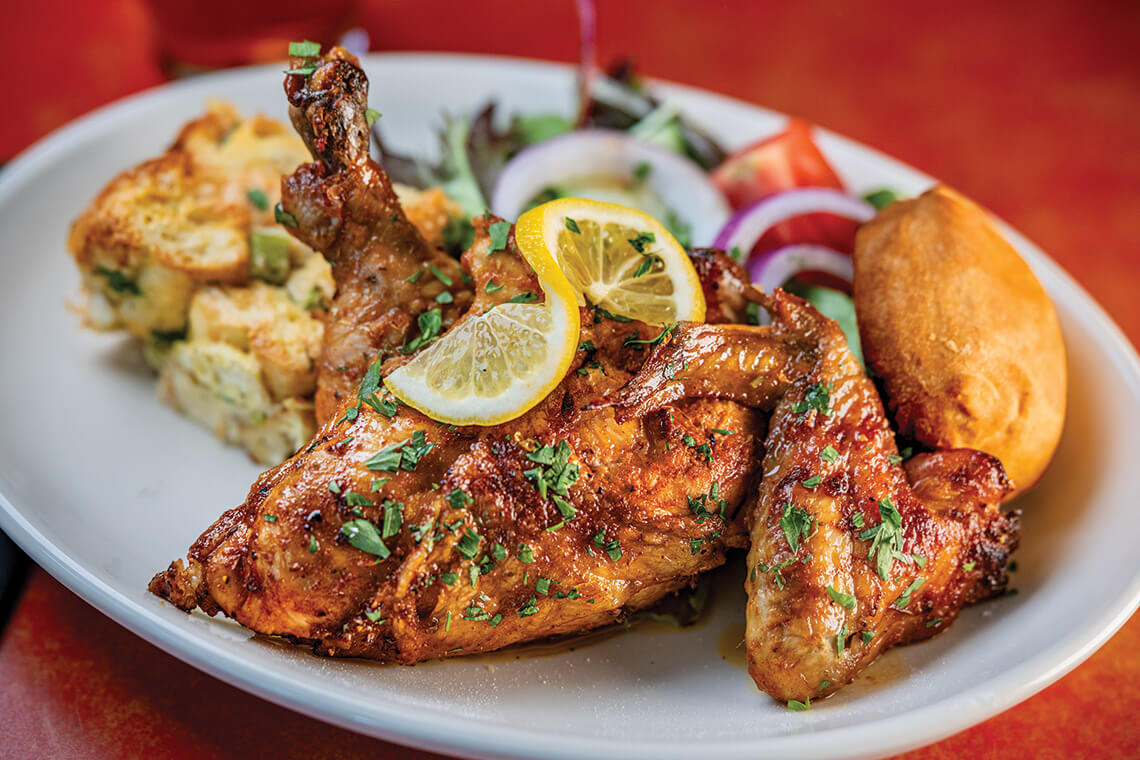
Hatem owns the Mecca and continues its legacy of serving homestyle dishes like lemon-herb chicken. photograph by Charles Harris
Hatem already had almost two decades of experience running successful restaurants, like The Morning Times café, within historic, renovated buildings. The track record was there, and just as important, so was the relationship. He’d been coming to the Mecca regularly since Paul’s parents, John and Floye, ran it.
“The Mecca is all about family, and customers are extended family,” says Mary Dombalis Winstead, Paul’s sister who still lives in Raleigh. “We knew we were passing it along to someone who would carry on the tradition and legacy.”
• • •
Despite its location in the heart of downtown, the Mecca is tucked into a narrow building. That may explain the restaurant’s illuminated exterior, calling passersby from the nearest intersection. A T-shaped neon marquee reads “Mecca” across in green and “restaurant” down in red, both in capital letters on the story-high sign. The facade is painted a deep blue, standing out from the rest of the block. In the warm months, a waterfall of fuchsia flowers spills from above the front door. Neon signs with the restaurant’s name adorn windows flanking the entrance.
All that retro flash underscores the unparalleled role the Mecca has played in almost a century of life in the capital city, from the boxed lunches that were prepared for army troops in the ’50s to the two retired state supreme court chief justices who brought their own grapefruits every morning.
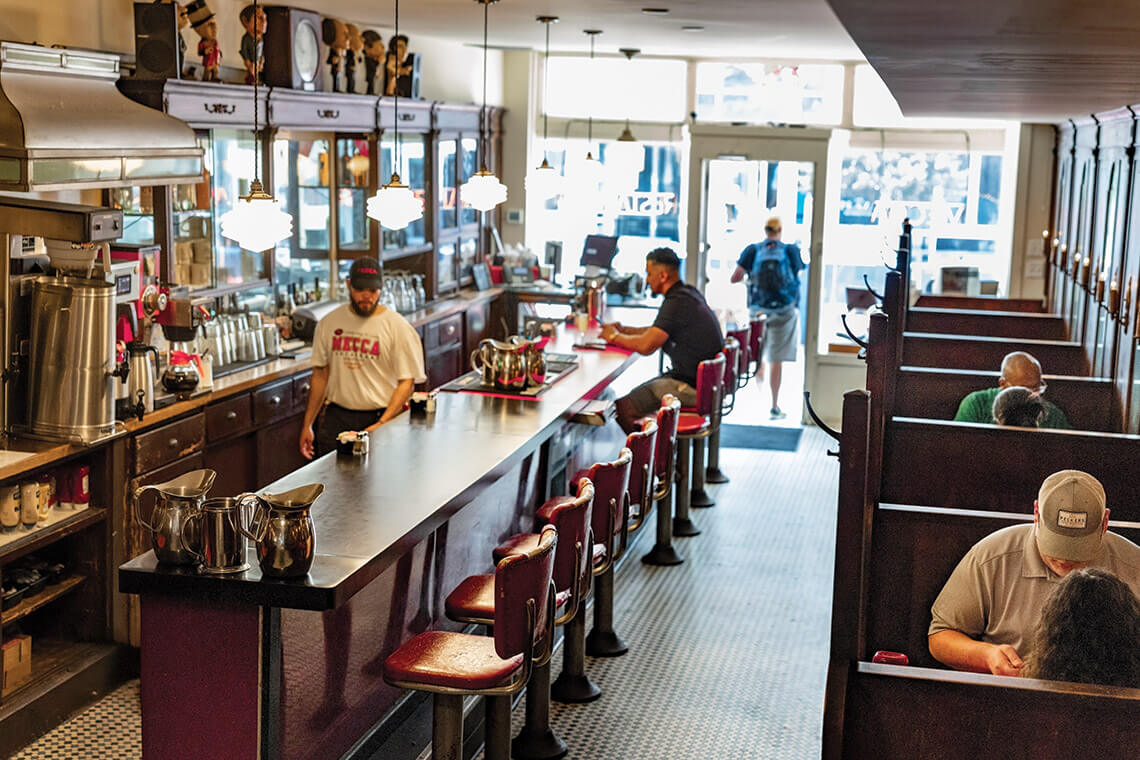
The Mecca’s interior hasn’t changed much since Nick Dombalis opened the restaurant with his wife, Helen, in 1930. photograph by Charles Harris
Those who’ve come to dine have become a part of the Mecca’s history, too. There was the man who, when asked about his favorite places to eat in Raleigh, said: “Upstairs at the Mecca and downstairs at the Mecca.” There are the endless thank-yous, including the note Mary found in her mom’s house from a customer who recounted the story of their parents’ 1943 honeymoon dinner at the restaurant. The groom forgot his wallet and was allowed to return the next day to pay his bill. And there was the time Paul and Mary’s brother, Nick — a big personality who died in 2020 — overheard a fellow lawyer tell someone, “You musta went to the Mecca for lasagna, because I smell garlic on you.”
The Mecca persists, in many ways, because of its commitment to service. The Dombalis family and Hatem both know this. It’s why the backs of the employees’ uniforms now read, “He profits most who serves the best.” That, paired with good food and its enduring service, is what defines the Mecca.
“It’s been here longer than just about anyone you know,” Hatem says. “There’s heritage, but that DNA still moves forward.”
The Mecca Restaurant
13 East Martin Street
Raleigh, NC 27601
(919) 832-5714
mecca-restaurant.com