Put ramekins on a baking sheet. Bake for 25-35 minutes, until puffed and golden. Remove from oven, and let stand for 5 minutes. With a flexible spatula, remove strata to
Listen as the pages of the magazine come to life in the Storytellers podcast showcasing the voices of Our State writers. Each podcast episode features a writer reading their column
Listen as the pages of the magazine come to life in the Storytellers podcast showcasing the voices of Our State writers. Each podcast episode features a writer reading their column
Listen as the pages of the magazine come to life in the Storytellers podcast showcasing the voices of Our State writers. Each podcast episode features a writer reading their column aloud, allowing each distinct voice to shine. Click below to listen to Eleanor read her column aloud.
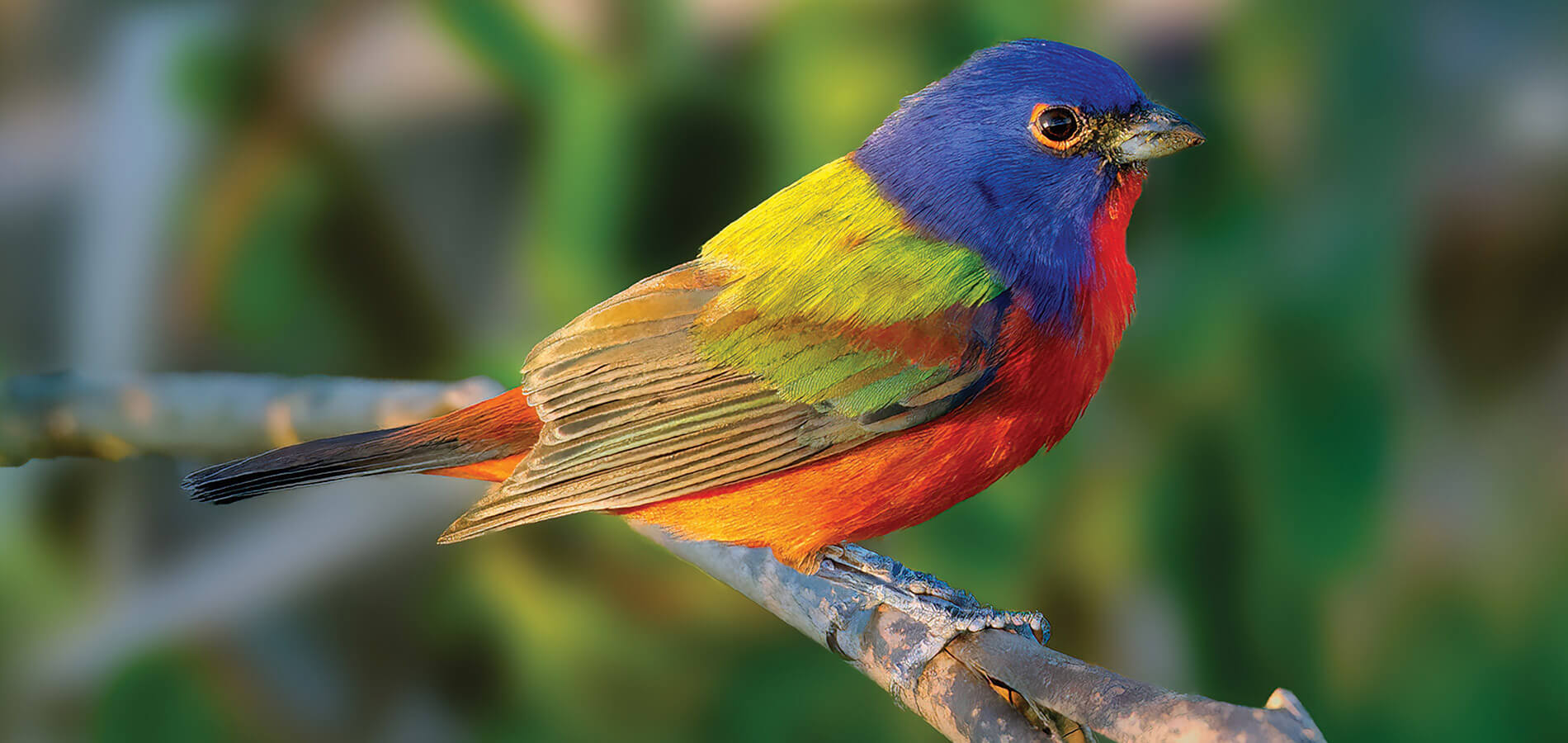
The French call painted buntings — a bird the size of a house finch flitting through the shrubs on our southernmost shores — “nonpareil,” or “without equal.” They’re right. Each adult male painted bunting carries a rainbow splattered across his body: red underneath with a lime-green back, bluish-purple head, red eye ring. They seem too dressed up for North Carolina’s coastal scrub-land, wearing their Sunday best to a pig pickin’.
“They’re the most colorful bird in the United States,” says Brian O’Shea, assistant curator and collection manager of ornithology at the North Carolina Museum of Natural Sciences. “The texture of their feathers impresses me. The brighter bird colors have feathers with a glossy, iridescent texture, and painted buntings are covered in that.”
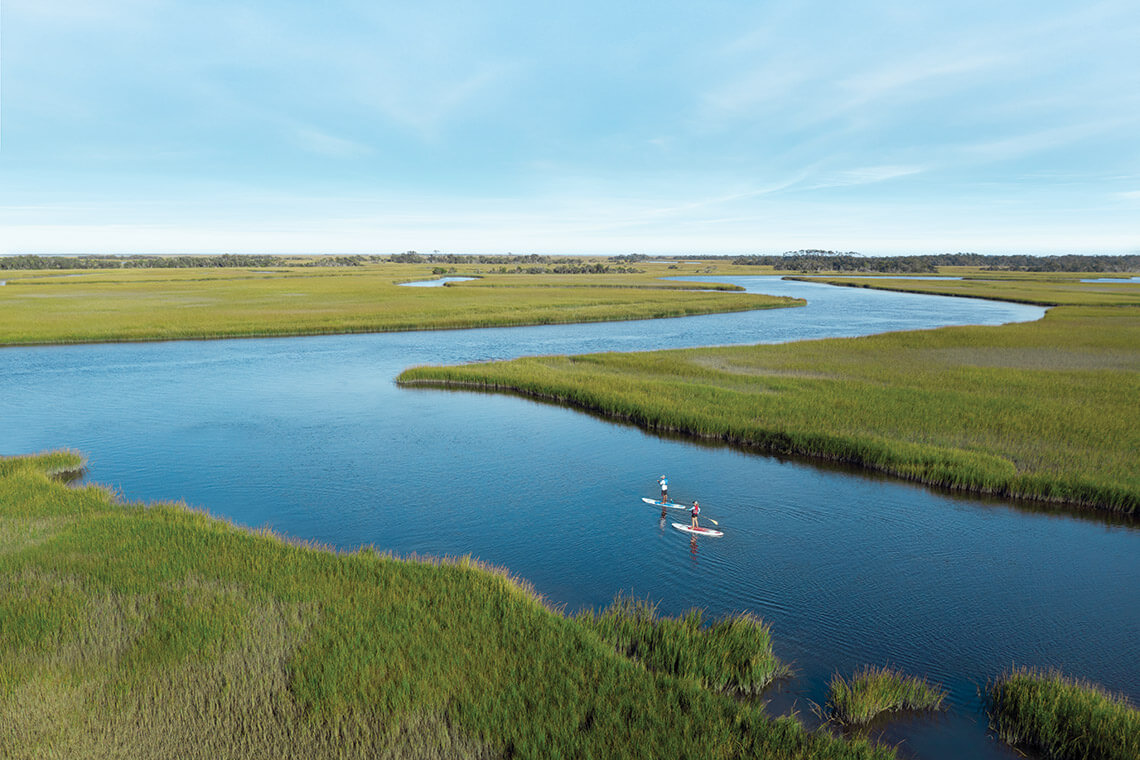
Until about October, one place to look for them is the salt marshes around Bald Head Island. photograph by VisitNC.com
Two painted bunting populations live in the U.S., and a sliver of southeastern North Carolina makes up the upper tip of the eastern group. Though they’re here, it’s rare to see one. The females and young males are as green as the shrubs where they hide, their movements easy to mistake for a marsh breeze or a slight shiver of a laurel oak bough. And they rarely fly more than a couple miles inland. Rare, but not impossible for those who take the time to look and hope.
“Beginning in April, the painted buntings here fly in from Florida and probably farther south,” O’Shea says. “This population runs from northeast Florida up the Atlantic coast to as far north as Morehead City.”
Though they only occasionally vacation in the Outer Banks, “they love the maritime forests and open salt marshes of Fort Fisher, Hammocks Beach, and Bald Head Island.”
Unlike the females and their younger brethren, older males can’t blend in. Like cardinals, those bastions of aerial fashion, male buntings are showboats for love. The more colorful the feathers, the more desirable they are to the females.
Beacons in the brush, it seems impossible that these winged rainbows haven’t been wiped off the map, pinioned in hawk talons, cat claws, or the human need to grab and cage things of beauty. For painted buntings, the benefits of beauty are worth the risk of annihilation.
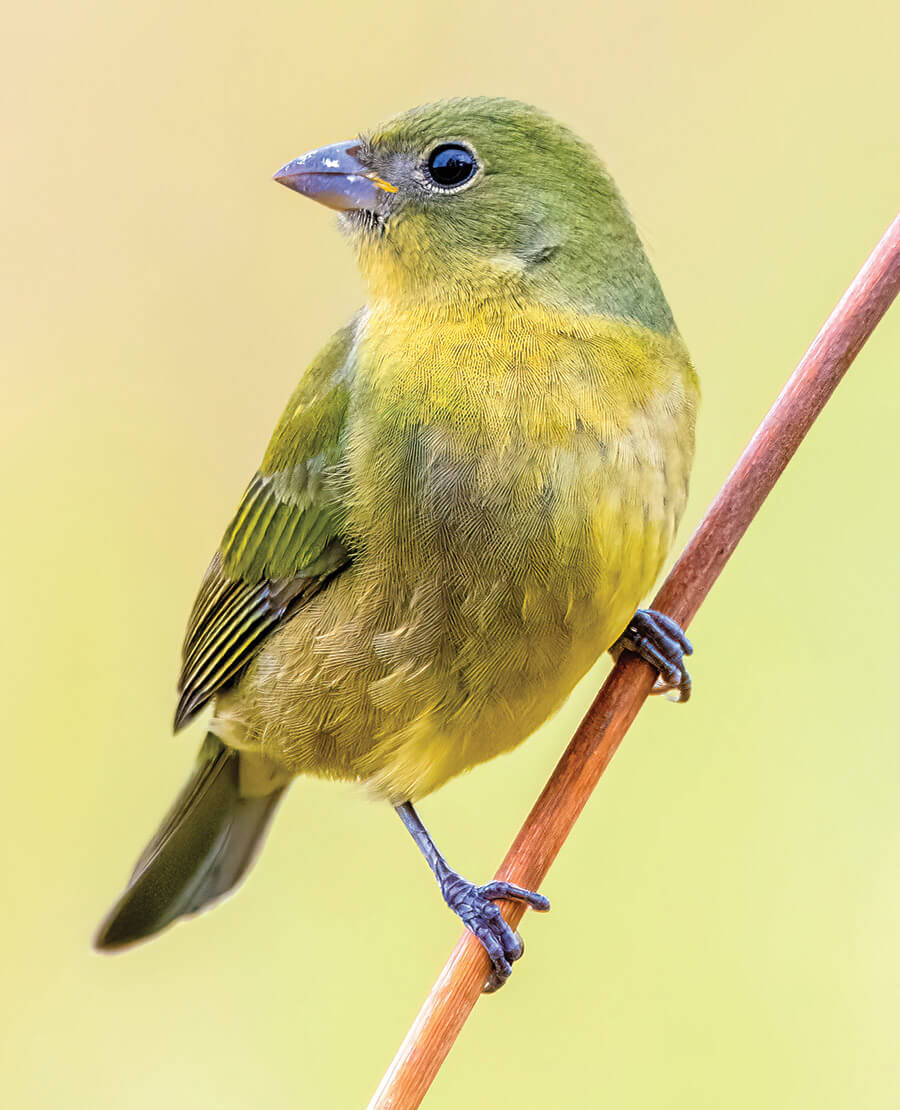
“Males look like females until they are 2 years old,” O’Shea says. Young, green males are perfectly capable of mating. While they sing and dance just as older males do, “the females prefer older men.” Females like the colors. The males will keep dressing up.
A mature male’s showy plumage may help attract a mate, but a female (pictured) has the advantage when it comes to camouflage. photograph by Michael Warren/E+/Getty Images
Beneath their rainbow plumage, painted buntings are just small birds. They do what plenty of small birds do — eat seeds, build little cup nests in bushes or trees, lay speckled eggs, migrate. They sing to each other and hop around on branches. They fly, pushing their bodies bravely into the air with their tiny muscles and hollow bones.
Every now and then, a wanderer ventures farther into the state.
“For the last three years, a male painted bunting has shown up at Dix Park in Raleigh,” O’Shea says. “He flies in around April, and he sings and sings, but he never finds a mate. He keeps coming back, though.”
Imagine taking years to get dressed up and then showing up to the venue only to find there’s no party after all. And then to keep showing up. To keep singing even though there are no ears to hear you. There’s valor in those feathers, and there’s hope, too. This could be the year. He could perch on the stem of a sunflower leaf without bending it. He could, blue head back, red chest ruffled in the breeze against the blue sky, open his beak and sing, his black eyes wide open to the world around him. Wait. He could sing again, his call joining the matter-of-fact treble of robins and the prettygirl prettygirl of cardinals in the morning chorus. This could be the year that, waiting in the tall grass beyond, she hears him. She could sing back to him. There’s no telling what could happen in our world.
Get our most popular weekly newsletter: This is NC
From the expanses of needlerush at Cedar Island to the lush spartina feathering the shores of Bodie and Roanoke islands, our salt marshes are the threshold to a watery world — the heartbeat of our coastal ecosystem.




 Listen as the pages of the magazine come to life in the