Put ramekins on a baking sheet. Bake for 25-35 minutes, until puffed and golden. Remove from oven, and let stand for 5 minutes. With a flexible spatula, remove strata to
1. Our Wooden Boats First, we scarfed. In a Piedmont country shed, Bill Garlick and I — boaters but not boatbuilders till one Sunday afternoon three days after Thanksgiving some
1. Our Wooden Boats First, we scarfed. In a Piedmont country shed, Bill Garlick and I — boaters but not boatbuilders till one Sunday afternoon three days after Thanksgiving some
In a Piedmont country shed, Bill Garlick and I — boaters but not boatbuilders till one Sunday afternoon three days after Thanksgiving some years back — began to craft two small sailing skiffs, and we were hooked at once.
We fashioned complementary angles on the ends of two pairs of marine plywood sheets in order to scarf them and make each pair into one. We checked the fit, poured the glue, clamped them together, and thus started making the deck pieces for the two little sailboats. We laid our two pairs of plywood sheets end to end, then glued and clamped them together for all that was to come.
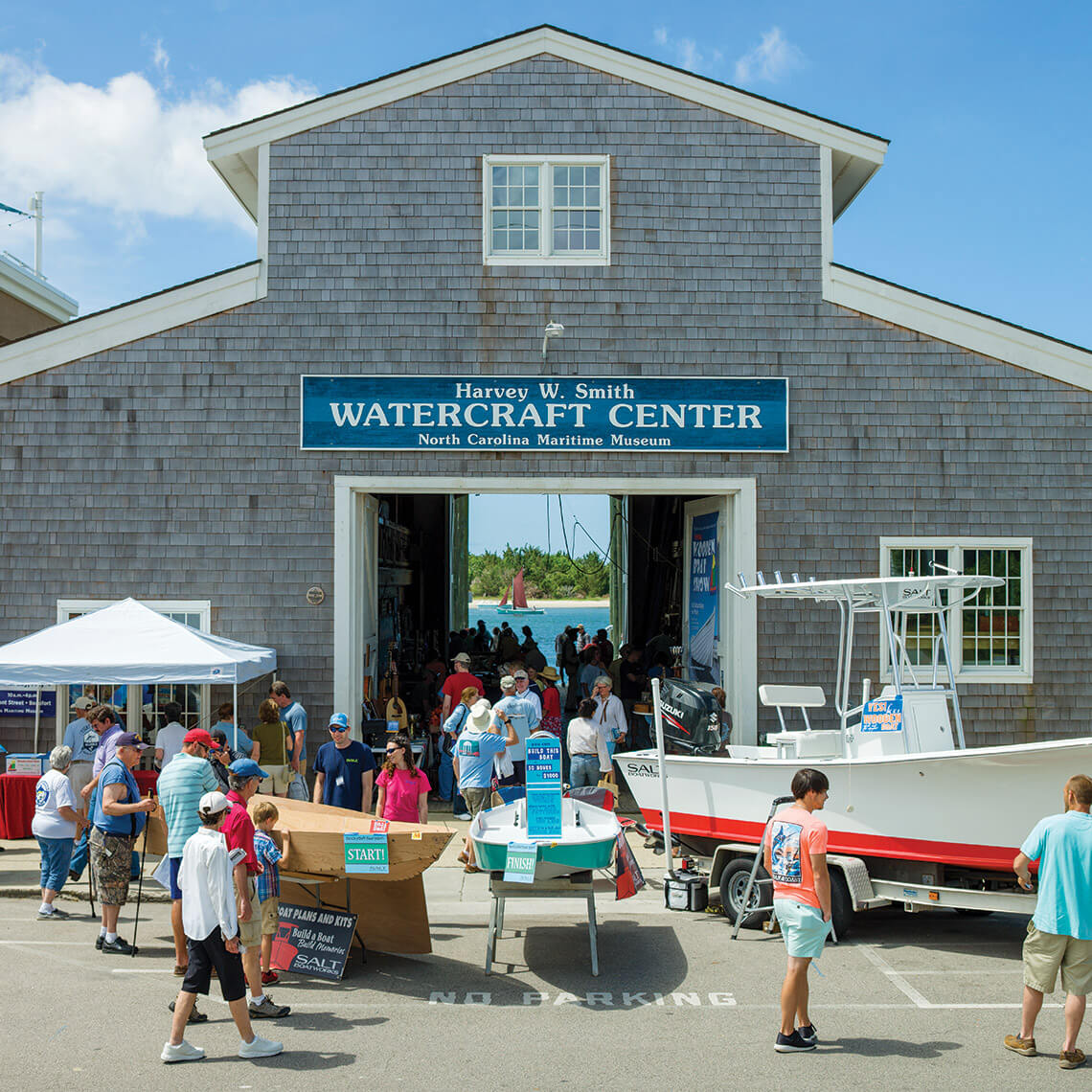
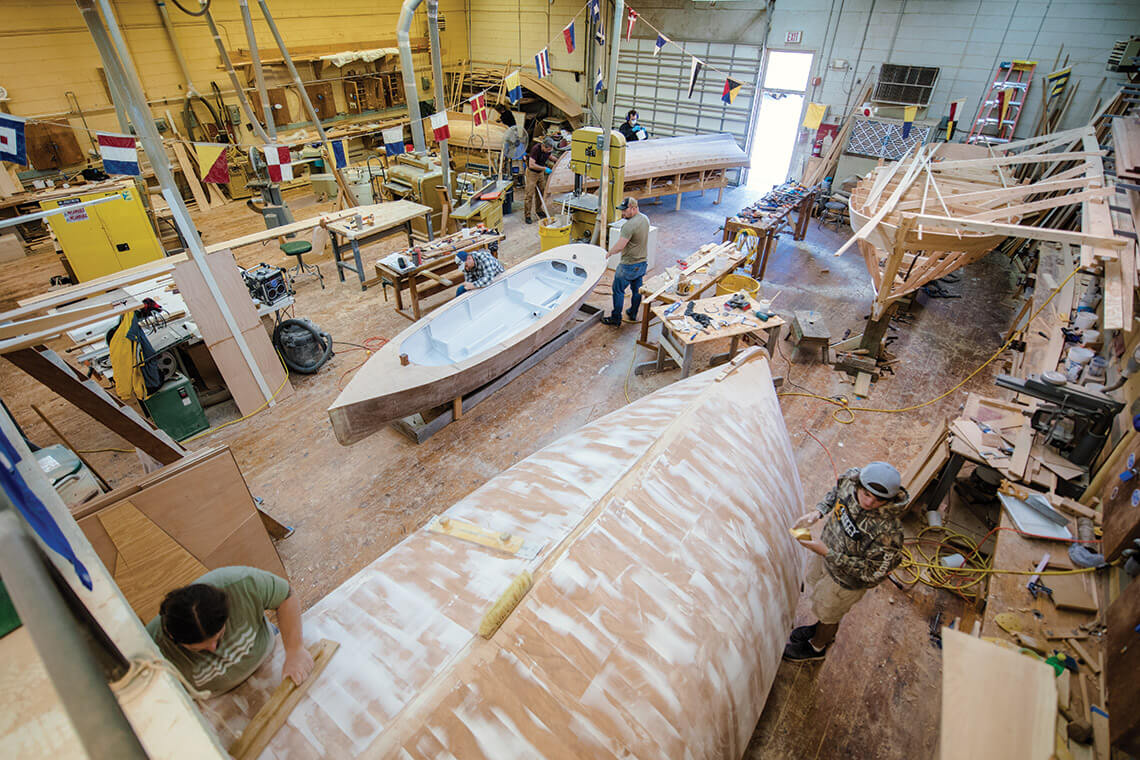
Harvey W. Smith Watercraft Center in Beaufort is a working center where visitors can see craftspeople at work and register for classes. photograph by Mike Basher
The two new 16-foot-long sheets would give us the decks, sides, and transoms for our skiffs. On through that winter and more — working with chop saw, jigsaw, and planer, along with screwdrivers, glue, and clamps, so many clamps! — we got the big pieces together, then fashioned ribs, seats, centerboards, trunks, mast steps, and almost-plumb stems, and made the two boats, the fresh, bright smell of wood and sawdust always with us, and woodsmoke, too, for only a stove heated the shed.
Perhaps the slow-moving thrill of it all was seeing different pieces of wood joined and formed as boats aborning, boats that would someday carry us over water and give us that phenomenal and most useful freedom that has served humankind for millennia. And along the way of building, we got the gift of working our hands in wood, as we cut and shaped it.
Though the designer of our little 11-foot-6-inch Bevins sailing skiffs had, in his plans, revealed his disdain for the inevitable times of stopping for what he called some “soulless sanding,” we always laughed about that and found rewards in the new smoothness of sanded wood, even in the surface warmth of it if one touched it moments after lifting the sandpaper.
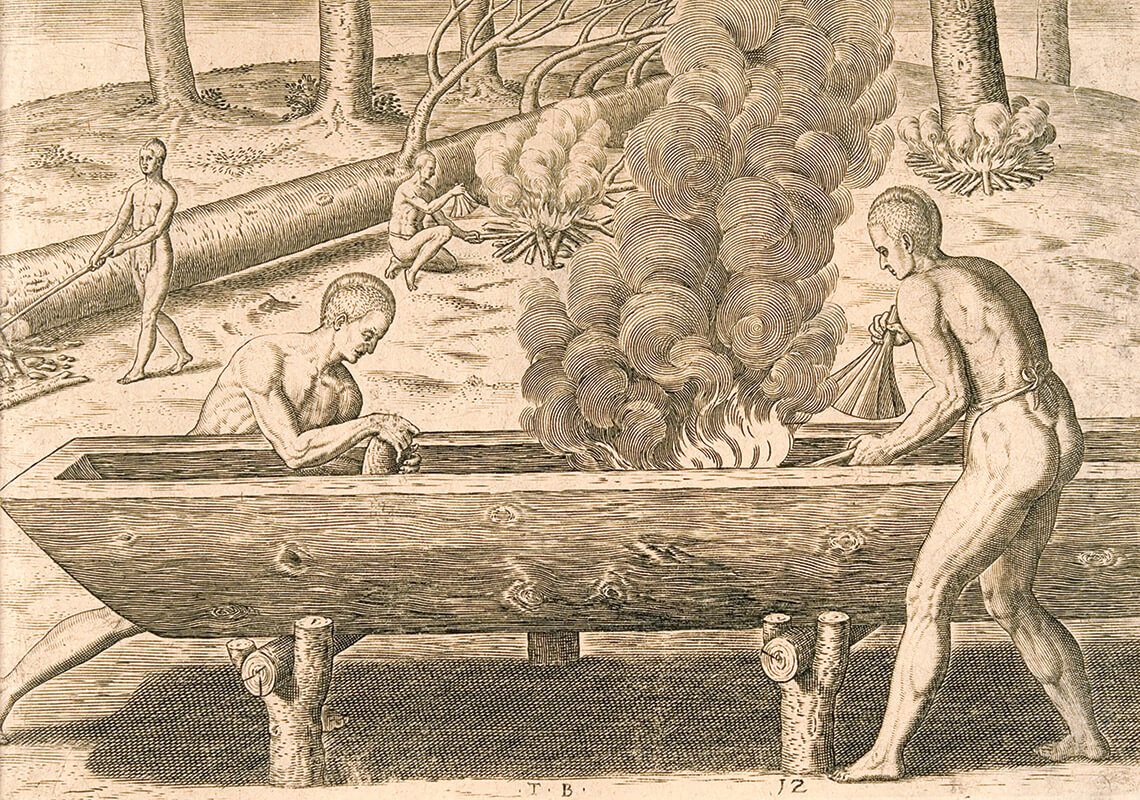
An engraving published in 1590 shows how Native Americans along the coast of North Carolina and Virginia used fire to create dugout canoes. Photography courtesy of Virginia Museum of History & Culture (RareBooks.F229.H27.1608L)
2. Ties to the Past
No matter that each of our little crafts were six inches shy of a dozen feet long. Though we two amateurs knew we were not even a patch on the great Carolina wooden boatbuilders of the here and now or the shipwrights of the ages, still we felt tied to them as we worked, each and every step of the way giving us the feel of a very real kinship with them all: With the Native American dugout burners whom John White saw out there on Roanoke Island in the mid-1580s. With the shipwrights of Indiantown Creek up in Currituck and those at Shipyard Landing on the Pasquotank just above Elizabeth City. With those like George Washington Creef Sr., who is widely believed to have invented the shad boat on Roanoke Island, and the boatbuilding Doughs there, too. With Ca’e Banker and preaching builder Devine Guthrie in Carteret. With Cap’n Van Sant and his lovely little 11-foot racing moth boat, which he designed while laying over for yacht repairs in Elizabeth City in 1929. With the Varnams of Lockwoods Folly River, who built shrimpers down in Brunswick County. With the Lewises and the Roses of Harkers Island. And with Sutton Davis, who escaped slavery and built a pair of sharpies at Davis Ridge, a mite farther Down East than Harkers Island, and fished them on Core Sound.
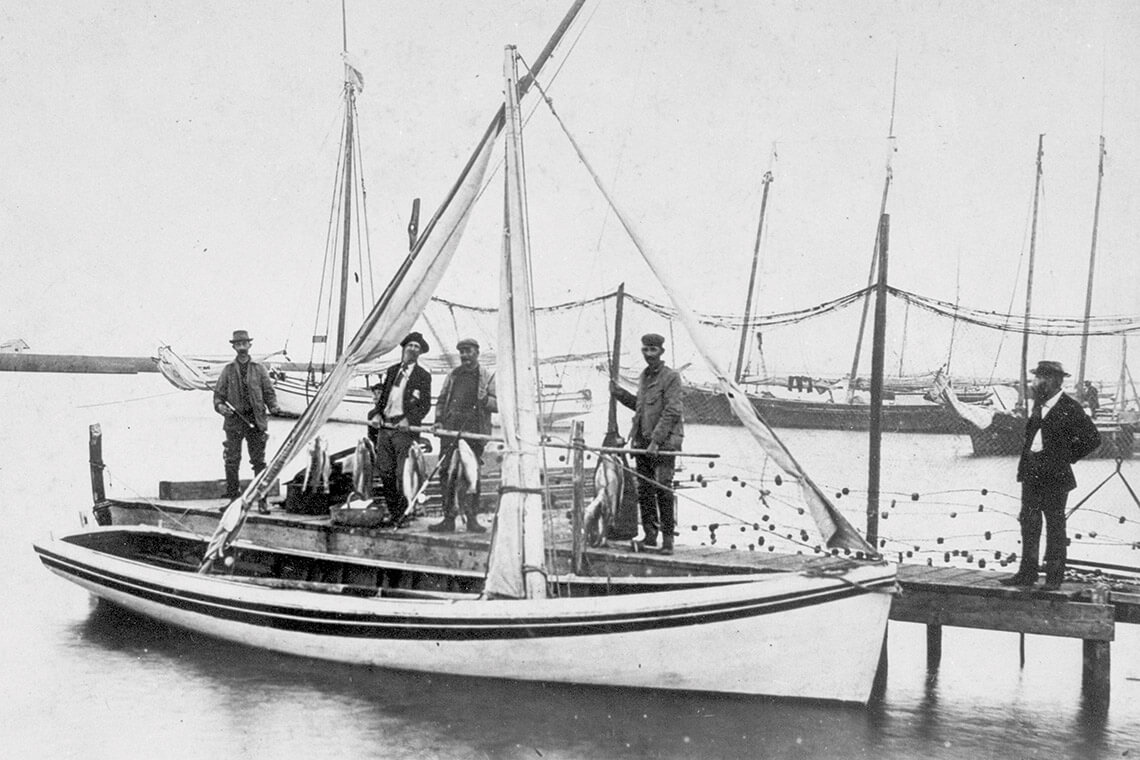
The shad boat (pictured in Manteo circa 1900) is widely attributed to George Washington Creef Sr. Photography courtesy of State Archives of North Carolina
And we could feel a tie, too, with those who more recently built, at the Harvey W. Smith Watercraft Center in Beaufort, a replica of the periauger, a highly popular Carolina wooden freightboat from centuries ago. My friend, the great coastal historian David Cecelski, and I were fortunate to lay eyes upon it as it was lowered into Taylor’s Creek for its water test — keel, hull, and masts all North Carolina cypress — not long before it sailed up to its home at the Newbold-White House on the Perquimans River, just southeast of Hertford.
Just to feel a thread of kinship with any of these builders was powerful, and for Bill and me, it was enough, and it kept us going.
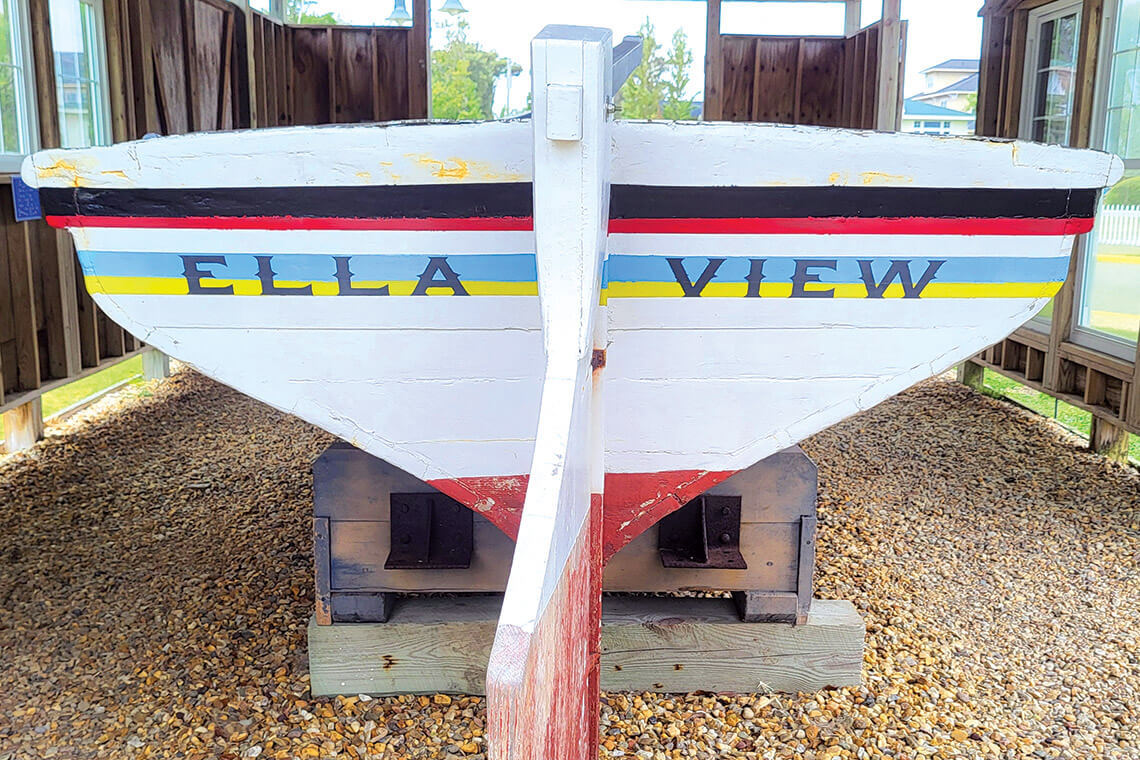
George Washington Creef Sr. built the Ella View on Roanoke Island in 1883. Photography courtesy of Barry Wickre
So when we made our inaugural outing in the first of the two skiffs finished, we found great satisfaction in swiftly sailing most of a mile out on Core Sound from the eastern end of the Straits, in this little craft that we had made board by board, cut by cut — and clamp by clamp — to just southeast of Browns Island, just northeast of Harkers Island.
Big open water everywhere, yet not a single solitary drop coming through our hull.
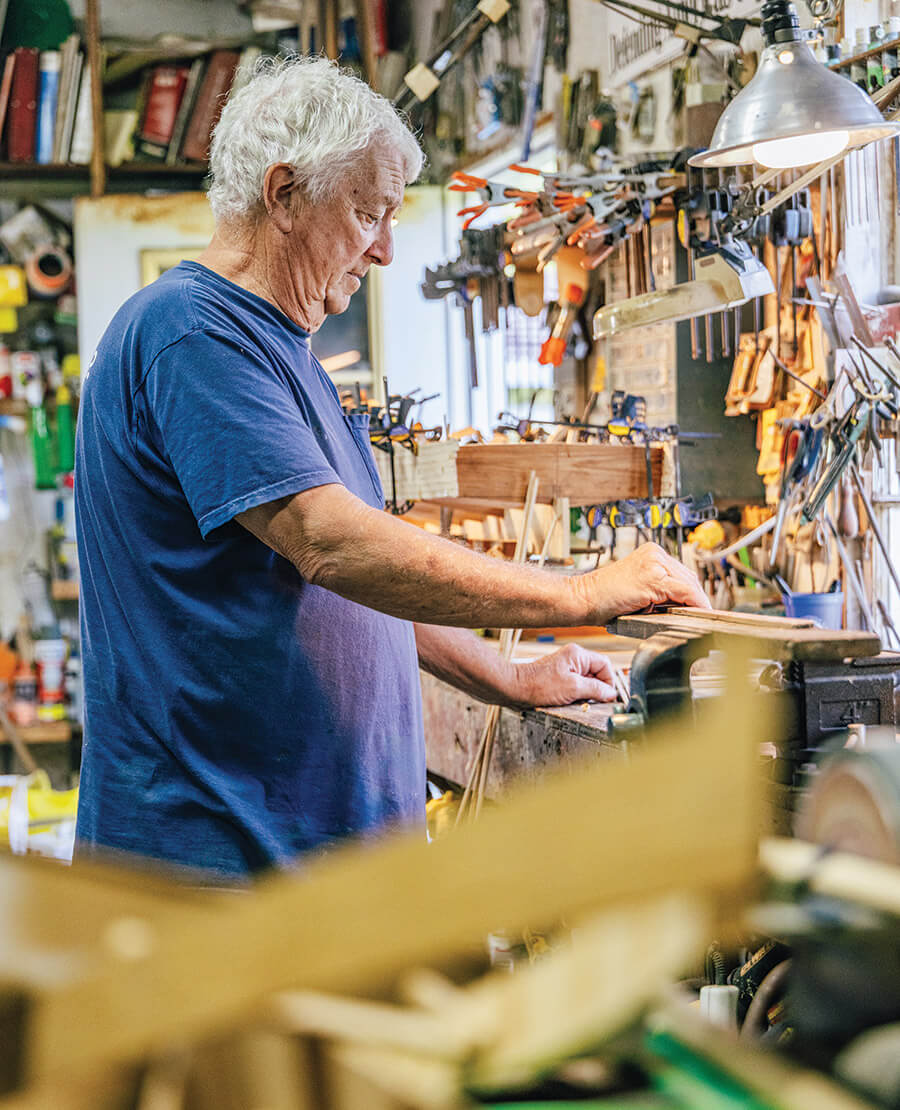
Jimmy Amspacher photograph by Baxter Miller
3. The Core Sounders
Great good fortune long ago brought me to Jimmy Amspacher of Marshallberg — waterman, sailor, engineer of both hydrodynamics and aeronautics, musician, Core Sounder — tall, rangy, as keen and ready as can be. If he cannot find it or fix it, he can make it. One day he may work on turning a Model T or an old VW into an impressive, moving-out hot-rod, and on another he might be sitting in on drums with a local band.
And, as the song says, he can build a boat.
Widely renowned as a top-tier, lifelong builder of wooden and model boats, Amspacher knows this pursuit backward and forward, from conception to execution and practical use. Having started years earlier as a young “hold the board” trainee with an experienced builder, Amspacher built his first skiff at 14, and then straightaway went out floundering and clamming with her.
“If you needed a boat,” he says, “you would go to the store and order the lumber, order the nails, and they bring it, drop it in your yard. And you went out there and built a boat like you want.”
The Marshallberg and Gloucester area of Carteret County also features such craftsmen as those at Budsin Electric Boats and Bryan Blake, who, over time, has brought back to life the 28-foot Natty Lou, a skipjack he built in 1982. Heber Guthrie, too, hails from Gloucester. Years ago, he, Amspacher, and Amspacher’s wife, Karen, built a 20-foot sail skiff in a week on the National Mall, during the 2004 Smithsonian Folklife Festival in Washington, D.C.
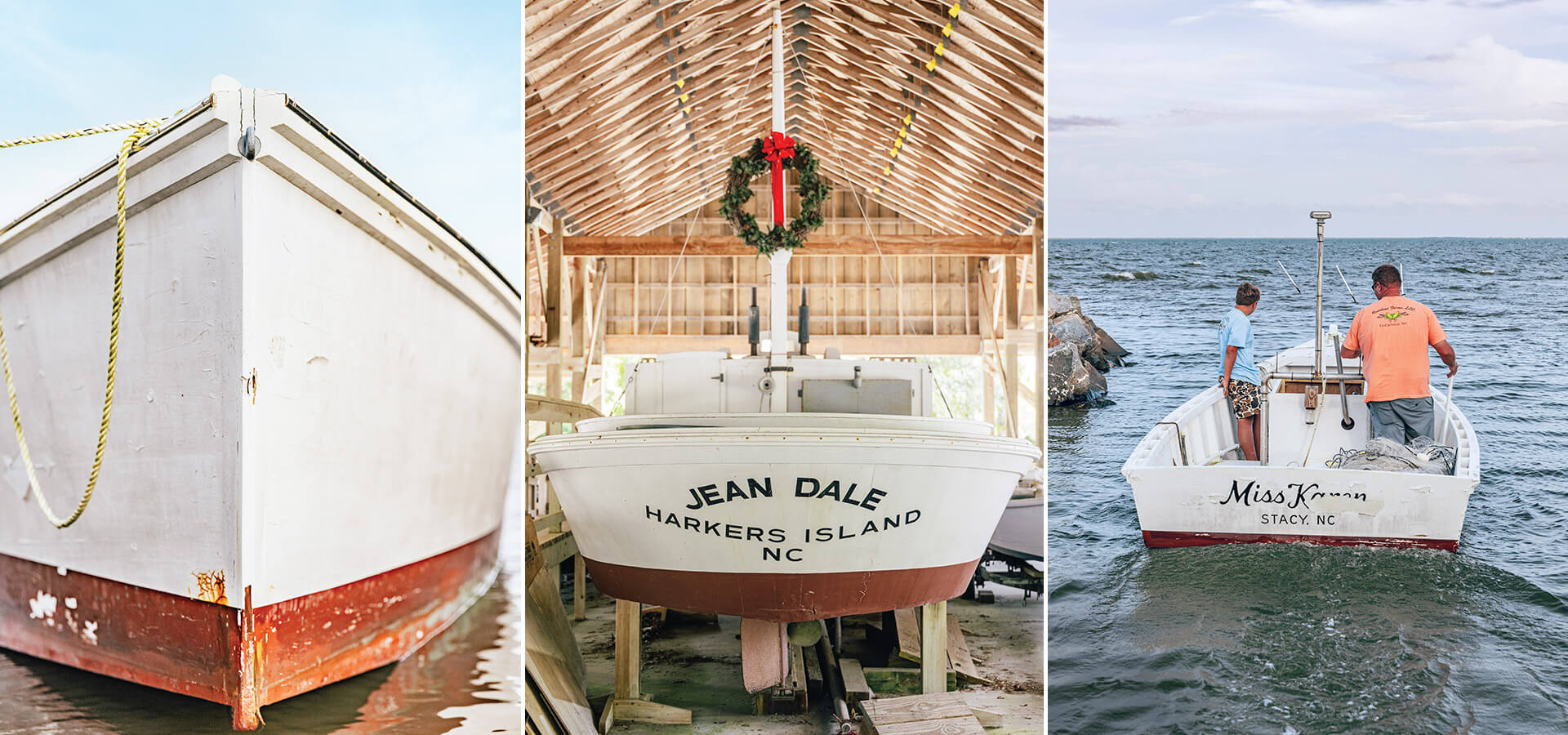
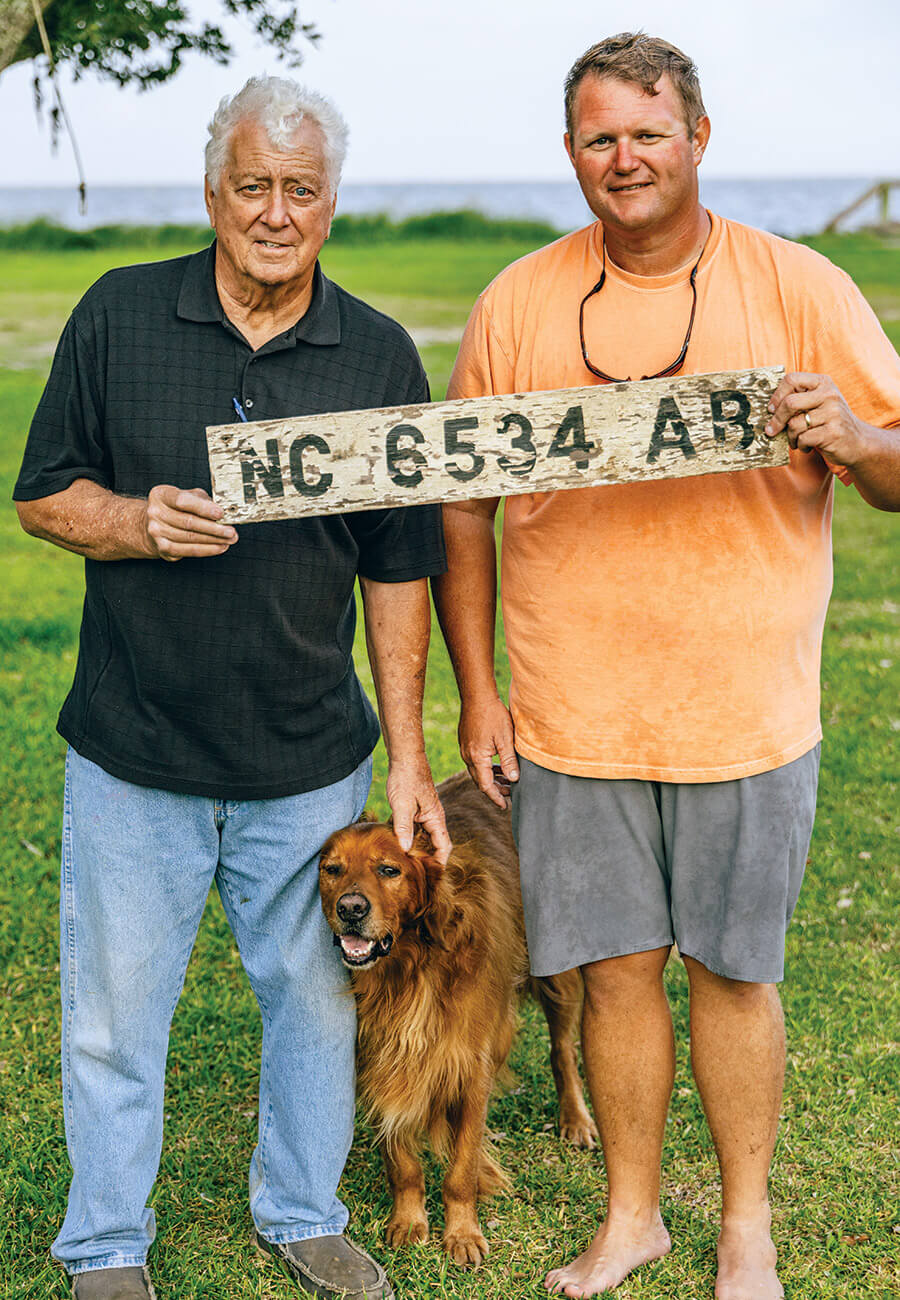
When Jimmy Amspacher (left) built the Miss Karen for Timothy Fulcher (right), he based its design on a boat he helped build as a high schooler. He still had the nameplate from the original boat, which he gave to Fulcher. photograph by Baxter Miller
For years, attendees of this magazine’s Best of Our State New Year’s gatherings in Asheville were treated to the marvel of Amspacher building a skiff just off the Grove Park Inn’s lobby during that single January weekend. An incredulous onlooker was overheard asking Karen, “Will this thing float?”
“Yes, it will, darlin’,” she answered coolly, “and it’ll come ahead, too!”
It was Amspacher who beautifully restored legendary Harkers Island flare-bow boatbuilder Brady Lewis’s 1946 heart pine and juniper Core Sounder fishing boat, the 44-foot Jean Dale, which, since 2010, has proudly sat in a boat shed on the grounds of the Core Sound Waterfowl Museum & Heritage Center at Harkers Island’s east’ard end.
Amspacher once embarked alone from Marshallberg in the 22-foot wooden sailing skiff he had just finished and rigged, with only a box of Ritz crackers, three cans of Vienna sausages, and a jug of Bojangles iced tea. He headed north up Core Sound, leaning over while navigating the shallows of Wainwright Slough and picking up scallops off the bottom, opening them with his pocketknife — or rather, with his granddaddy’s pocketknife, his favorite tool — and eating them raw not a minute out of the water.
“Take that pocketknife,” Amspacher has said, “I can go anywhere; I can do anything I want to.” He sailed on up into Ocracoke’s harbor just a little later that evening.
“Best day in my life,” he once told me.
At Cape Fear Community College students learn to craft boats. Photography courtesy of CAPE FEAR COMMUNITY COLLEGE
4. The Present Day
Nowadays, there are classes for those who want to learn how to craft wooden boats, notably at Cape Fear Community College’s boat house on the Cape Fear in Wilmington, not far from the Myrtle Grove Sound area, where T.N. “Sims” Simmons developed his revered high-prow Simmons Sea Skiff, and just across the Cape Fear River from where great wooden ships were once framed and planked. At the North Carolina Maritime Museum’s Harvey W. Smith Watercraft Center, where that periauger was built, where sometimes “Build a Boat-in-a-Day” classes are held. At Down East Middle School in Smyrna, where Heber Guthrie has been building skiffs with students. And at Carteret Community College’s campus on Bogue Sound in Morehead City, where, in recent times, none other than Jimmy Amspacher has served as the school’s traditional-watercraft instructor.
Of teaching how to build a small boat, Amspacher calls it as he calls everything: straight-up and with a wry spirit. “Boatbuilding is hard work,” he says. “It’s not ‘go to the store, buy all the boards already cut, or this, that, or the other.’ It’s hard work. And I have most of my students, when they get done, they’re wore out, [saying], ‘I didn’t know it’s that hard.’” He chuckles at that, and yet his students have done it — they have built a boat with the best of them.
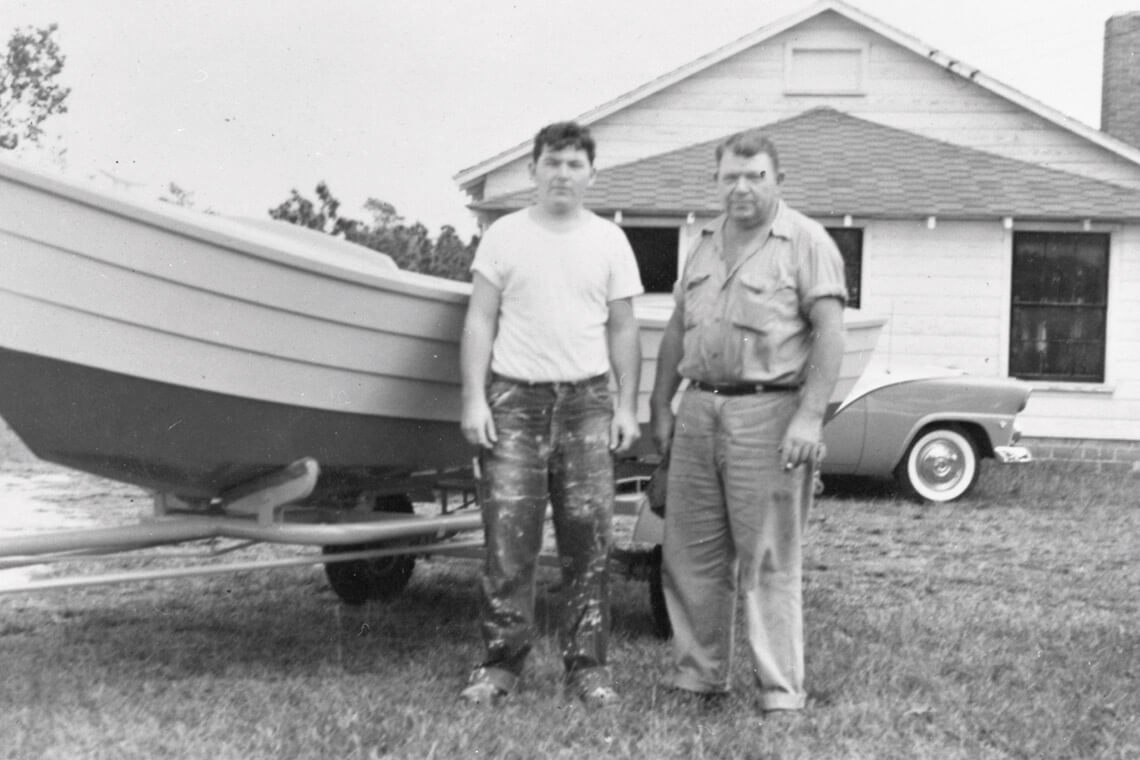
T.N. “Sims” Simmons, pictured with his son in 1955. Photography courtesy of Cape Fear Museum of History and Science, Wilmington, NC
At last May’s Wooden Boat Show in Beaufort, the 49th annual, held along Front Street and in the waters of Taylor’s Creek in that old port town, “No one was more surprised than I,” said amateur boatbuilder John Stanback of Marshallberg and Chapel Hill, who won Best in Sail Class for Betty Anne (named for his mother), his 16-foot-10-inch double-ended sailboat, a “Tirrik” based on traditional Scottish craft. Stanback amassed quite a collage of woods for his winning entry, including Douglas fir for her stems, keelson, and spars; thwarts of cherry; and rails, tiller, and benches of mahogany. “She sails beautifully,” Stanback says, “and her shallow draft is ideal for her home waters in Core Sound.”
My wife, Ann, and I have attended Elizabeth City’s Classic Moth Boat Nationals, held annually on the Pasquotank River (usually) the third weekend of September, watching the smart little moths glide, speed, and chase each other in heat after heat on the broad, bay-like waters.
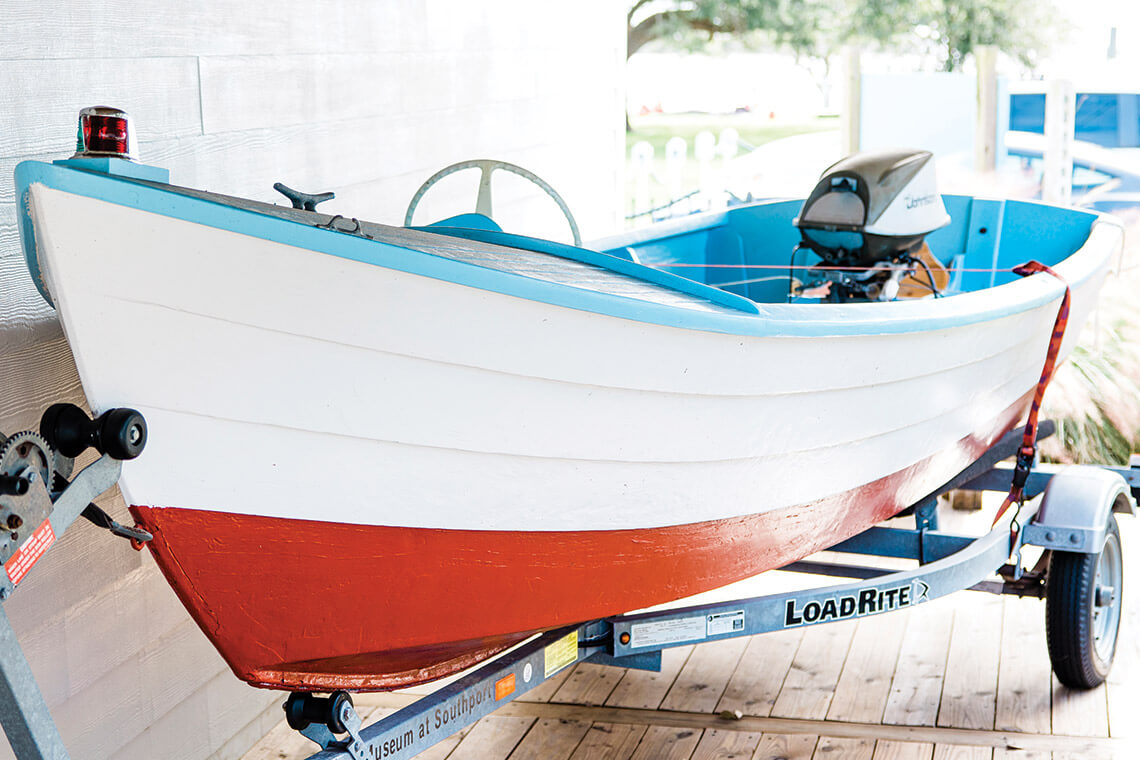
And we toured Southport’s large Wooden Boat Show last fall, which makes a grand maritime parade grounds out of the waterside flat above West Bay Street, near the vaunted Provision Company restaurant. We were delighted to encounter a host of Simmons Sea Skiffs there, the inlet-waves buster, including: Fair & Sweet of Oak Island, Mary Ellen of Southport, and even an original T.N. Simmons 1963 20-foot model.
Simmons built nearly 1,000 of his famed Simmons Sea Skiff at his shop near Myrtle Grove Sound.<br><span class="photographer">photograph by Matt Ray Photography</span>
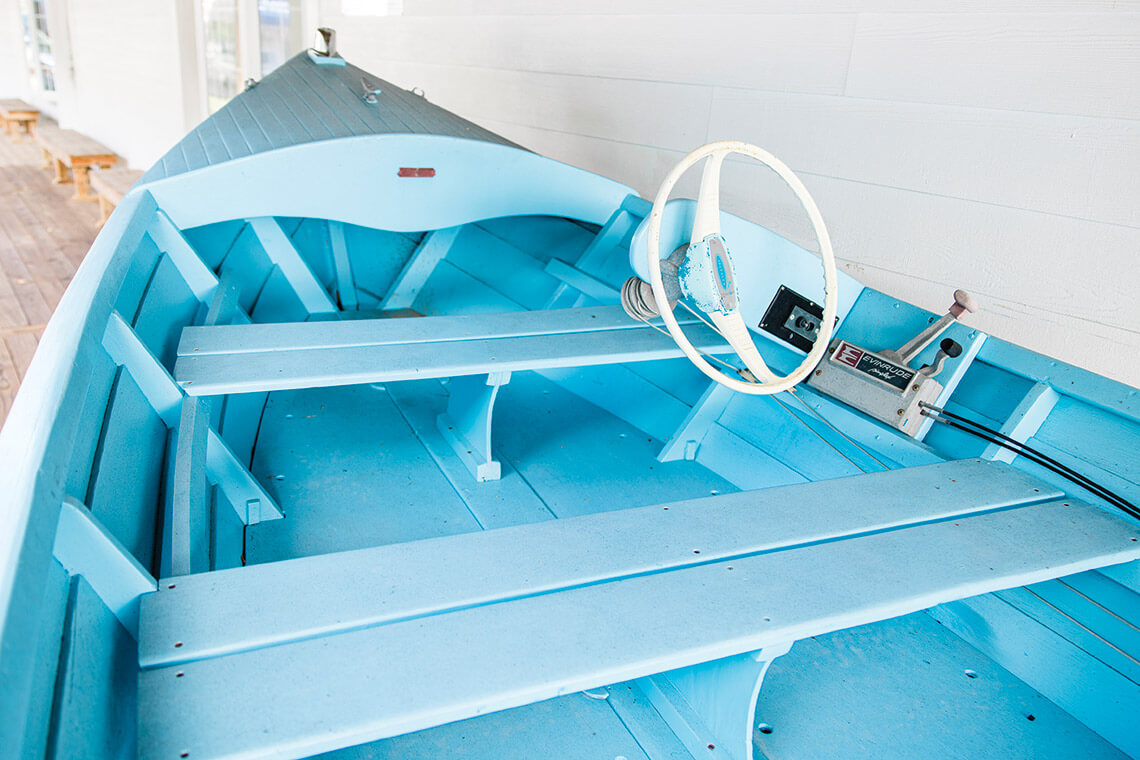
Present-day boat owners preserve the classic design. <br><span class="photographer">photograph by Matt Ray Photography</span>
The Opal, a Whitehall 16-foot, gaff-rig sailboat with a cypress hull, ash keel, and mahogany transom sat nearby. And, just around the Southport shore’s curve, in the water rested a Bluejacket, the PurDee, a smart and stylish cruising powerboat with a white oak exterior and a red oak interior, one of a number of this line designed by the late Tom Lathrop at his Mildred’s Cove Boatshop in Oriental.
As we wended our way home, up through the Green Swamp, on toward the hills, Ann and I saluted again all those who had built the old dugouts; the old wooden ships; the periaugers, sharpies, and shad boats; the shrimpers and pogie boats; and, above all, the skiffs. We thought aloud of how all those boats and their builders deserve our utmost respect, which is theirs every time we regard them, whether in backyard boatsheds, in our maritime museums, or shows in coastal towns. And, too, when we watch them ply our waters, under sail or engine power, and especially when we are in them, out on the water. We honor all the work our wooden watercrafts have done and can do, their stability, the beauty of their lines, and their steady and awesome ability to throw off lines and come ahead on.
The 16th annual Southport Wooden Boat Show will be held on November 1 at the Southport Yacht Basin. For more information, visit southportwoodenboatshow.com.
Get our most popular weekly newsletter: This is NC
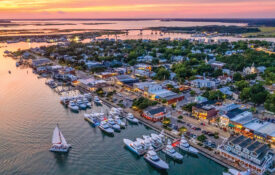
At both the turn of the century and today, Beaufort’s waterfront has attracted a hum of commerce and community. At its heart, a historic avenue tells that history, from the stately double-porched homes to the sound of ships announcing their arrival at port.