 Listen as the pages of the magazine come to life in the Storytellers podcast showcasing the voices of Our State writers. Each podcast episode features a writer reading their column aloud, allowing each distinct voice to shine. Click below to listen to Sheri read her column aloud.
Many North Carolinians understand that a vague reference to a “mess of greens” actually says quite a lot.
A “mess” of something is an imprecise measurement that good Southern home cooks recognize. Right up there with “pinch,” “dash,” “dab,” “some,” and “enough,” it’s not a weight or dimension, but an assessment in the eye of the beholder. Make that the holder. Most messes are handpicked or plucked from piles at the farmers market.
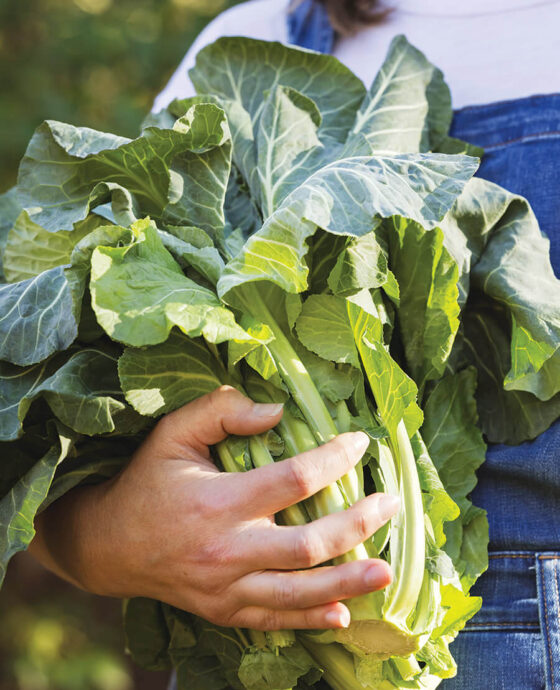
I gather up a mess of large, leafy greens in the crook of my arm, cradling them like a beauty queen’s prize bouquet. My grandmother gathered her mess du jour out of the garden in her outstretched apron or an enameled dishpan balanced on her hip. My working definition is that a mess is the amount necessary to meet the task at hand and satisfy the mouths that need feeding.
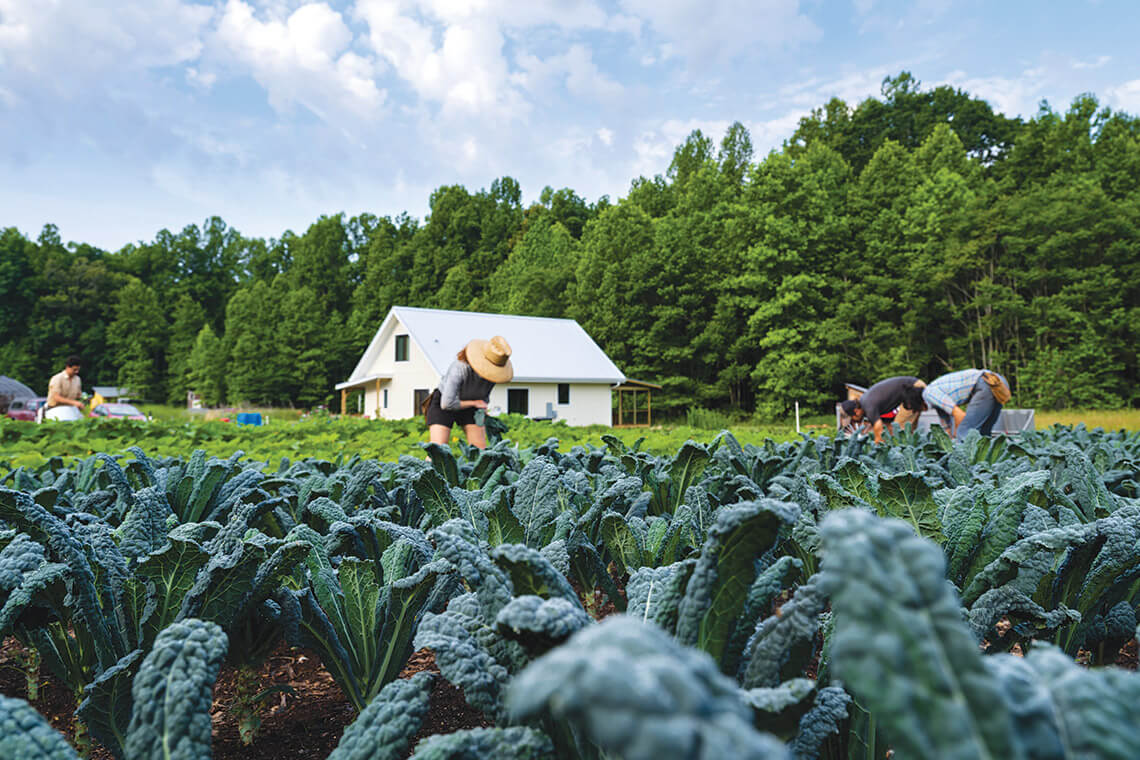
Our greens come in all shades and textures: Lacinato kale has dark, bubbled leaves (pictured at Ten Mothers Farm in Cedar Grove). photograph by Andrew Kornylak
A mess cannot be paltry, especially when it’s a mess of greens. Cooking reduces a mountain of greens to a mere molehill. Each time I trundle home an armload, I chuckle at the memory of a former cooking class student telling me that when she first sent her new, non-Southern spouse to the store to buy enough collards for a big meal, he bought only two leaves per person, based on the enormity of the raw leaf size.
The term “greens” is as descriptively vague as “mess.” No one type of green is ubiquitous across the state. Depending on where somebody lives, their mess might be collards, mustard, turnip, kale, or even foraged dandelions and creekside creasies. In eastern North Carolina, down around Ayden, it’s likely to be the locally beloved cabbage collards, an heirloom variety that grows in loose heads, lighter in color and flavor than others.
After judicious cooking, mustard greens softened like crushed velvet and kind words on my tongue.
I was raised mostly on mustard greens, my grandparents’ pick for their garden in Watauga County. Early on, I developed a love for their intriguing peppery bitterness that, after judicious cooking, softened like crushed velvet and kind words on my tongue.
My family splashed our greens with vinegar out of a sparkling cut-glass cruet that was as sure to be on our table as salt and pepper. Even when seasoned thoughtfully by the cook, eaters appreciate condiments on the table so that they can doctor their portion to their liking. Whenever I eat greens out, I scan the room for bottles of pepper vinegar and hot sauce to corroborate the validity of the establishment’s offer.
I didn’t cut my collard teeth until I was in college, likely first trying them at Mama Dip’s Kitchen in Chapel Hill. I didn’t figure out how to select and cook them — criteria I now apply to other types of hearty seasonal greens — until years after that first bite.
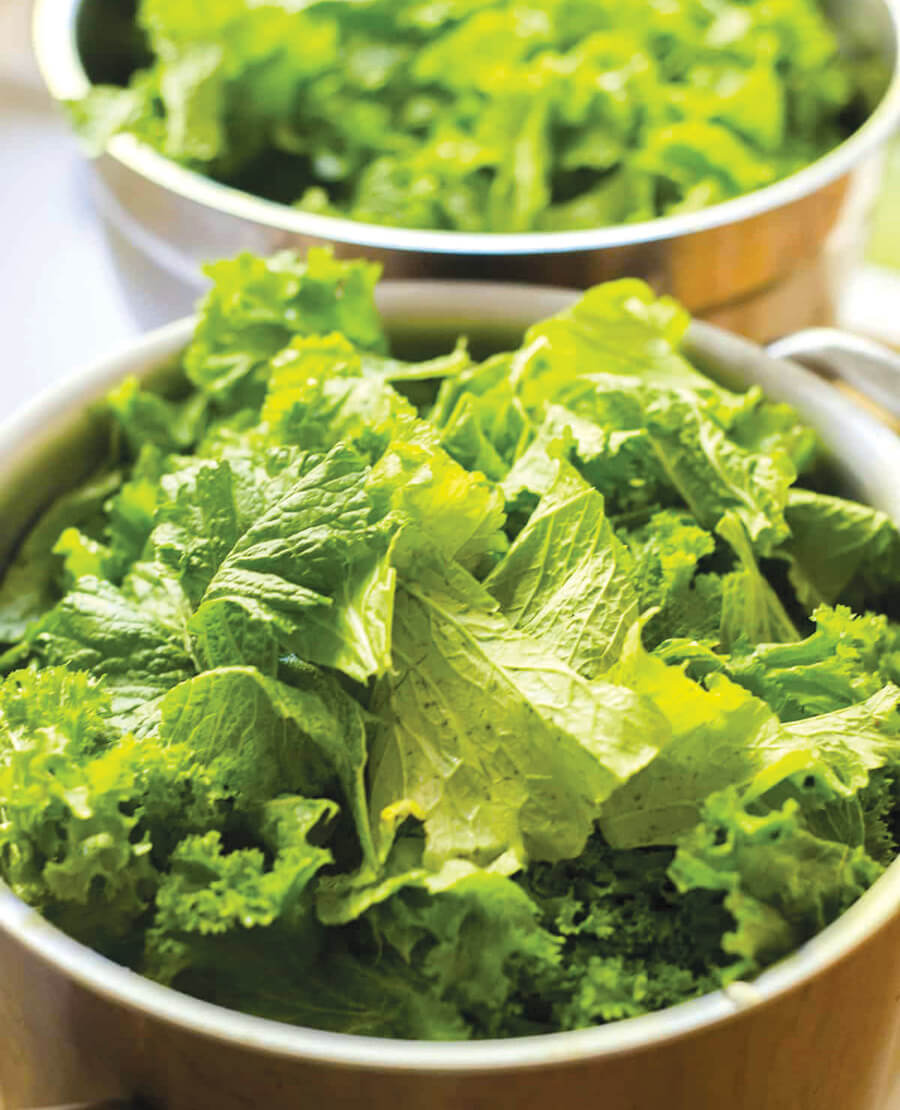
Mustard greens are known for their tennis-ball hue and frilled edges. photograph by Katelyn Owensby/Tastes Just Like a Memory
We can enjoy fresh greens all year in North Carolina, including through the winter, when some varieties peak. I crave the leathery leaves picked after a heavy frost, when beads of icy cold dew collect on the surface and shine like diamonds. People say the frost sweetens them. It’s true; when it’s cold, the plants convert some of their starches to sugars, making them more digestible.
Back home in my kitchen, I tumble my mess into a sink filled with cool water, swishing them gently to loosen the sandy grit they track in. To decide how to cook a given haul, I assess their tenderness by nibbling a raw leaf, not unlike a grizzled prospector in a black-and-white western assaying a gold coin by biting it. I might simmer the tough guys into submission in smoky potlikker so fully wrought that it tastes like soup. I often wilt the relatively tender ones with a quick spin in a hot skillet. No matter the approach, greens are always a delicious mess to be in.
photograph by Tim Robison
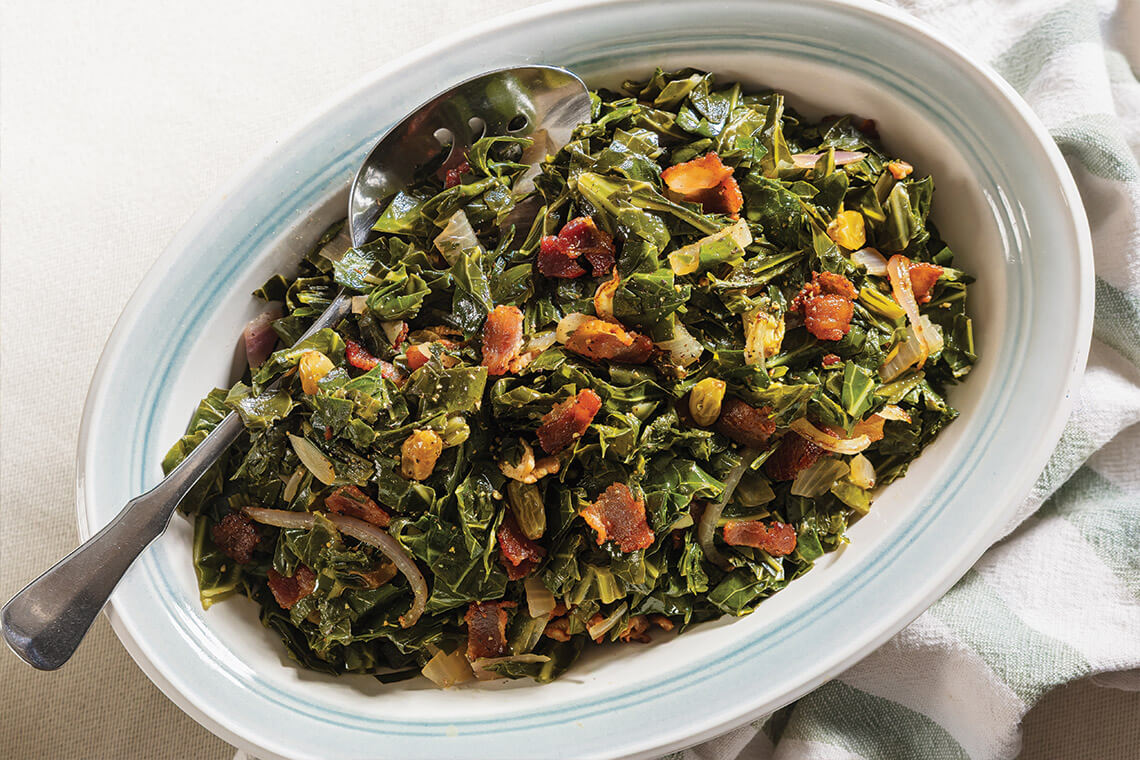
Beginner Greens
This recipe is a great way to introduce people to cooked leafy greens, whether it’s their first time eating or cooking them. These greens turn out tender, but remain vibrant — a revelation for those who’ve only seen greens that have been simmered in potlikker until soft and khaki-colored.
My favorite green for this recipe is Tuscan kale, also known as dinosaur or lacinato kale, although any large, leafy variety will work, so long as they are neither too thick and tough (such as leathery mature collards), nor too small and flimsy (such as baby spinach.) No two bunches of greens are the same, so be sure to taste them and adjust the seasoning to suit you before serving.
Yield: 8 servings.
⅓ cup golden raisins
6 tablespoons sherry vinegar, plus more
as needed
3 pounds kale, collards, turnip, beet, chard, and/or other similar large, leafy greens
2 slices thick-cut bacon, cut crosswise into ½-inch-wide pieces
1 to 2 tablespoons extra-virgin olive oil, if needed
1 large red onion, halved lengthwise and thinly sliced (about 2 cups)
4 garlic cloves, thinly sliced
1 tablespoon firmly packed brown sugar
½ teaspoon crushed red pepper flakes
Kosher salt and ground black pepper, to taste
In a small bowl, stir together the raisins and vinegar. Microwave on high for 30 seconds or until bubbling. Set aside for the raisins to plump.
Remove and discard any tough stems from the greens. Set aside and finely chop tender stems and set them aside. Cut leaves into thin ribbons. Fill a large bowl with ice water, add the shredded leaves, and swish to remove any grit. Drain leaves in a colander. It’s fine if a little water clings to them.
Cook bacon in a large, deep skillet or saucepan over medium heat until it renders its fat and becomes crisp, stirring often, about 20 minutes. Transfer the bacon with a slotted spoon to a small bowl and set aside, leaving behind drippings. If the bacon does not render at least 4 tablespoons of drippings, add enough olive oil to make up the difference.
Stir in onion, reserved stems, and a pinch of salt. Cook, stirring often, until softened, about 5 minutes. Stir in garlic, sugar, and pepper flakes. Cook, stirring often, until the garlic is fragrant, about 1 minute.
Add the shredded greens in large handfuls, stirring until they begin to wilt before adding more. Sprinkle with a pinch of salt and continue to cook, tossing with tongs until the greens are just tender, 5 to 8 minutes. Do not let them turn soggy or slick. If the greens get dry before they are done, add a splash of water.
Stir in the raisins and any standing liquid. Season with salt and pepper to taste. Adjust the brown sugar and vinegar, if needed. Sprinkle with the reserved bacon just before serving.
Serve warm or at room temperature.
Note: Consider this recipe more of a framework than an exact formula. You can swap things as you see fit, such as using another dried fruit or finely diced apple or pear in place of the raisins, or even a ripe, sweet, fresh tomato. You can skip the bacon and use all olive oil to keep it meatless. I sometimes add pine nuts or pecans for a bit of crunch.
print it