 Listen as the pages of the magazine come to life in the Storytellers podcast showcasing the voices of Our State writers. Each podcast episode features a writer reading their column aloud, allowing each distinct voice to shine. Click below to listen to Sheri read her column aloud.
When North Carolinians extol “the ties that bind,” they’re often referring to shared experiences. But when it comes to many of our favorite food traditions, I’m pretty sure they’re describing mayonnaise.
We Southerners have particular skill and proclivity in using mayo, not only as a condiment and sauce, but as an ingredient in everything from pimento cheese to deviled eggs to coleslaw to ranch — and even the occasional dessert. There’s potato salad, chicken salad, shrimp salad. So many salads. Dishes that we call salads are curious and contentious considering not all of them contain fruits or vegetables, and some feature Jell-O. But if we define a Southern salad as a concept on a sliding scale, then mayonnaise is the perfect thing to grease the skids.
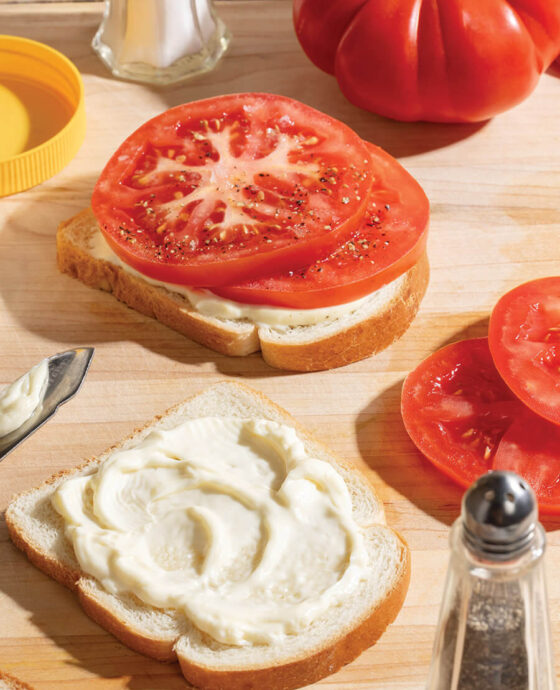
Then there are the sandwiches, most especially BLT and ’mater, the holy grails of summertime feasting. I can’t be the only one who pulls out bread and mayonnaise before even scanning the kitchen for what else is available to make a sandwich. If I have those two things, I’m already rounding third base and headed for home.
As a person who ponders and talks about food for a living, I’m used to fielding questions about favorite ingredients and recipes. I’ll brave most topics, even North Carolina barbecue. But I won’t debate mayonnaise brands. It’s too dicey. Most devotees are fiercely loyal to a given label, holding up their choice as evidence of their taste, decorum, and culinary prowess. They ceaselessly prefer the brand they grew up on. Most persistent food memories challenge us to replicate a prized family recipe, but hitting the mayonnaise mark requires nothing more than twisting a lid or tearing open a squeezy packet.
photograph by Tim Robison
I once listened to a Southern studies graduate student present her scholarly essay on the history of a beloved mayonnaise brand. People in the audience nodded in agreement as though listening to their favorite sermon, and I swear I heard more than one heartfelt “Amen!”
My favorite anecdote in her essay was the story of a woman who, upon learning that this brand was switching to plastic containers, begged the company for three of the original glass jars, complete with the labels and bright yellow lids. Her goal was to have a pristine jar for each of her three daughters so that, when her time came, each would have one to hold their portion of her ashes. I dearly hope that the meal that followed her service showcased an iconic Southern funeral food, such as aspic with homemade mayonnaise.
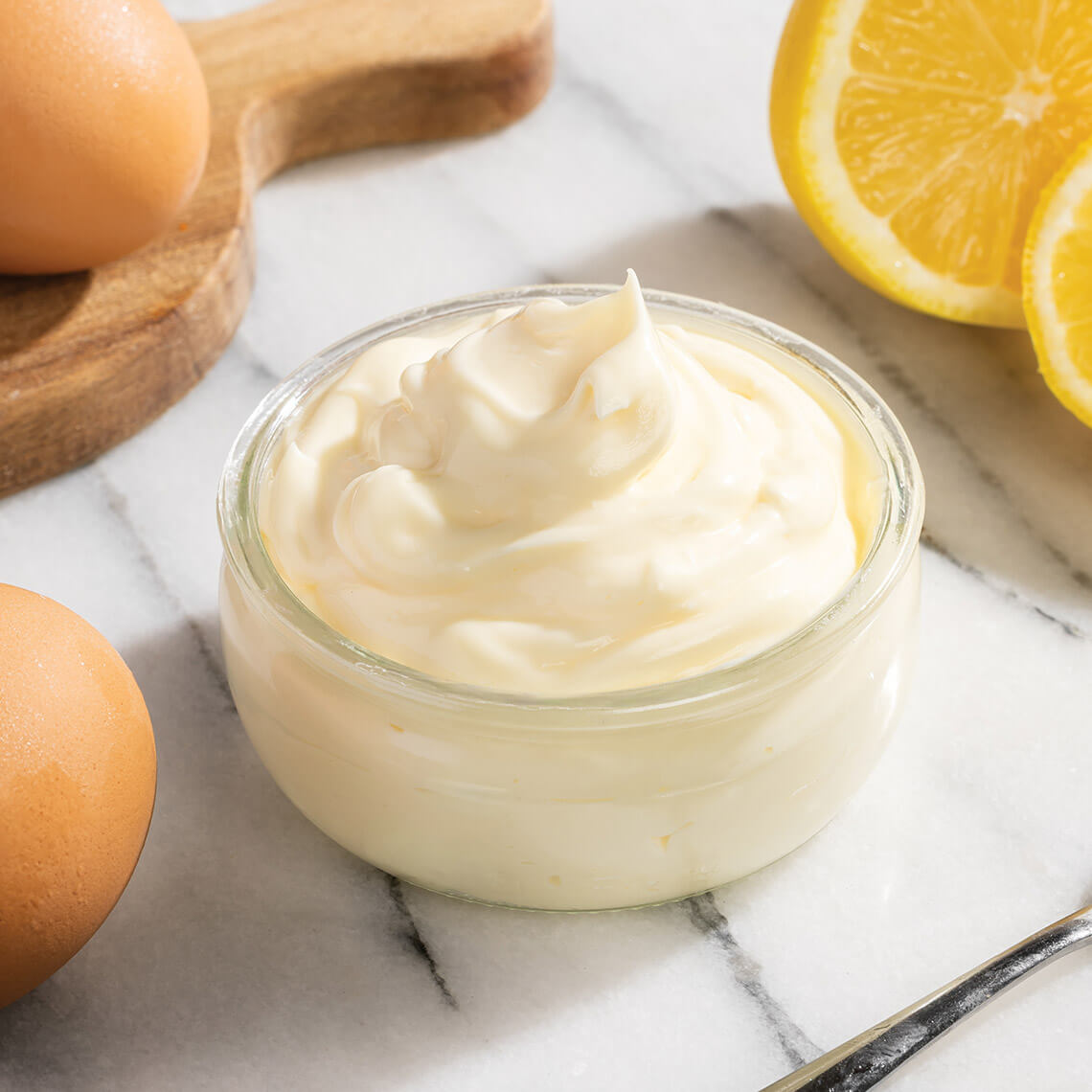
Despite always having store-bought jars in the fridge and at least one more waiting in the pantry like an understudy, I’ve tackled homemade mayo a few times. It’s singularly elegant and delicious, but not easy. Despite the conveniences of plug-in appliances, I quickly run out of the hands necessary to maneuver the moving parts. The process renders me awestruck by the cooks who, armed only with elbow grease, could whip up perfect mayonnaise in a sweltering kitchen at the height of tomato season.
What I love about mayonnaise — and mercy me, do I love the stuff — is that each new jar is a fresh start, full of promise, a legacy and luxury for about five bucks a pop. Many of my all-time favorite foods cannot be made without it, or at least not made to suit me. (Even though I can’t stop shaking my head over it, I respect that some folks loathe mayo with equal passion. I think they don’t know what they’re missing. They assure me they do.)
Yes, I am rah-rah for mayonnaise despite not caring about the team colors. I’m eager to spread the love.
Search for Spots
For this recipe, perfectly ripe bananas are as important as the mayo. Choose fragrant bananas that are fully yellow with large brown patches. The flesh should be very soft and easily mashed with a fork. Trim away any discolored areas and discard any strings. Avoid using frozen and thawed bananas (that might be just right for banana bread) because the flesh turns too dark and watery.
photograph by Tim Robison
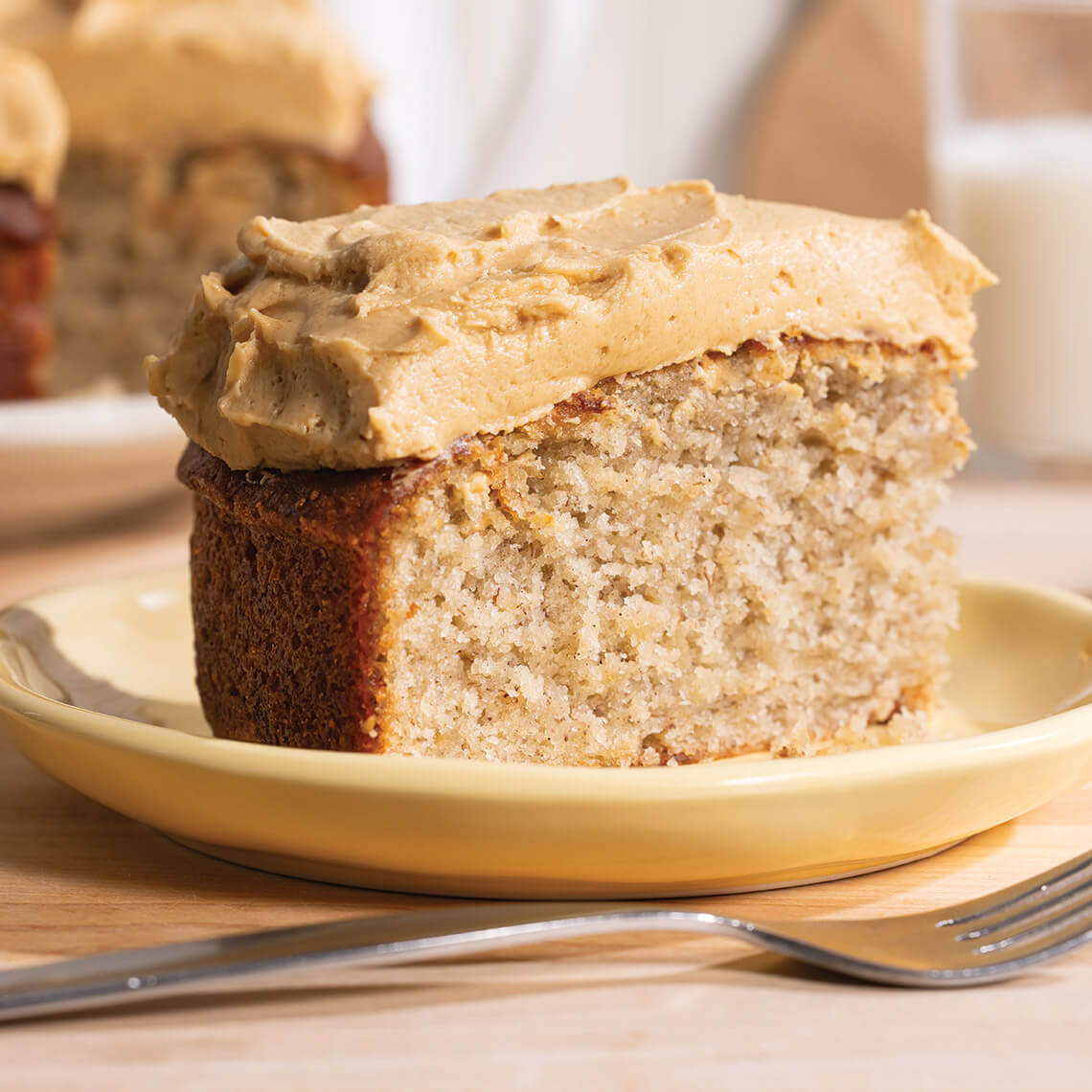
Banana Mayonnaise Snack Cake with Peanut Butter Frosting
Many of us are familiar with the vintage chocolate cake recipe that calls for mayonnaise. It sounds suspect, but when you consider that the main ingredients in mayonnaise are oil and eggs, things found in most cakes, it makes more sense. No one could possibly guess that’s what makes the cake so moist and tender, which made me curious whether mayo magic would work in other cakes. I grew up eating banana-and-mayo and banana-and-peanut butter sandwiches and enjoy both to this day. A few years ago, I learned that some people put all three of those things on one sandwich. That combination is the inspiration for this snack cake. Plus, people who love eating peanut butter straight from the jar will adore this frosting.
For the cake:
1 cup mashed bananas (2 to 3 very ripe bananas)
1 cup mayonnaise (not reduced fat)
1 cup granulated sugar
⅓ cup water
1 teaspoon vanilla
2 cups all-purpose flour
½ teaspoon baking powder
½ teaspoon baking soda
½ teaspoon kosher salt
½ teaspoon cinnamon
For the frosting:
1 cup creamy peanut butter (not the type that separates and must be stirred)
⅓ cup heavy cream
5 tablespoons unsalted butter, softened
¼ teaspoon kosher salt
1 teaspoon vanilla
1 cup powdered sugar, sifted
For the cake: Position a rack in the center of the oven and preheat to 350º. Mist a 9-inch round cake pan with nonstick spray. Line the bottom with a round of parchment paper and mist the paper.
In a large bowl using a spatula, stir together bananas, mayonnaise, sugar, water, and vanilla.
In a separate bowl, whisk together flour, baking powder, baking soda, salt, and cinnamon.
Add flour mixture to banana mixture; whisk until dry ingredients are just incorporated.
Scrape batter into prepared pan. Bake on center rack until a tester inserted into the middle of the cake comes out clean, about 50 minutes. Let cool in pan on a wire rack for 10 minutes. Remove cake from pan and place topside up on wire rack to cool completely before frosting.
For the frosting: In a medium bowl using a mixer on low speed, beat peanut butter, cream, butter, salt, and vanilla until smooth. Add powdered sugar and beat on low until smooth, scraping the bowl as needed. Use immediately or store in an airtight container in the refrigerator for up to 5 days. Return to room temperature and stir well before using.
print it