Put ramekins on a baking sheet. Bake for 25-35 minutes, until puffed and golden. Remove from oven, and let stand for 5 minutes. With a flexible spatula, remove strata to
Listen as the pages of the magazine come to life in the Storytellers podcast showcasing the voices of Our State writers. Each podcast episode features a writer reading their column
Listen as the pages of the magazine come to life in the Storytellers podcast showcasing the voices of Our State writers. Each podcast episode features a writer reading their column
In forests, chimneys, and caves across North Carolina, bats carry out silent, vital work — devouring pests, protecting crops, and defying their spooky reputations.
Listen as the pages of the magazine come to life in the Storytellers podcast showcasing the voices of Our State writers. Each podcast episode features a writer reading their column aloud, allowing each distinct voice to shine. Click below to listen to Eleanor read her column aloud.
North Carolina’s October evening skies quiver with papery wings in the final rush to fatten before winter: bats, with arms like umbrella undersides, with spines of fingers spread wide to catch the dark night air. Each spiky tooth gleams, ready to spear insects, not the tender necks of sleeping children. Through a hood of soft fur, black eyes sparkle, triangles of ears — some 10 times keener than our own — detect a moth’s flutter or the sound of their own voices calling back to them in the dark.
Katherine Etchison, a wildlife diversity biologist for the North Carolina Wildlife Resources Commission, pays close attention to our bats. She knows why our state is gifted with so many of the world’s only winged mammal.
“We are fortunate to have varying land cover and habitat types across our state, supporting a wide variety of bat species,” Etchison says. Seventeen, to be exact.
“Some bats live underground in caves and mines where few people venture,” she says, “or they sleep high in the trees, blending in with dead leaves or under bark.” Some hide beneath leaves on the ground, and others roost shoulder to shoulder in our chimneys and eaves.
Historically, western North Carolina’s cliffs and caves harbored the greatest bat abundance in the state. The town of Bat Cave, folded into the crags of the 14-mile canyon of Chimney Rock’s Hickory Nut Gorge, at one time harbored bats by the thousands. Millions of years before it was called Bat Cave, the rock there split, forming North America’s largest augen gneiss granite fissure — and bat homes. All along the gorge, cathedrals were fashioned for flittermice.
Now, a dangerous fungus that causes the often deadly White Nose Syndrome creeps from bat to bat as they sleep through winter’s cold. The hoary fungus thrives in the western part of the state and has cut the population of some species of bats by 90 percent.
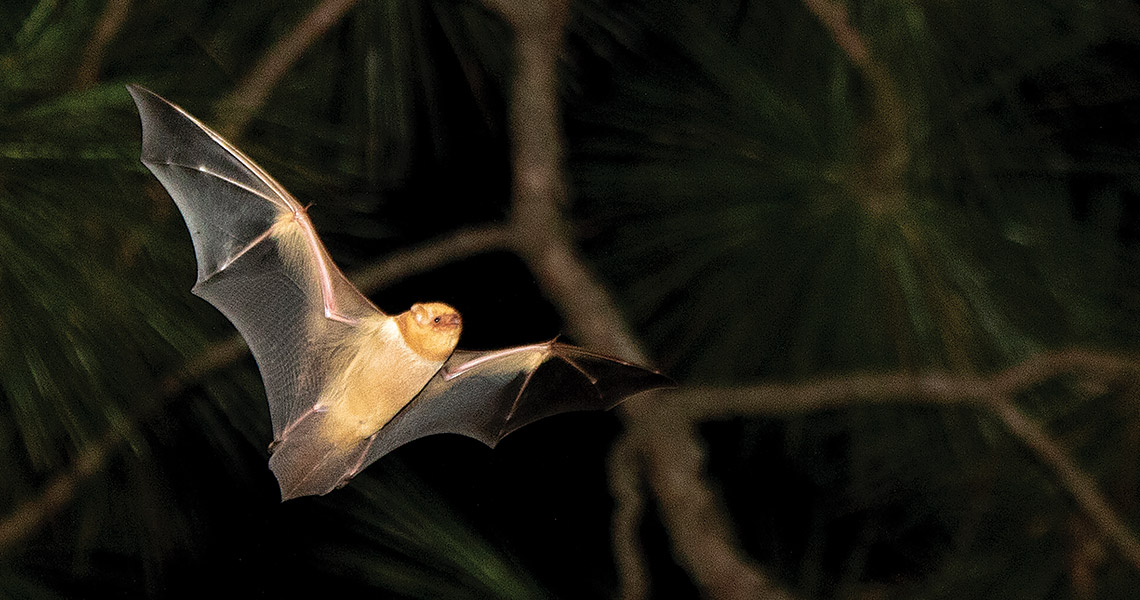
However, the bats on our coast that swoop and scoop insects year-round are safe from the pernicious disease because, Etchison explains, “winters on North Carolina’s Coastal Plain are mild enough to support insect populations.”
Bats have a voracious appetite: They can eat as much as their own body weight in insects in a day, capturing them by clicking in the darkness and waiting for the echo of their voices to bounce off their miniscule airborne meals.
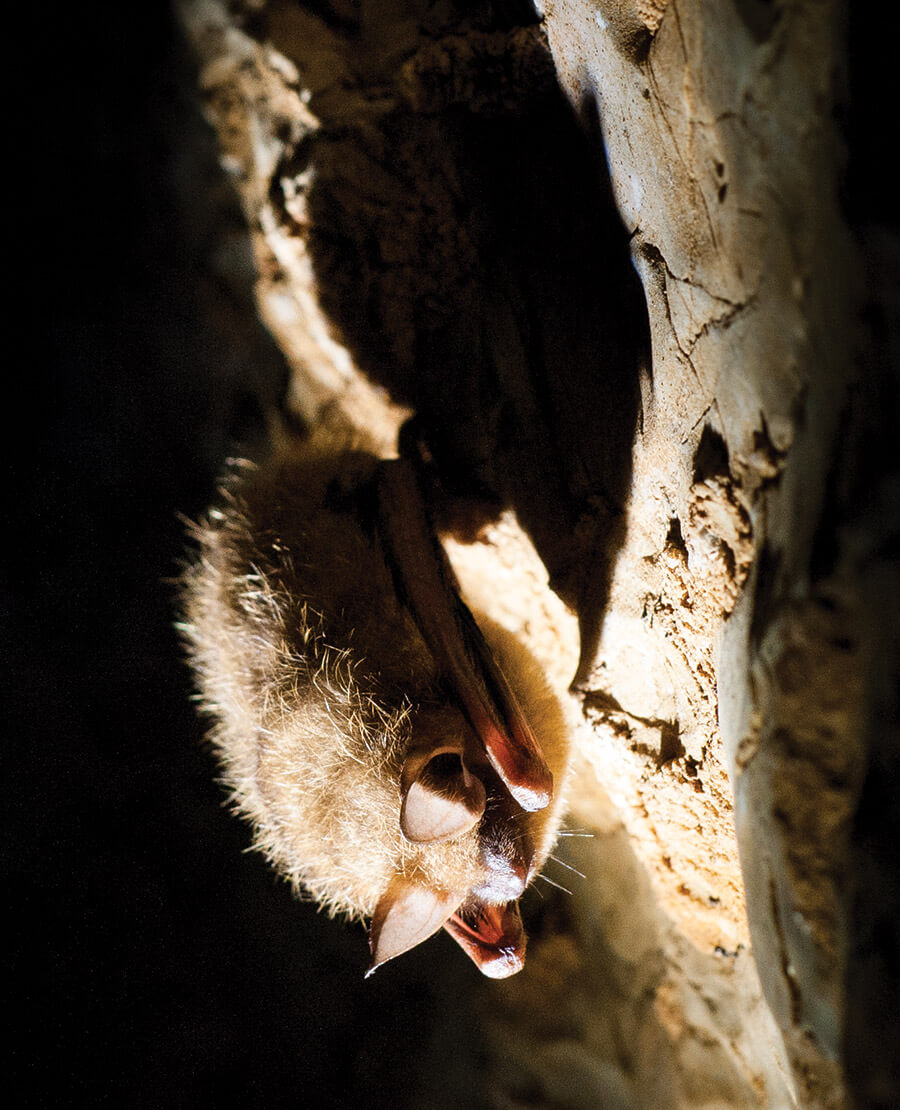
Tricolored bats find refuge in Linville Caverns when it comes time to hibernate from late fall to early spring. There, they find a stable environment, but also must contend with White Nose Syndrome, a disease that has decimated some species. photograph by Emily Chaplin
If we could hear them, they’d be as loud as fire alarms. If we could hear them, they’d be as loud as a rock concert in our yards each night. But, ever considerate, bats click outside the range that humans can hear, somewhere beyond dog whistles, beyond mice tucking their babies in to sleep, beyond the whirs of cicadas.
Their appetite works in our favor, Etchison says. “It has a great benefit to our crops and forests. A study even estimated that bats provide pest control to the corn industry valued at a billion dollars annually.”
Long-eared, silver-haired, free-tailed — bat names come as sleek and soft as their papery wings. Their reputation as fearsome night stalkers belies their truth as invaluable custodians of the dark. They may weigh less than an ounce — often much less — but they are mighty.
Get our most popular weekly newsletter: This is NC
At both the turn of the century and today, Beaufort’s waterfront has attracted a hum of commerce and community. At its heart, a historic avenue tells that history, from the stately double-porched homes to the sound of ships announcing their arrival at port.




 Listen as the pages of the magazine come to life in the