Put ramekins on a baking sheet. Bake for 25-35 minutes, until puffed and golden. Remove from oven, and let stand for 5 minutes. With a flexible spatula, remove strata to
Listen as the pages of the magazine come to life in the Storytellers podcast showcasing the voices of Our State writers. Each podcast episode features a writer reading their column
Listen as the pages of the magazine come to life in the Storytellers podcast showcasing the voices of Our State writers. Each podcast episode features a writer reading their column
A painter, a poet, a novelist, a middle school student, and many others have played a role in revealing the story — and the lessons — of the all-Black Pea Island Life-Saving Station.
Listen as the pages of the magazine come to life in the Storytellers podcast showcasing the voices of Our State writers. Each podcast episode features a writer reading their column aloud, allowing each distinct voice to shine. Click below to listen to Brad read his column aloud.
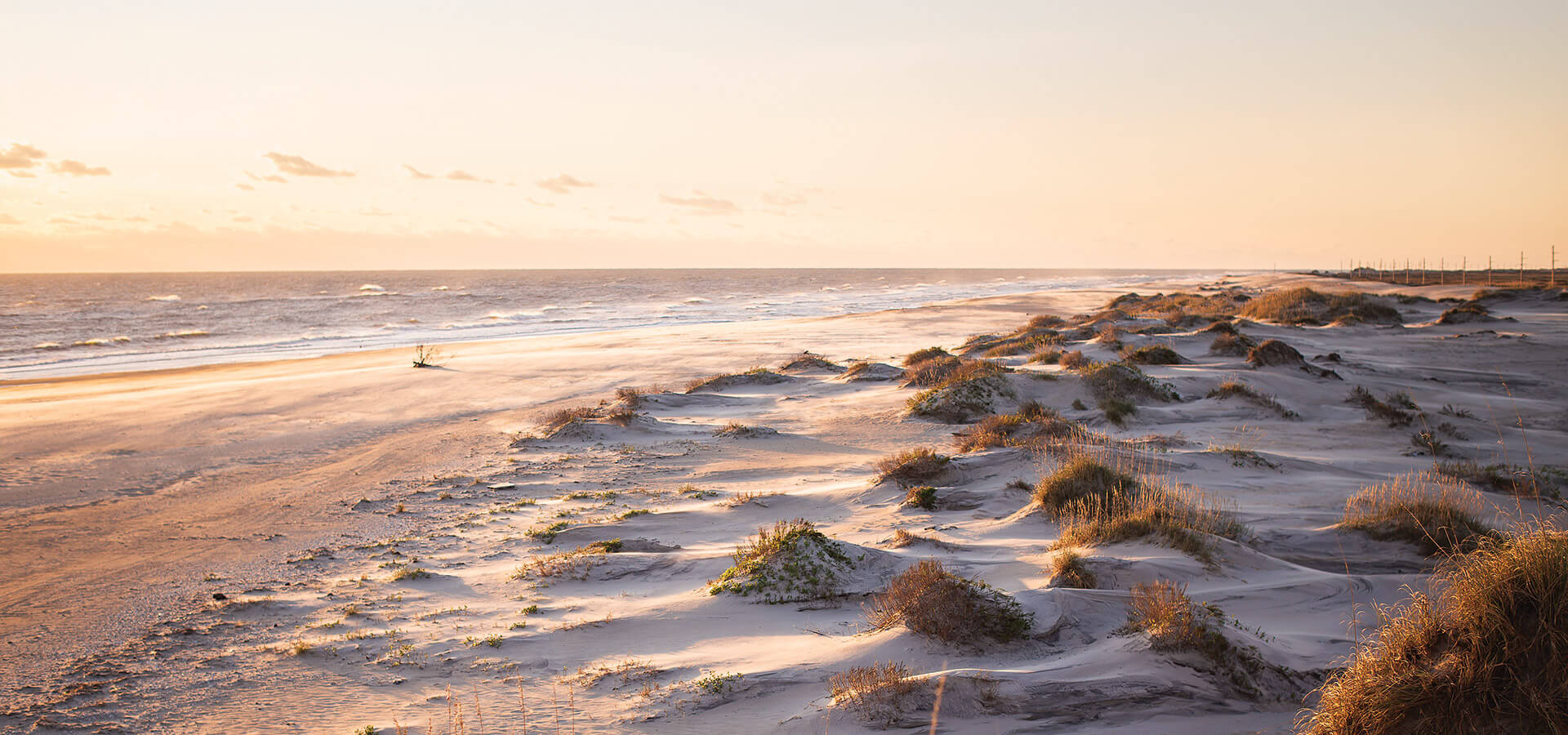
On the night of October 11, 1896, the E.S. Newman ran aground on the Outer Banks in a fierce hurricane. From the crow’s nest at the Pea Island Life-Saving Station, a lookout glimpsed a weak light to the south. The station’s keeper, Richard Etheridge, gave the order to launch a rocket. As its glowing embers cascaded back to earth, a faint red light answered in the distance.
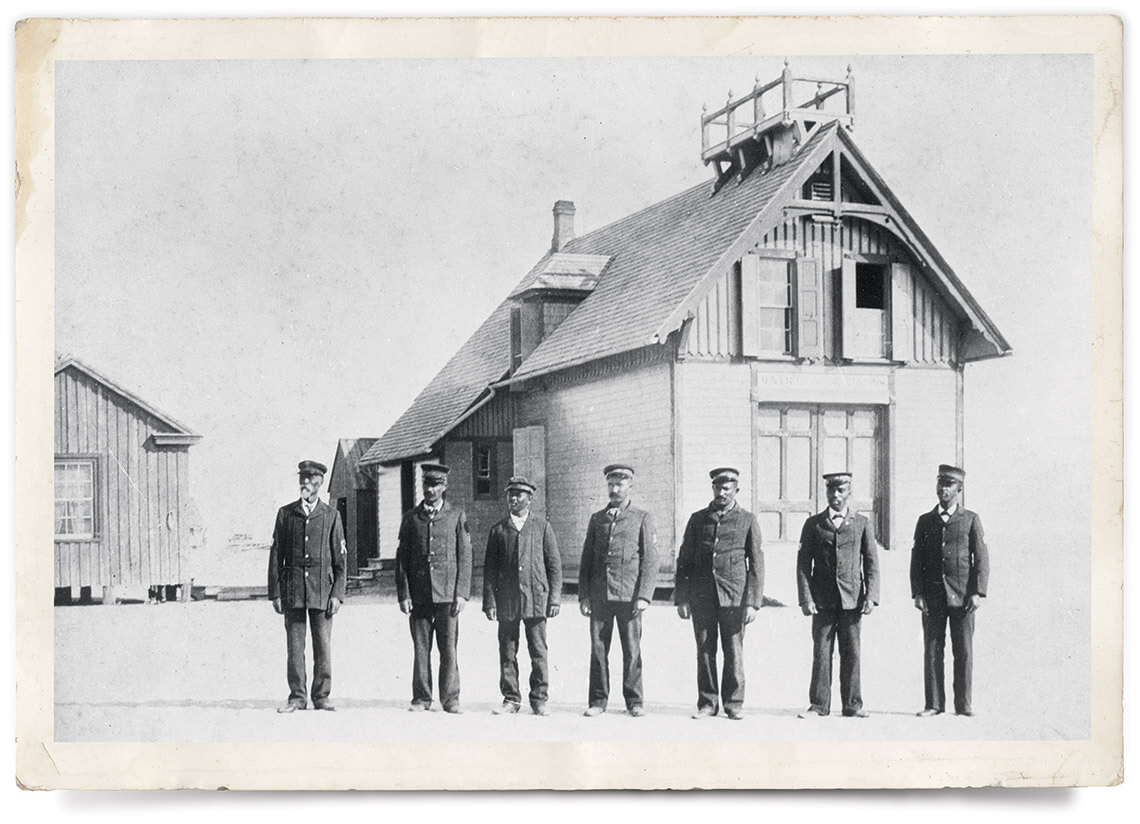
Led by Richard Etheridge (far left), the Pea Island Life-Saving Station was home to the nation’s first and only all-Black crew. The surfmen performed rescues in the treacherous waters around the Outer Banks. Photography courtesy of State Archives of North Carolina
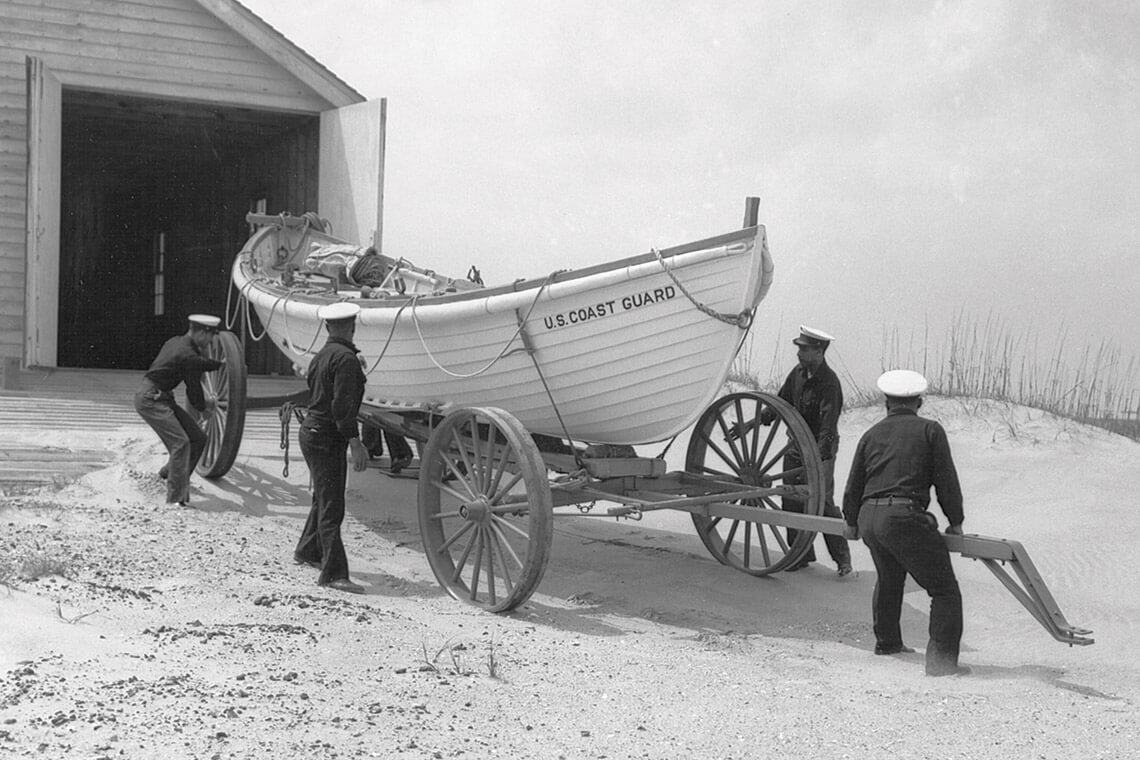
It took two hours for the surfmen to get their rescue cart down a narrow strip of beach that was already awash with pounding waves. Normal procedure would have been to shoot a line to the ship with a short-barreled cannon and use a breeches buoy — a sling with leg holes — to haul the crew to safety one by one. But there was no dry shore on which to mount the gun. Etheridge considered the problem. Then he asked for volunteers.
Surfmen Theodore Meekins and Stanley Wise donned their cork life preservers while other crewmen tied a length of rope between them, then attached a line held by the crew on the beach. The others watched as the two men disappeared into the churning sea.
• • •
When Joan Collins talks about Etheridge, there’s a familiar refrain: It’s complicated. Collins is director of outreach and education for the Pea Island Preservation Society, which tells the story of the all-Black crew that manned the Pea Island Station for more than 60 years. Etheridge was the first Black keeper in the U.S. Life-Saving Service and led the crew from 1880 to 1900.
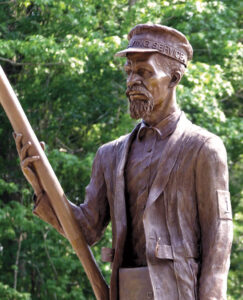
At Collins Park in Manteo, a life-size bronze statue honors the life and legacy of Richard Etheridge. Sculptor Stephen H. Smith also created the bronze statues at the Wright Brothers Monument. Photography courtesy of Stephen H. Smith, Sculptor
Etheridge was born enslaved but grew up in the home of his owner, John B. Etheridge, who treated him as a son. His mother, Rachel Dough, was enslaved, owned by another Outer Banks family. While his paternity is unknown, many believe that John Etheridge was his father. Richard was taught to read and write — which was illegal at the time — and learned the ways of the Outer Banks. He fished, hunted, and became a skilled boatman. In many ways, he was part of the family. Yet, in 1859, the elder Etheridge “gave” Richard to his younger son, Jesse.
It’s complicated.
When Roanoke Island was captured by Union forces in 1862, it became a refuge for men and women fleeing their enslavers — the first and largest freedmen’s colony in the state. Newly free men were given the opportunity to join the Union. Richard Etheridge joined the 2nd Regiment North Carolina Colored Volunteers (later reorganized into the 36th Regiment, U.S. Colored Infantry) and went on to fight in Virginia as a sergeant.
After the war, he returned to the Outer Banks, joining a Black and white team (known as a checkerboard crew) at the Bodie Island Life-Saving Station. He served at the lowest rank, No. 6 surfman. In the 1870s, 19 Black men worked at life-saving stations along the North Carolina coast, all of them restricted by their race to the lowest-ranking positions.
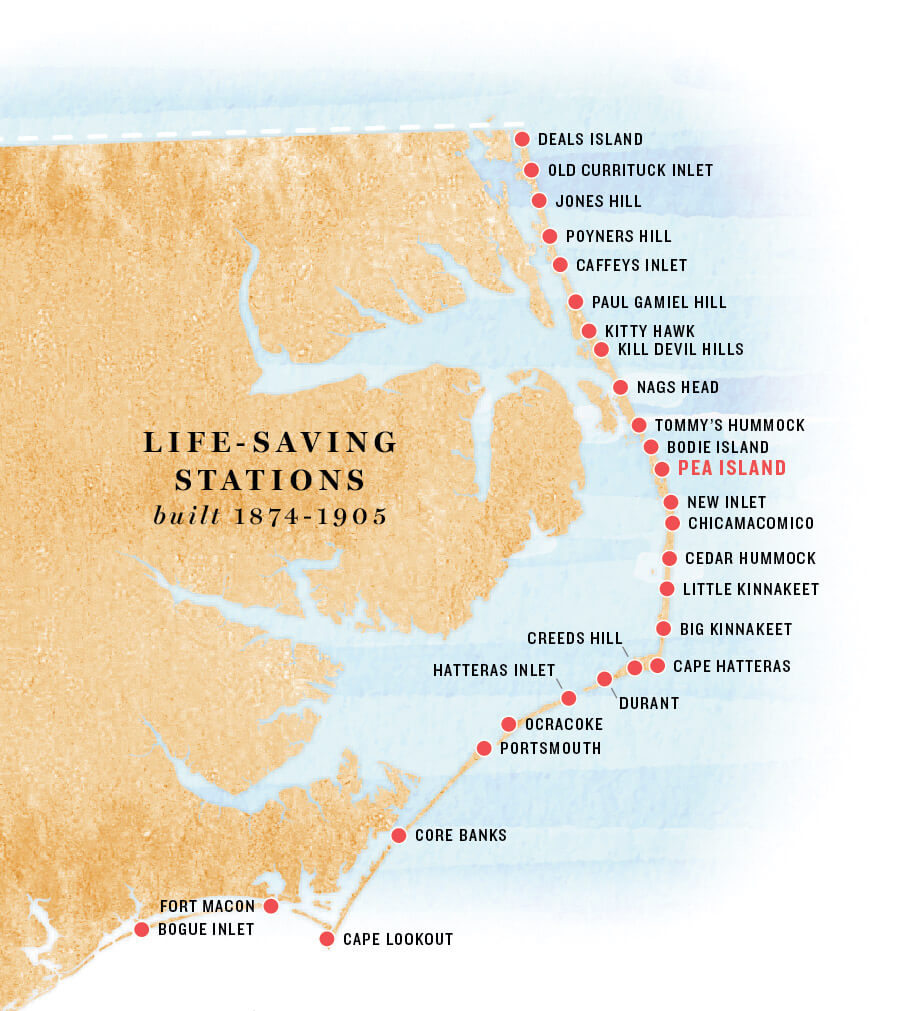
At the time, the district representing the 18 life-saving stations of the Outer Banks was in shambles. Ineffective management, patronage appointments, and a series of preventable maritime disasters had resulted in the loss of nearly 200 lives. An inspection by two superintendents resulted in a bold proposal: removal of the keeper at Pea Island. In his place, they recommended Etheridge, believing he would help restore the reputation of the life-saving service.
It was an unprecedented move that challenged accepted racial hierarchies in the South. Etheridge was sworn in, and the white members of the station resigned in protest. Those positions were filled by Black surfmen. Months later, the station mysteriously burned to the ground. Etheridge and his crew became an island unto themselves.
It’s complicated.
• • •
Meekins and Wise made their way to the E.S. Newman, ducking waves and dodging flotsam. When they reached the vessel, they passed the line to its crew, and the first rescue was made: the captain’s 3-year-old son. Over the next hour, the surfmen took turns making the harrowing journey until everyone was saved: the captain’s wife, six crew members, and, finally, the captain himself.
Members of life-saving crews were routinely honored with gold medals for rescues. For their actions on October 11, 1896, the surfmen at Pea Island received no recognition. And with that, their act of bravery slipped beneath the waves of time. So, too, did the extraordinary life story of their leader, Etheridge, and the legacy of an all-Black crew that helped save more than 200 lives. As it turns out, stories, like ships, have a way of disappearing in the Graveyard of the Atlantic.
• • •
Almost a century after the E.S. Newman rescue, undergraduate student David Zoby saw a painting at the North Carolina Aquarium in Manteo: a portrait of Etheridge alongside six Black men in front of a life-saving station. The artist, James Melvin, had based it on an old photograph. Intrigued, Zoby later told a fellow graduate student, David Wright Faladé, about the painting.
“Even then, how do you explain this all-Black crew at the end of Reconstruction and beginning of Jim Crow?” Wright Faladé says. “I was super drawn to that.”
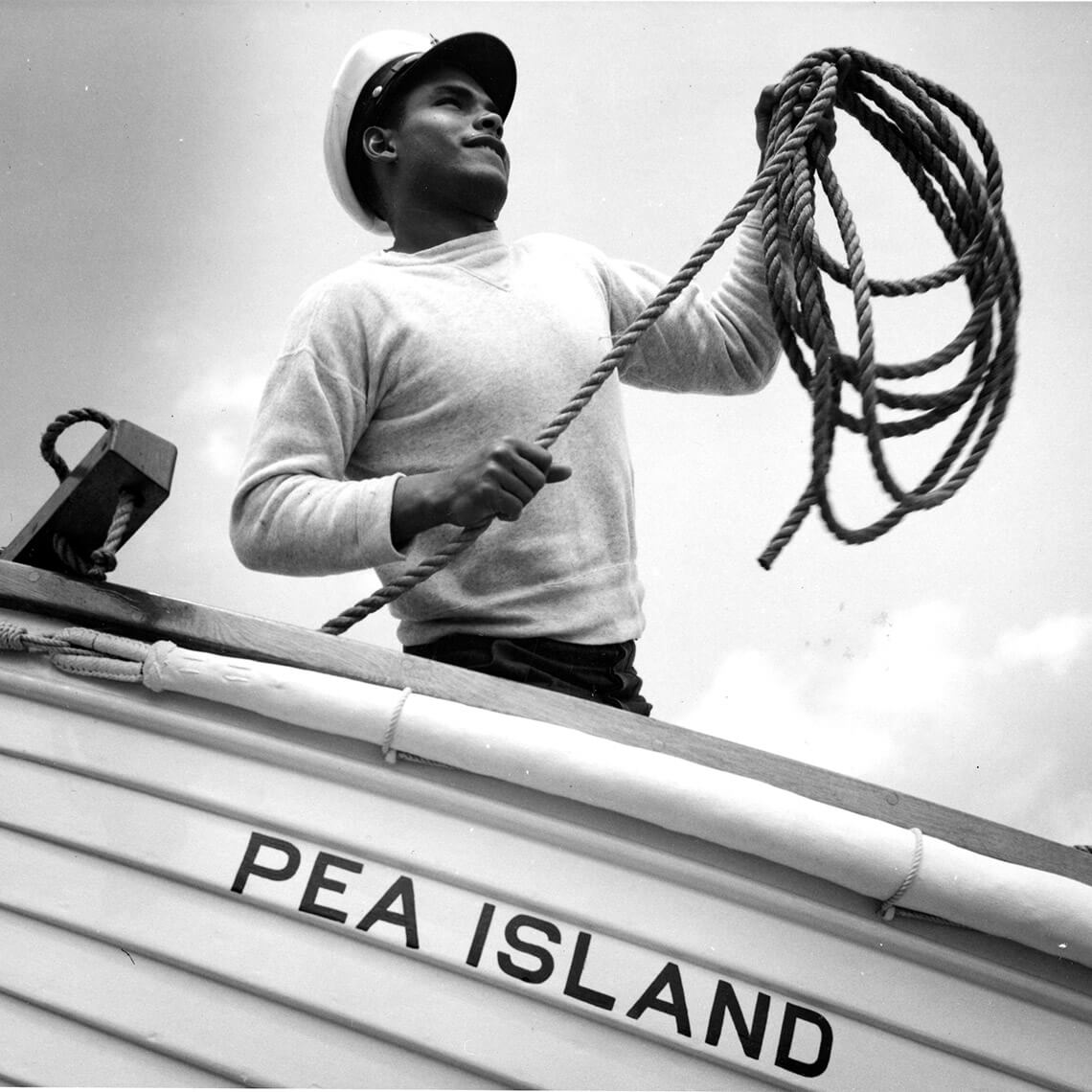
The Pea Island crew prepares their surfboat during a training exercise. photograph by USCG
Bit by bit, the two men began to uncover the history of the Pea Island Station with help from Wynne Dough, former curator of the Outer Banks History Center, and Coast Guard Commander Stephen Rochon. “It became clear to us we had something bigger,” Wright Faladé says.
After their petition to award posthumous gold medals to the crew was denied by the Coast Guard, Kate Burkhart, an eighth-grade student from Washington, North Carolina, saw a slideshow about the Pea Island crew put together by Zoby and Wright Faladé. She found it so affecting that she wrote letters to President Bill Clinton and Senator Jesse Helms, urging them to intercede on the crew’s behalf. It worked.
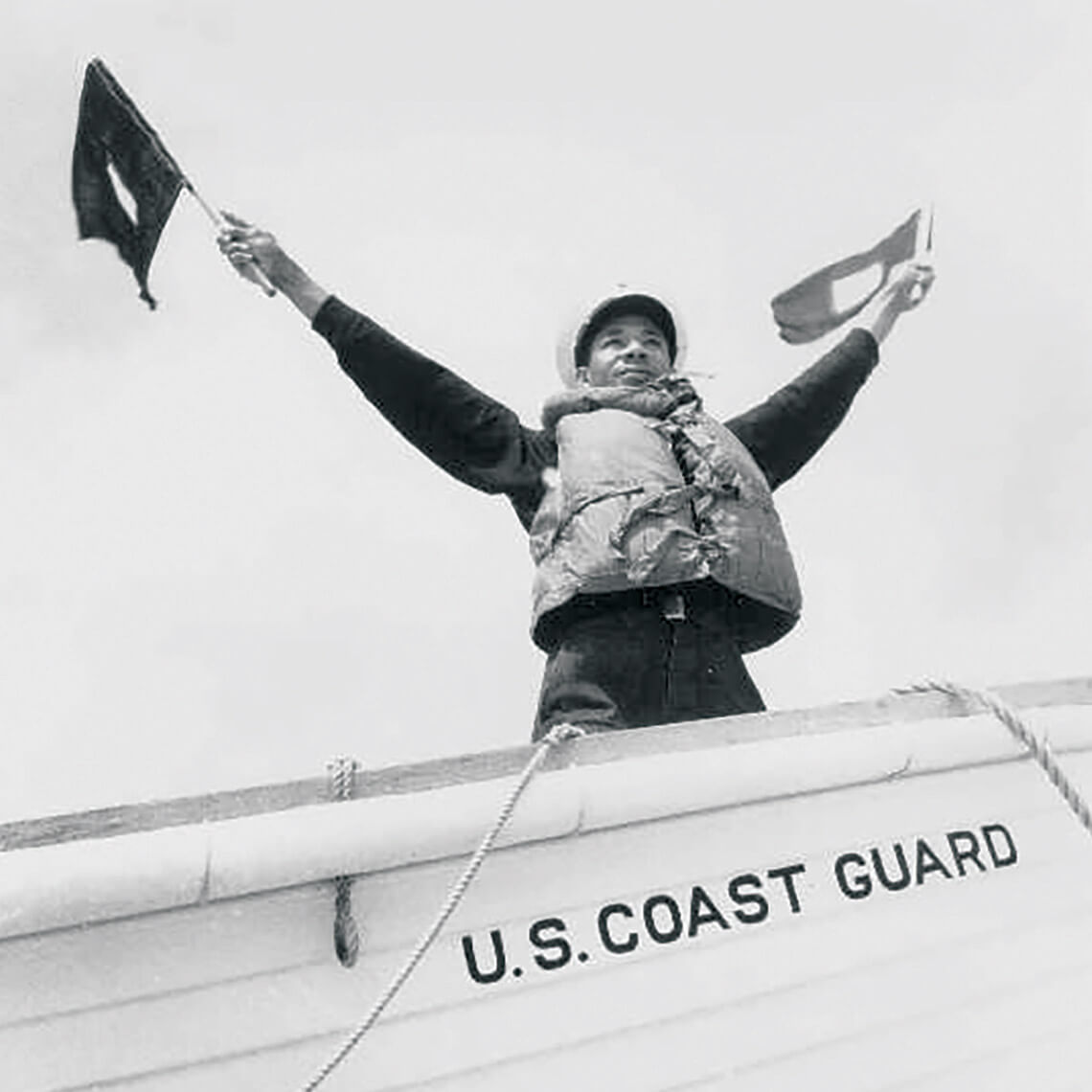
Surfman Fleetwood M. Dunston signaling during a training exercise. Photography courtesy of USCG
On March 5, 1996, the Coast Guard posthumously presented the men of Pea Island a Gold Lifesaving Medal. Suddenly, they were no longer forgotten. In 2000, Wright Faladé and Zoby published Fire on the Beach about the all-Black crew.
“History is often oversimplified,” Wright Faladé says. “This is a complex story with lots of dark, unknown corners.” Yet he sees the difficult history as a vital part of the story, helping us better understand the heroism of ordinary men during the Jim Crow era. “Despite a ton of pressure to submit on some level as things were becoming more repressive, they persisted,” Wright Faladé says. “They are claiming and owning their Americanness, and that’s the thing I hold on to.”
• • •
There are 400 combined years of Coast Guard service in Joan Collins’s family. Her great-great-uncle served with Etheridge on the Pea Island crew. Her grandfather was a substitute surfman at the Pea Island station. And her dad, Herbert M. Collins, served in the Coast Guard for 39 years.
“He grew up longing to be a surfman,” Collins says of her father. “But the only way he could enter the Coast Guard was as a mess attendant, shining shoes and serving food to officers.” Ultimately, he was reassigned to the post of his dreams: Pea Island. He served there for several years and locked the doors for the last time when the station was decommissioned in 1947.
Surfman Herbert M. Collins served at Pea Island for about seven years, including during World War II. When the station was decommissioned in 1947, he was the last to lock its doors. Photography courtesy of USCG
“It makes me sad, obviously, they had to endure what they endured,” Collins says of the Pea Island surfmen. “I didn’t know Etheridge, but I knew my father very well. He was proud of service, of country. He wasn’t one to boast or brag. They just wanted to be the best that they could be.”
In 2006, the cookhouse from the Pea Island Station was moved to Manteo, and in 2008, it was dedicated as a museum. Collins had become increasingly interested in her father’s story and that of Pea Island. She began to understand the station’s importance to her father and the Black community, who saw the surfmen as leaders and heroes.
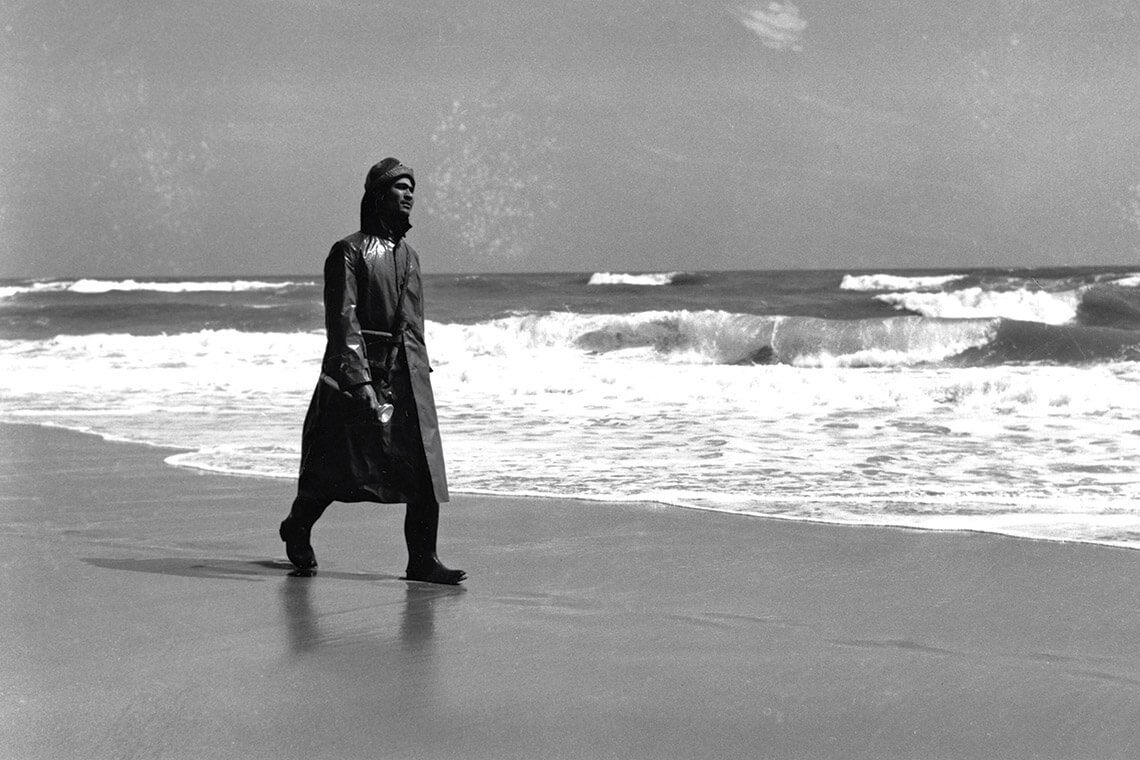
Surfman Ruben Gallop patrolling the beach. Photography courtesy of USCG
She also became personally invested in the story. “My journey has helped me find my own history,” she says. “I’d been living on the north end of the island for years and hadn’t heard the story of the freedmen’s colony.”
Her dad was there for the dedication of the museum in 2006 and was given the honor of opening its door, 61 years after locking up the station in 1947.
“I’m with my father when he opens that door,” Collins recalls. “And I understand that grin. He was unlocking his history.” And for once, that history wasn’t complicated. It was simple: These men deserved to be honored, remembered — and understood.
Get our most popular weekly newsletter: This is NC
From the expanses of needlerush at Cedar Island to the lush spartina feathering the shores of Bodie and Roanoke islands, our salt marshes are the threshold to a watery world — the heartbeat of our coastal ecosystem.



 Listen as the pages of the magazine come to life in the