Put ramekins on a baking sheet. Bake for 25-35 minutes, until puffed and golden. Remove from oven, and let stand for 5 minutes. With a flexible spatula, remove strata to
[caption id="attachment_202993" align="alignright" width="400"] Matt Tooni[/caption] Whether Matt Tooni plays the native flute for visitors to the Museum of the Cherokee People, tells the traditional Cherokee story “Wolf Wears Shoes”
[caption id="attachment_202993" align="alignright" width="400"] Matt Tooni[/caption] Whether Matt Tooni plays the native flute for visitors to the Museum of the Cherokee People, tells the traditional Cherokee story “Wolf Wears Shoes”
SPONSORED BY Cherokee Travel - Eastern Band of Cherokee
Matt Tooni Photography courtesy of Cherokee Travel - Eastern Band of Cherokee
Whether Matt Tooni plays the native flute for visitors to the Museum of the Cherokee People, tells the traditional Cherokee story “Wolf Wears Shoes” to students on a field trip at the Great Smoky Mountains National Park, or teaches fifth and sixth graders the Cherokee language at New Kituwah Academy Elementary, he’s working to preserve Cherokee culture and extend it into the future.
The surroundings of Tooni’s Cherokee home base look a lot like other places in the North Carolina mountains — hilly and forested, with peaks in every direction. But this is a sovereign nation, separate and unique. As a teacher, flutist, artisan, and storyteller, Tooni encourages visitors to look deeper than the town’s beautiful landscape. “Learn a piece of our history, hear some of our stories, or at least learn some of our language — especially our language.”
Tooni’s stories were born here in the Great Smoky Mountains, where opportunities to learn about the Cherokee people’s ancestral homeland abound. Read on for his local recommendation of ways to experience one of our state’s greatest cultural and natural resources.
A message from our sponsor:
Find Your Spirit in Cherokee
Plan an escape to Cherokee, N.C. where ancient traditions meet breathtaking beauty. Hike misty trails, explore waterfalls, and experience authentic Cherokee culture. Nestled in the Smoky Mountains, it’s your gateway to adventure, heritage, and unforgettable memories. Plan your getaway today
Opened in 1948, the Museum of the Cherokee People is one of the oldest continuously operating tribal museums in the United States. <br><span class="photographer">Photography courtesy of Cherokee Travel – Eastern Band of Cherokee</span>
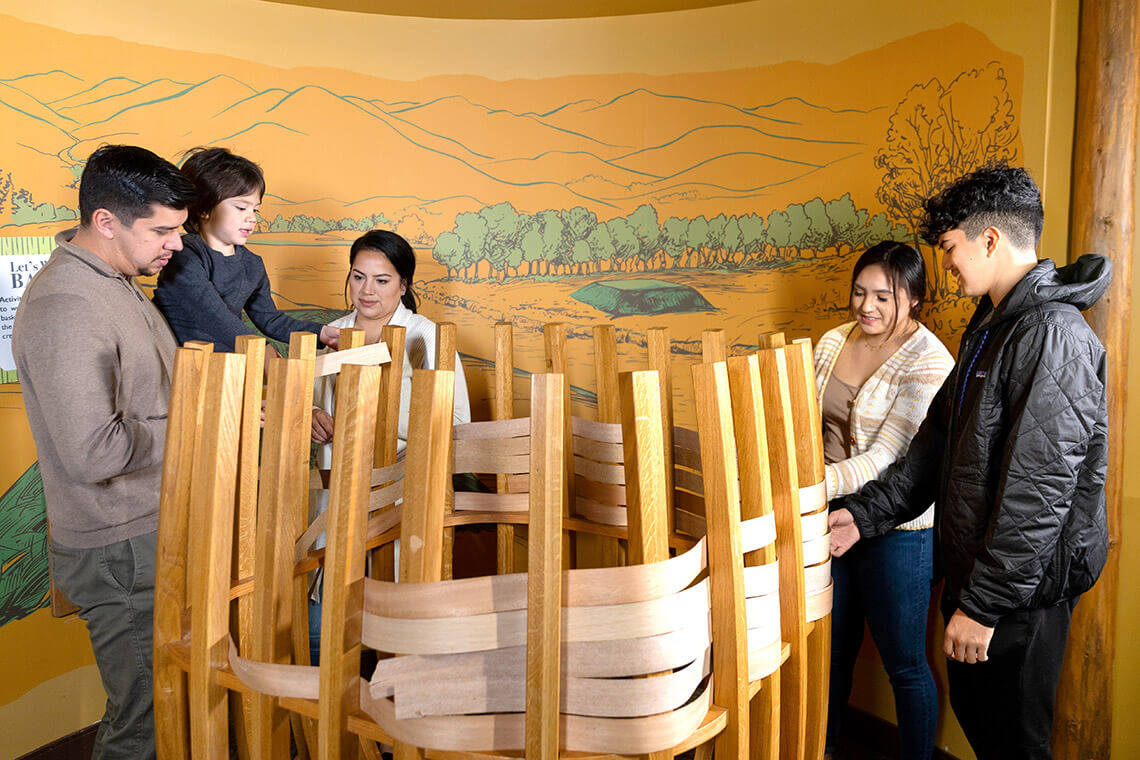
Learn about Cherokee traditions at the museum, like basket-weaving. <br><span class="photographer">Photography courtesy of Cherokee Travel – Eastern Band of Cherokee</span>
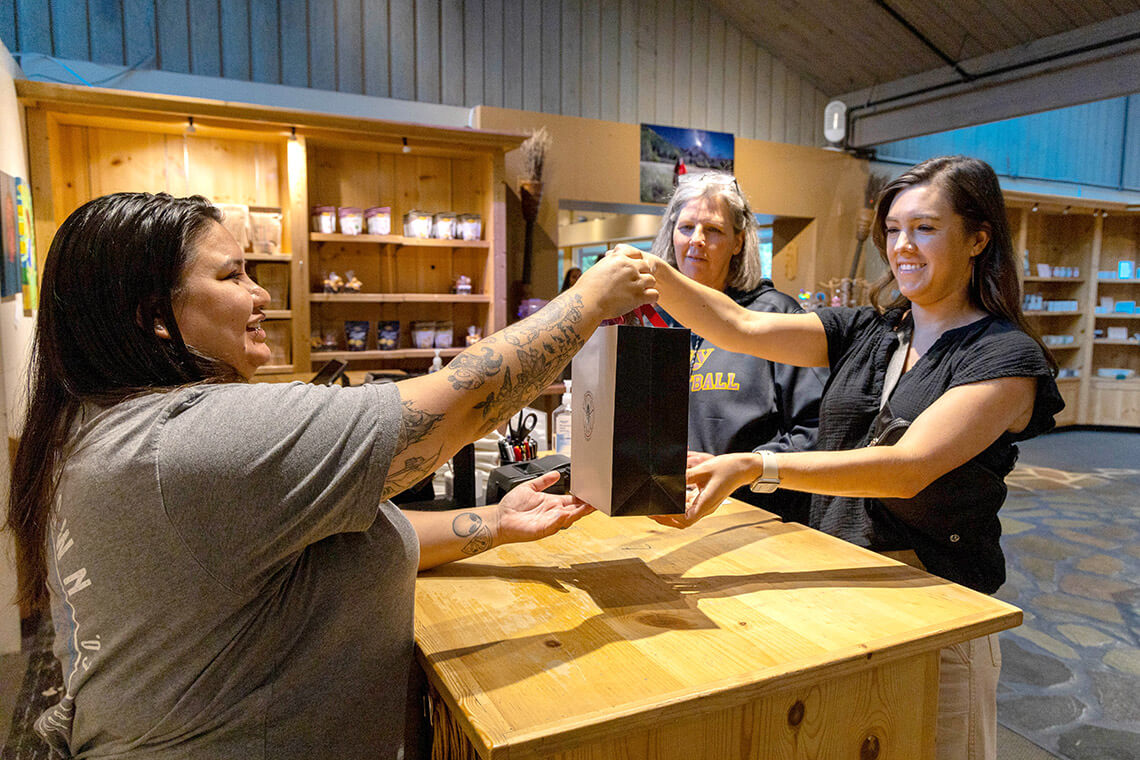
Shop for art, apparel, books, and more made by Cherokee artists at the Museum of the Cherokee People’s store.<br><span class="photographer">Photography courtesy of Cherokee Travel – Eastern Band of Cherokee</span>
Tsalagi (tsah-lah-kee): Cherokee
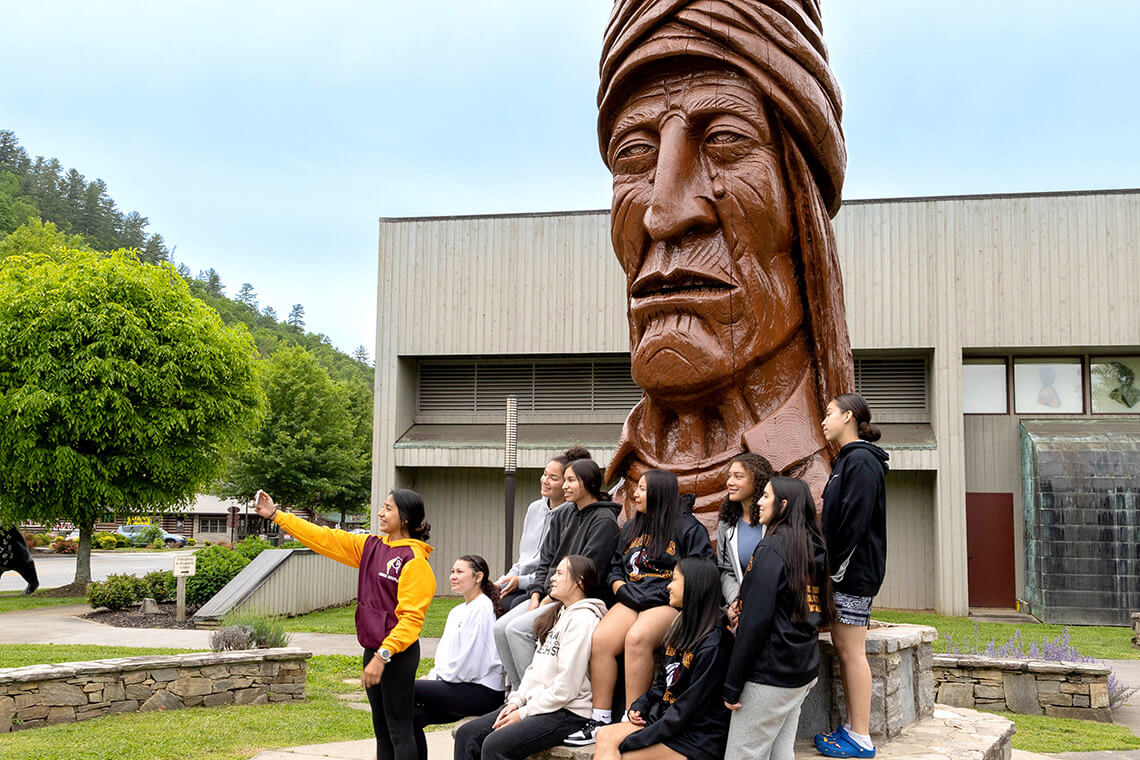
For 76 years, the Museum of the Cherokee People has shared a history spanning millennia. Located on the Qualla Boundary — the sovereign land of the Eastern Band of Cherokee Indians — it’s the perfect place to begin your visit. Here you can immerse yourself in the history and culture of the Cherokee people through exhibitions like sov·er·eign·ty: Expressions in Sovereignty of the Eastern Band of Cherokee Indians, on display until December 29, 2025.
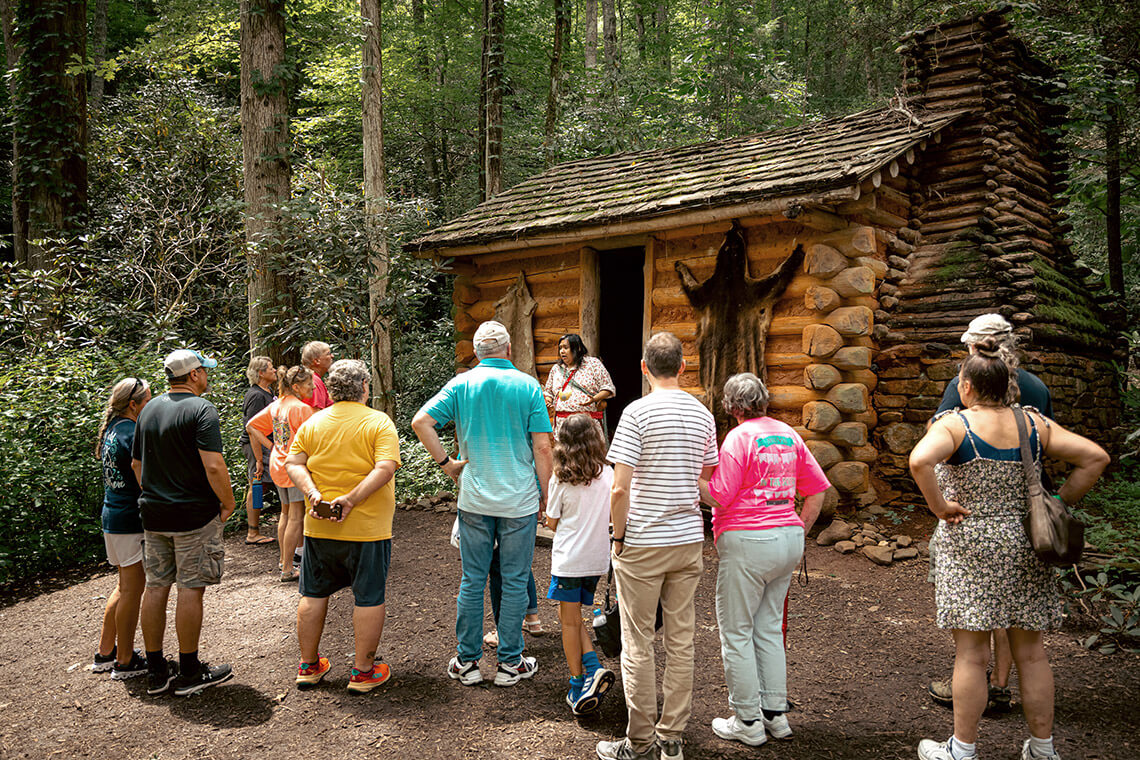
Enter historical buildings and watch traditional demonstrations at the Oconaluftee Indian Village. Photography courtesy of Cherokee Travel - Eastern Band of Cherokee
Tooni began to appreciate his heritage while working at Oconaluftee Indian Village after high school. In this open-air history museum, you’ll step into life in an authentically replicated 18th-century Cherokee village.
In the village, you can view demonstrations by artisans practicing traditional skills like basket weaving, pottery, wood carving, and beadwork. Inside the village’s structures, like the council house, learn about Cherokee family structure and tribal government. And make sure to join the crowd around the Village Square to watch traditional dances like the Quail Dance and learn more about their significance.
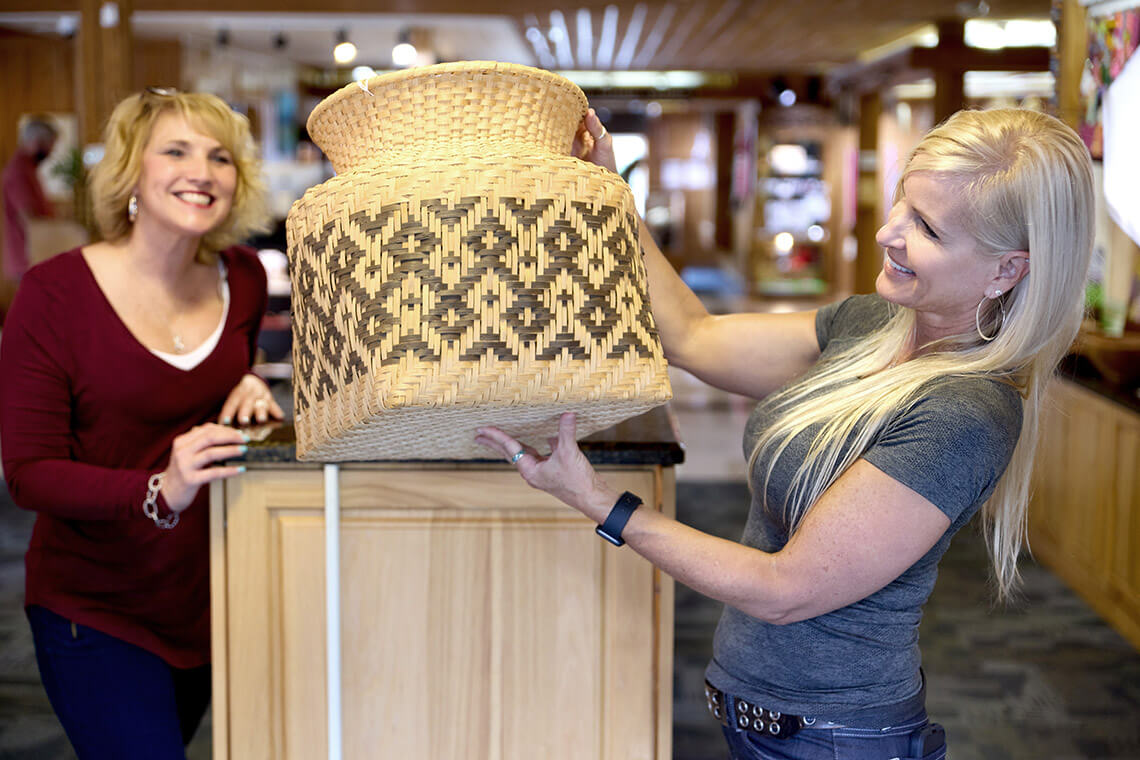
Shop for artisan-made crafts, gifts, and keepsakes at Qualla Arts and Crafts Mutual. Photography courtesy of Cherokee Travel - Eastern Band of Cherokee
A large and varied collection of arts and crafts made locally by Qualla Arts and Crafts Mutual co-op members, all enrolled members of the Eastern Band of Cherokee Indians, fills the oldest Indigenous American artists’ cooperative in the country. Browse the wood carvings of Davy Arch, baskets woven by Gabriel Crowe, colorful beadwork created by Alice Groenewold, acrylic paintings by Aaliyah Swimmer, and more in this celebration of craftsmanship and creativity. You can also shop the co-op store for handmade quilts, pottery, carvings and jewelry.
Stretch your legs or bring your bike to explore the Oconaluftee River Trail. Photography courtesy of Cherokee Travel - Eastern Band of Cherokee
The trailhead of the wide, fairly level gravel path lies behind the Mountain Farm Museum. Here, a collection of log structures built in the late 1800s and early 1900s from different parts the park arearranged to represent a typical farm of the region.
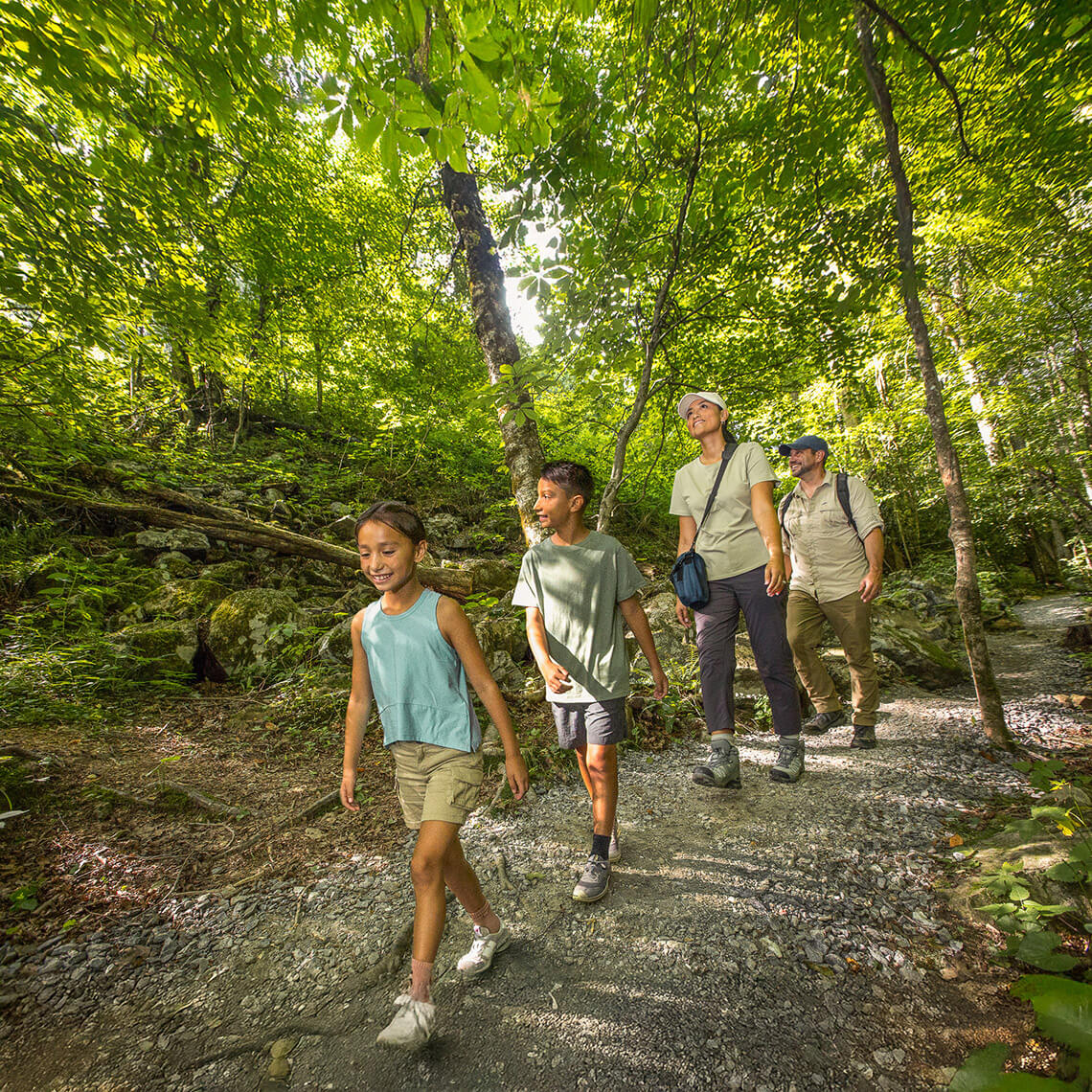
Pause to read the informational signs along the shady trail that explain Cherokee beliefs and traditions and include lore about the surrounding landscape.
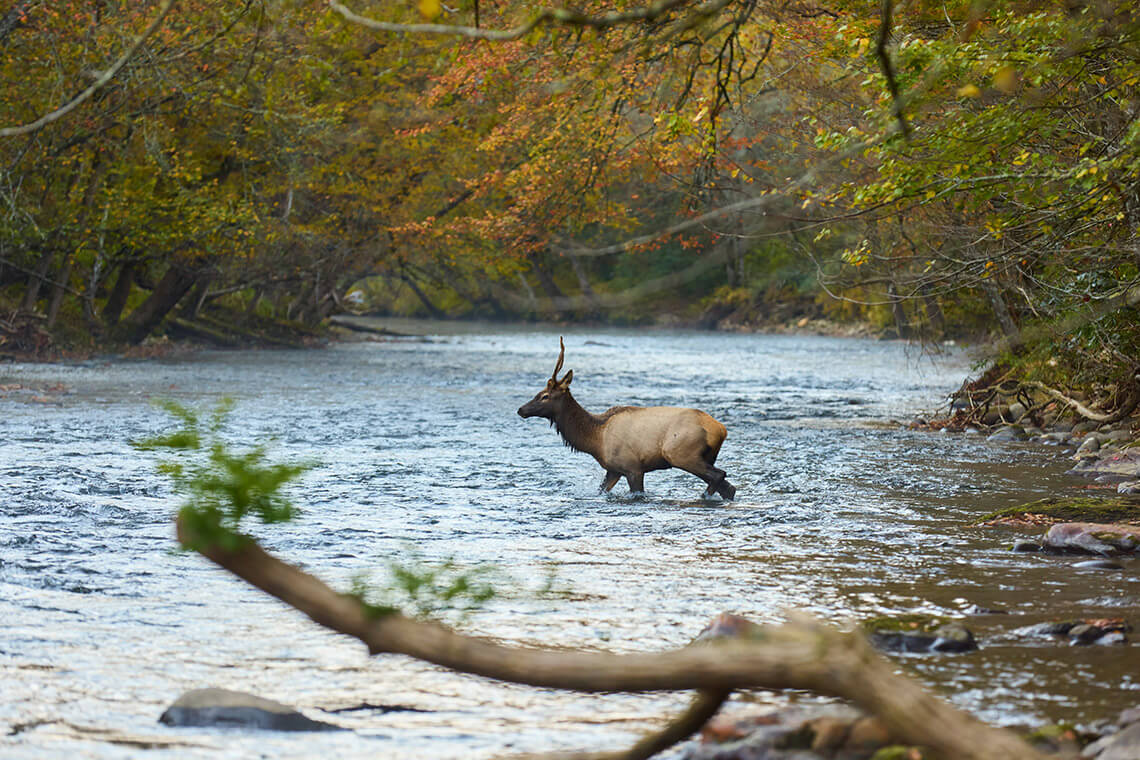
In the serene landscapes surrounding the Oconaluftee Visitor Center and Cataloochee Valley, elk can often be spotted. Photography courtesy of Cherokee Travel - Eastern Band of Cherokee
Awi Equa (ah-wee aye-gwah): Elk
At one time, large herds of elk roamed the southern Appalachians, but populations dwindled due to overhunting and habitat loss. The last of North Carolina’s native elk is thought to have been killed in the 1700s. Elk were re-introduced to the park in 2001, and today approximately 150 elk make up two herds now living in the Oconaluftee and the Cataloochee Valley areas.
Elk prefer grazing in the cool early morning and late evening. A herd often ranges in the fields surrounding the Oconaluftee Visitor Center, and about an hour drive from Cherokee, elk also frequent the grassy expanses in the secluded Cataloochee Valley.
Although they may seem calm, it’s always a good idea to view these massive creatures at a distance — at least 150 feet — through binoculars or your camera lens. Elk cows are quite protective of their young, and bulls are known to defend their territory.
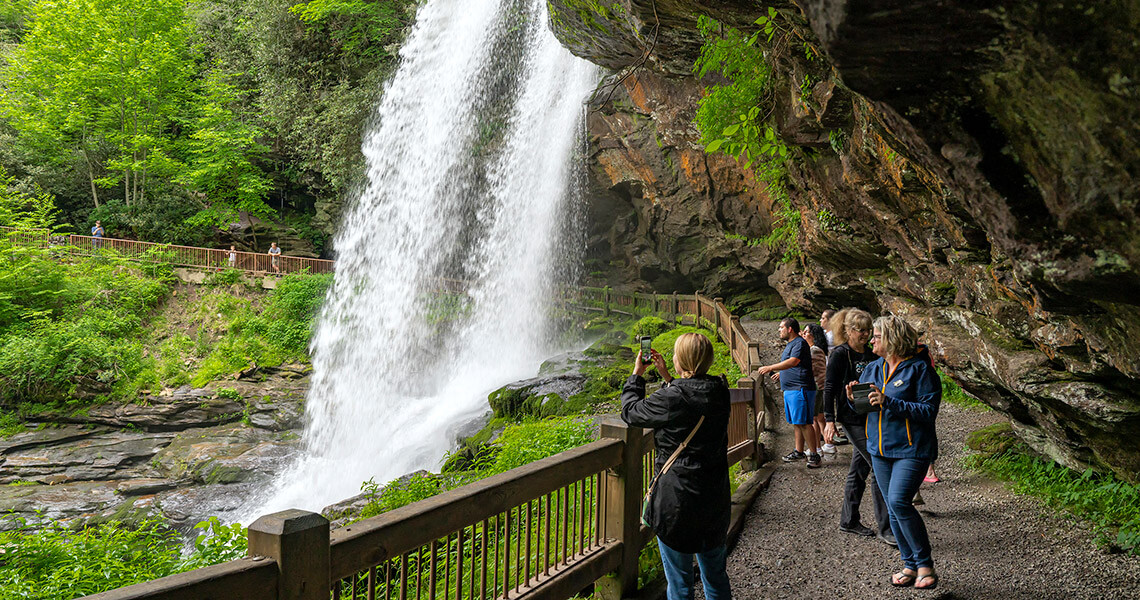
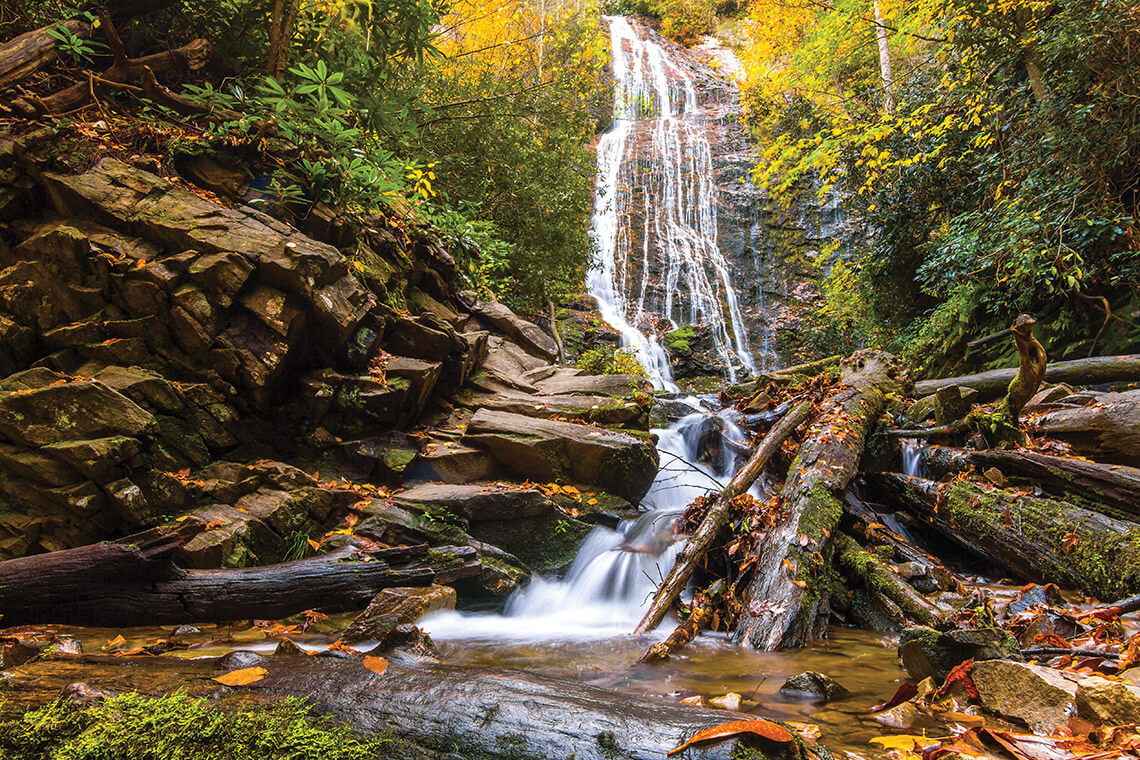
One of the tallest waterfalls in southern Appalachia, Mingo Falls captivates visitors with its 120-foot-tall cascades. Photography courtesy of Cherokee Travel - Eastern Band of Cherokee
Ama Galo’osgv (ah-mah gah-lo-oh-skuh): Waterfalls
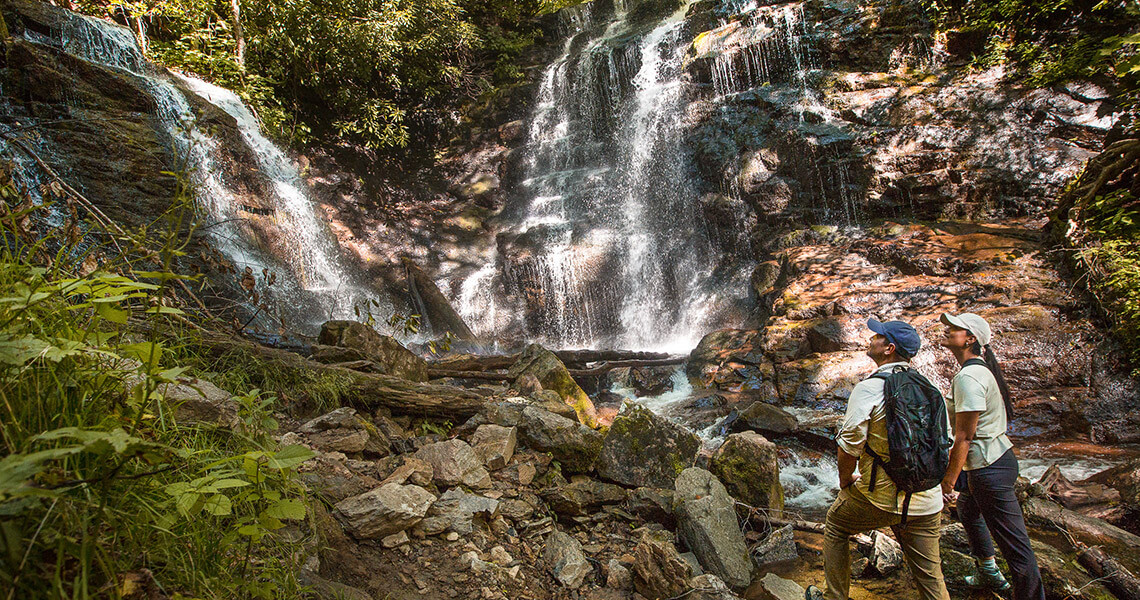
Even if you’ve admired Soco Falls in photos, you’ll find standing near it an altogether different experience. Within the alcove-like spot, the sound of cascading water and feeling it spray off the rocks adds to the magic of this impressive double waterfall. Reopened this summer after extensive renovations, expanded parking and improved viewing platforms make the falls easier to enjoy. The relatively short hike, about a half mile to the falls and back, has some steep sections and steps that make it a moderately difficult trail.
Visitors who make it up the 150-plus steps to Mingo Falls are in for a treat. A long ribbon of water cuts a steep path through forestland and over granite boulders before leveling out in front of a small viewing bridge. To reach the falls, follow a rushing stream about a quarter mile up from your parking spot. To see the falls at their most magical, many like to visit them in the misty morning hours.
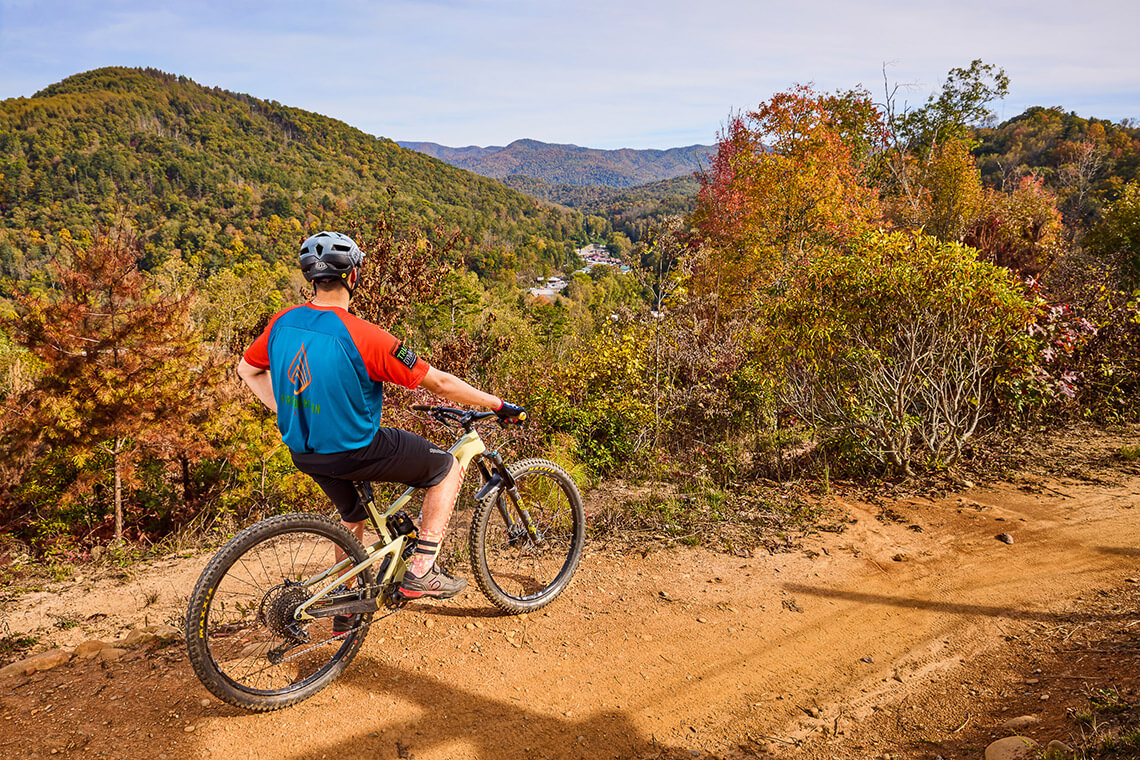
In addition to the variety of features for cyclists to navigate, Fire Mountain Trails include breathtaking views of the rugged surroundings. Photography courtesy of Cherokee Travel - Eastern Band of Cherokee
There are so many ways to experience Fire Mountain Trails: hiking to views, trail running through the Great Smoky Mountains, and — a favorite — zooming down single track on a mountain bike.
With more than 11 miles of recreational trails, you can come for a quick ride or take your time exploring the network. Built into a mountainous ridge, the varied routes include flowy runs, berms, tables, rock gardens, and blinds. The system includes trails suitable for folks new to mountain biking as well as those with intermediate and more advanced skills.
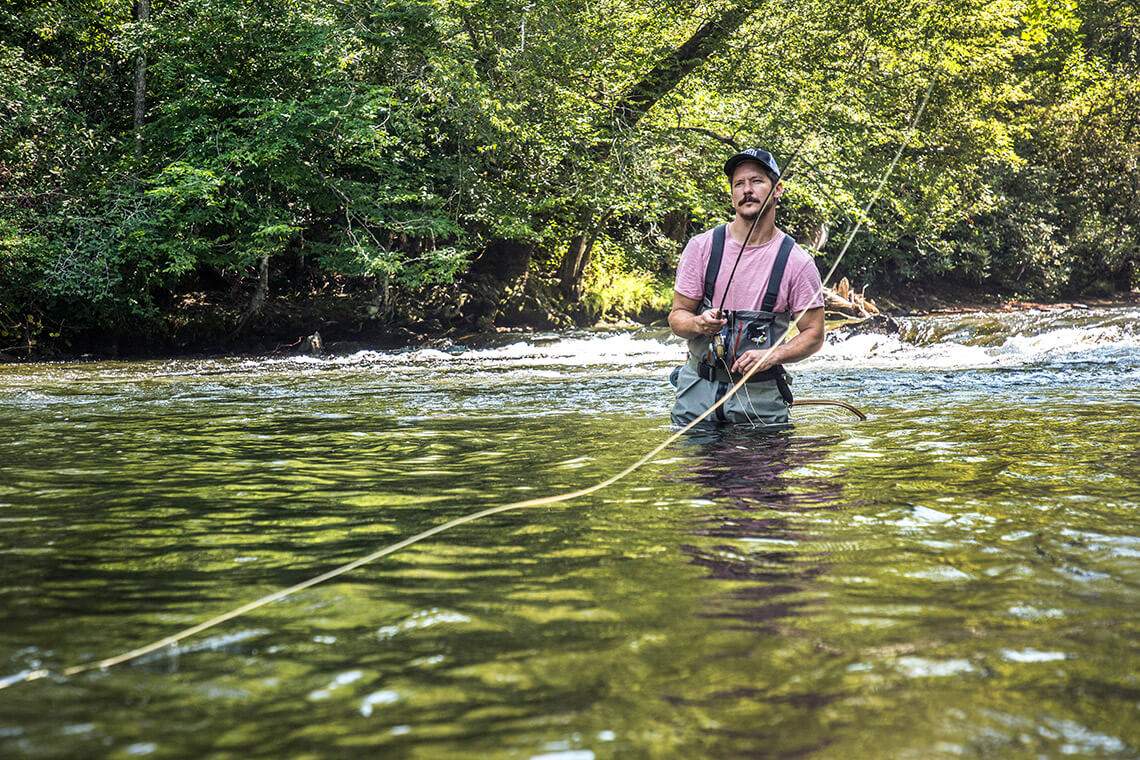
Take a guided or self-guided fly-fishing outing in the Oconaluftee River. Photography courtesy of Cherokee Travel - Eastern Band of Cherokee
Asuhvsga (ah-soo-huhs-ga): Fishing
Within Cherokee’s 30 miles of rivers, creeks, and streams, fishing holes reward beginner and pro anglers.
The Eastern Band of Cherokee Indians Fisheries and Wildlife Management Department annually raises 400,000 trout and stocks the waters within the Qualla Boundary. You’ll need a permit to fish, which can be purchased online or at a store in town.
Brimming with rainbow, brook, and brown trout, the Oconaluftee River consistently maintains some of the highest densities of fish in the eastern United States. This makes it a natural place for young anglers to take their first dip into fly fishing. Find an access within town limits at Oconaluftee Islands Park and the Oconaluftee River Trail.
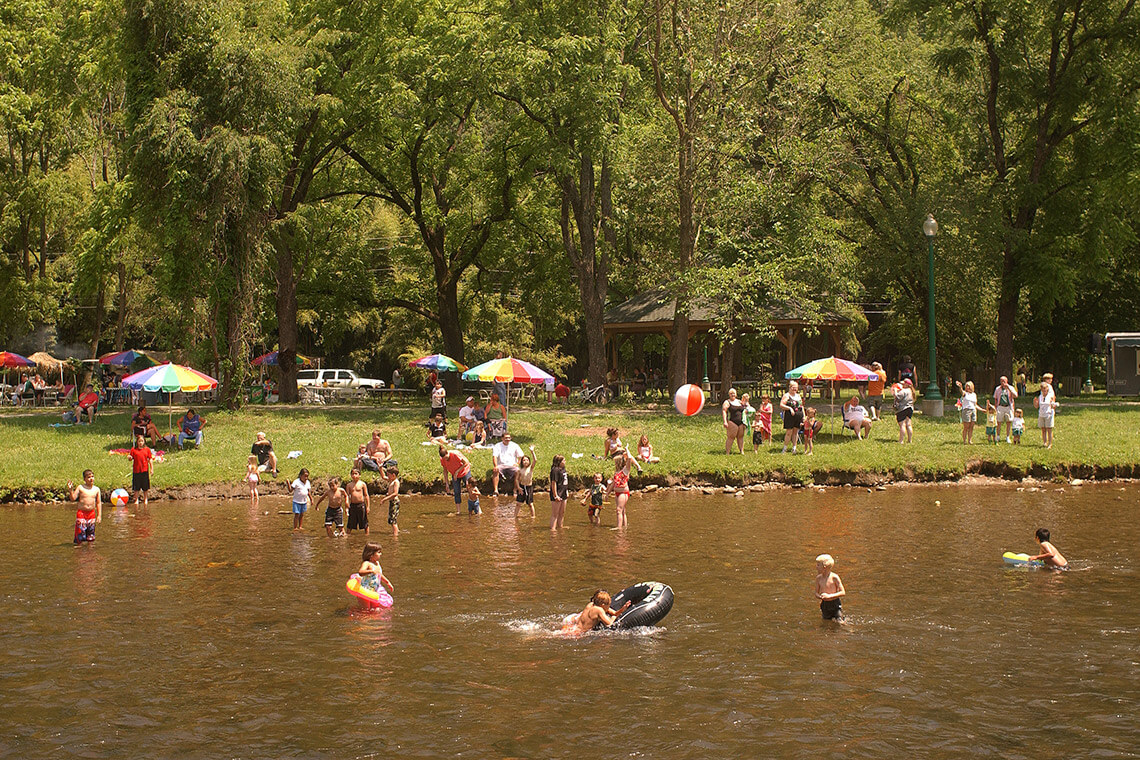
Splash, float, fish, or picnic in the shade at Oconaluftee Islands Park. Photography courtesy of Cherokee Travel - Eastern Band of Cherokee
The 2.2-mile Trophy Waters section of Raven Fork allows only catch-and-release fishing with a special permit. This section, which begins where the Blue Ridge Parkway crosses the river and runs north, offers deep, inviting pools. It’s stocked twice weekly with a mix of trout — rainbow, brown, brook, and palomino — and it’s not unusual to catch trout close to two-feet long here.
In addition to providing food, the rivers had a deeper significant in Cherokee traditions. “We would wash every morning and prepare ourselves mentally and spiritually before starting our day,” Tooni says, explaining that it’s one reason why most Cherokee villages originated beside rivers.
After traveling to the area, Tooni hopes visitors will take a bit of this knowledge home. “The eagerness to learn, I think, says a lot about our visitors,” he says. “Rather than just coming and going to the casino or going bike riding, it gives them a whole lot deeper insight into who we are.”
Ready to plan your own visit? Click here to learn more about the natural and cultural experiences that await in this corner of western North Carolina.
Get our most popular weekly newsletter: This is NC
At both the turn of the century and today, Beaufort’s waterfront has attracted a hum of commerce and community. At its heart, a historic avenue tells that history, from the stately double-porched homes to the sound of ships announcing their arrival at port.