Put ramekins on a baking sheet. Bake for 25-35 minutes, until puffed and golden. Remove from oven, and let stand for 5 minutes. With a flexible spatula, remove strata to
Listen as the pages of the magazine come to life in the Storytellers podcast showcasing the voices of Our State writers. Each podcast episode features a writer reading their column
Listen as the pages of the magazine come to life in the Storytellers podcast showcasing the voices of Our State writers. Each podcast episode features a writer reading their column
Listen as the pages of the magazine come to life in the Storytellers podcast showcasing the voices of Our State writers. Each podcast episode features a writer reading their column aloud, allowing each distinct voice to shine. Click below to listen to Eleanor read her column aloud.
I was reading my toddler son a bedtime story called “Merry Months of the Year” by Patricia Scarry when we came to the winter pages — four lines that would change my life forever:
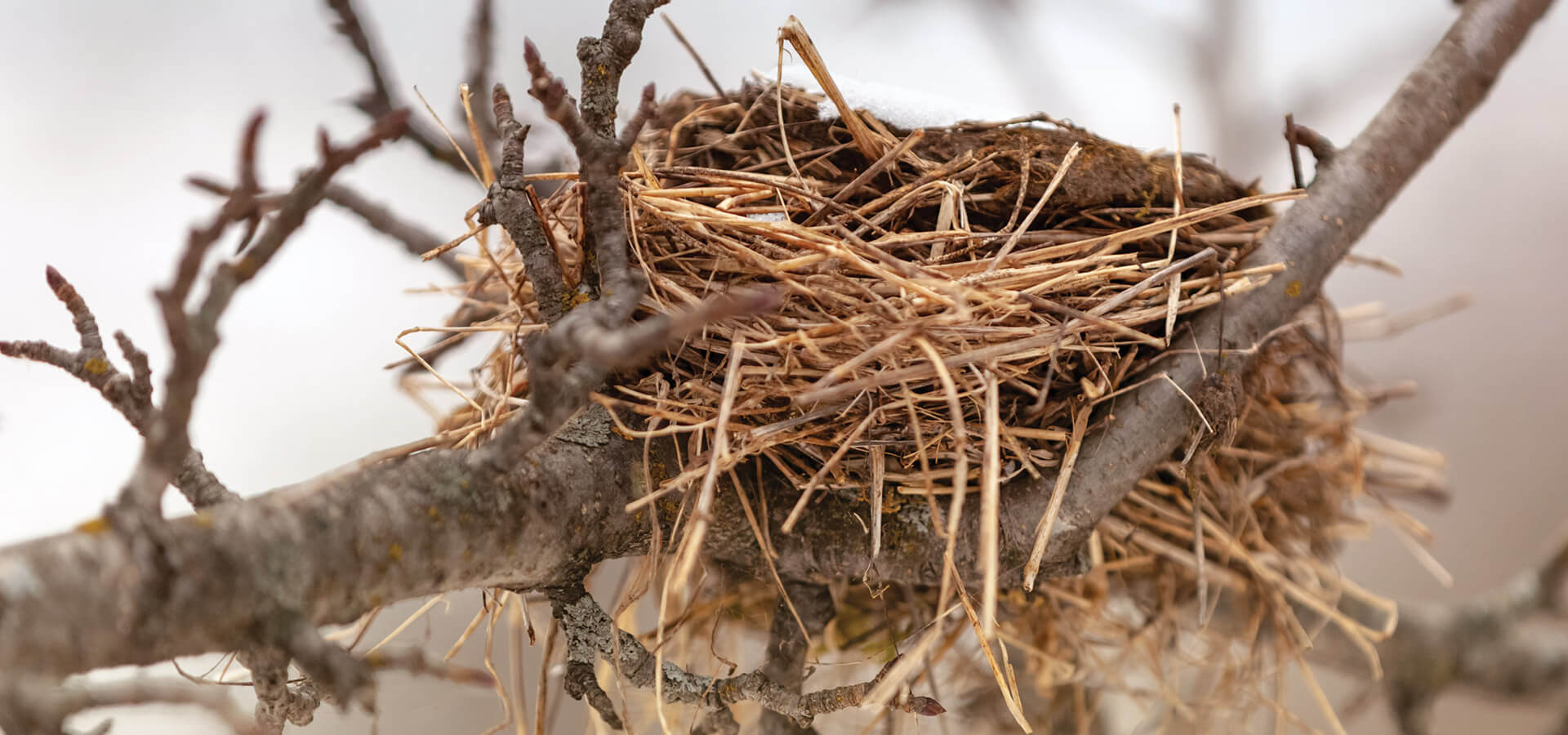
Nature’s garden is resting. The trees are stark and bare. Now you can see the lovely nests You didn’t know were there.
I had always thought of winter as a time we all agreed to muddle through together — the worst book on the shelf, sandwiched between two stunners. How had I been so wrong for so long? Winter is not a time of gloomy barrenness. It is a time for finding. In winter, nature lays its cards on the table, ready for us to see it all.
Most birds around here don’t live in their nests during the winter. Instead, they fluff feathers, shiver, huddle, and hunker down in cavities. Nests aren’t built for warmth or surviving frigid rains. They’re built for babies. They’re cradles, not homes.
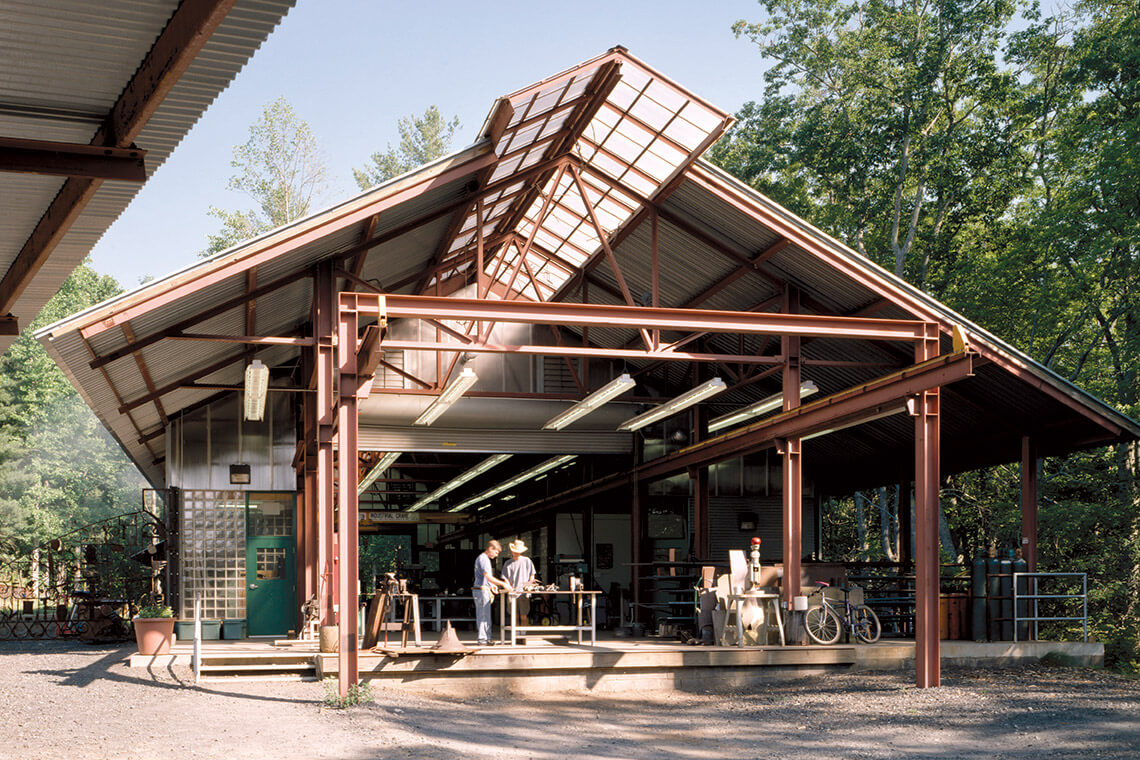
Frank Harmon is an architect whose structures grace landscapes in other parts of the world — and across our state. Once you see his style, you’ll recognize his buildings as soon as you come upon them. The natural light filtering into the iron studio at Penland School of Craft. The deceptive simplicity of the Center for Architecture and Design in downtown Raleigh. The natural goodness of the North Carolina Pottery Center in Seagrove.
Penland School of Craft, Bakersville photograph by Tim Hursley
Frank knows more about dwellings than almost anyone. Maybe that’s why finding bird nests thrills him. Or maybe it thrills him for the same reason it thrills most of us: A bird nest gives us a peek into someone else’s most private life, something meant to be hidden. Whatever the reason, Frank’s designed plenty of nests for humans, too.
Bird nests are different.
“Birds’ nests decay on an accelerated scale,” he says. “Nothing we build lasts, but a bird’s nest goes away more quickly than ours.”
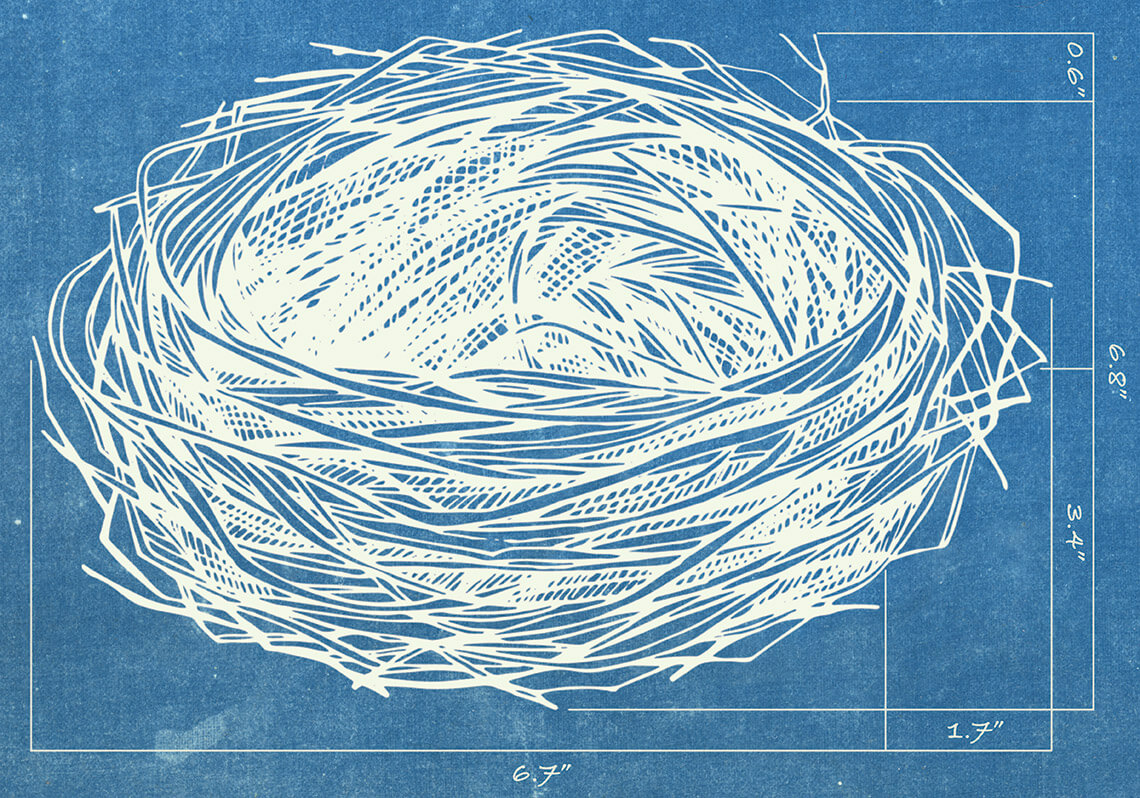
photograph by belterz/E+/Getty Images, Oleksandra/stock.adobe.com
Bird nests are built from discarded bits found with tiny eyes, carried in beaks or scaly toes, woven or stacked in impossible layers. Each bit, to a bird’s mind, becomes something greater than it once was. Earthworm castings become mortar spackled between a robin’s sturdy twigs. Snake skins become ribbons, together with hair and feathers, for Carolina wren nurseries.
Every piece of this world can be made beautiful, useful, when seen by the right eyes.
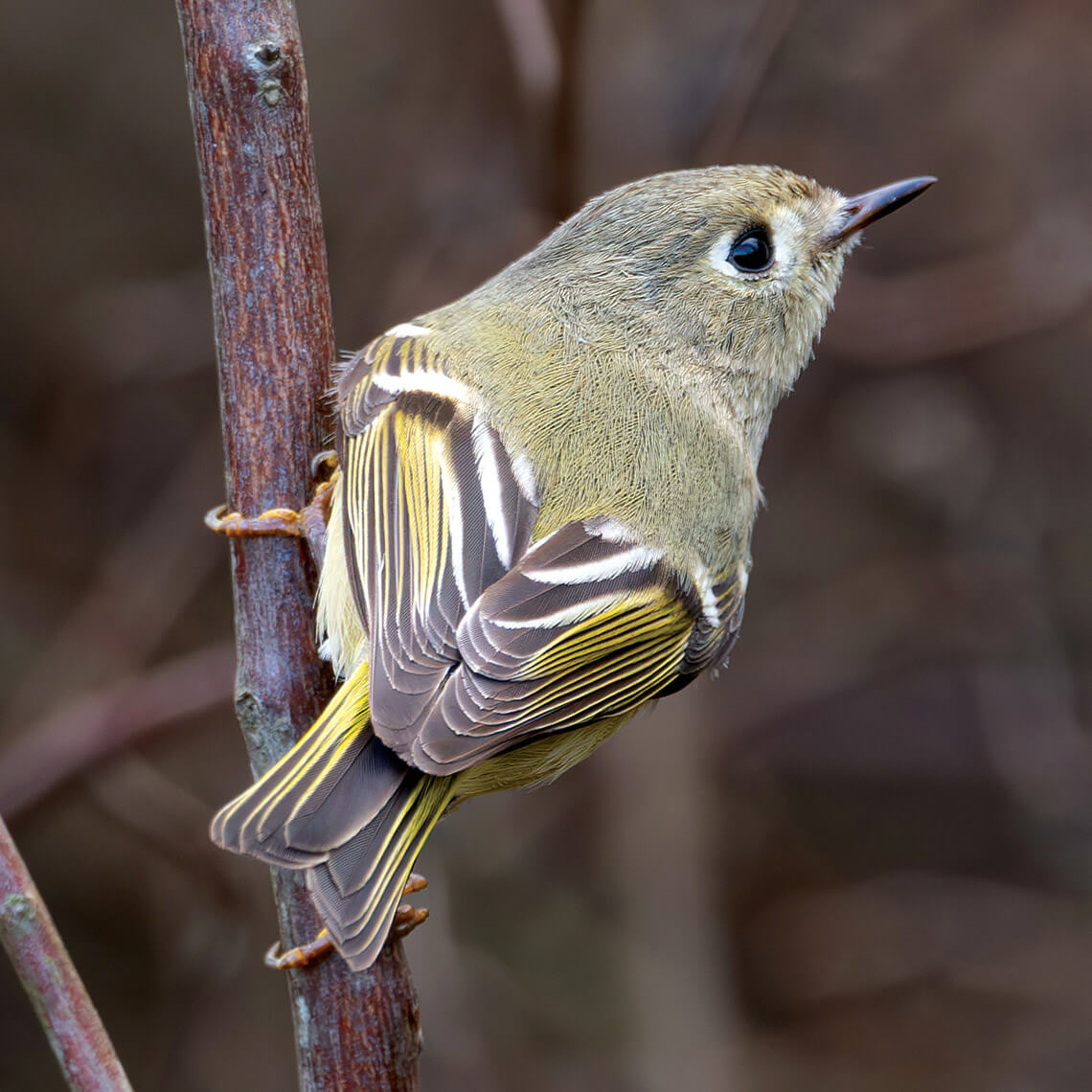
All year long, Frank and I look for birds. In the winter, we await the ruby-crowned kinglets that show up for a few months before heading back north. In the spring, we wait for the curious catbird’s return. In the fall, we watch for the masses of red-winged blackbirds that flow from lawns to sky like a dandelion wish come alive.
In winter, we find those birds’ nests in bare trees and bushes, and we marvel at how the ordinary becomes something revelatory.
“One reason to admire bird nests,” Frank says, “is that they use things that are local. It makes things more comfortable.”
Among some bird species, including ruby-crowned kinglets, it’s the female that builds the family’s home. photograph by David Blevins
Twigs and candy wrappers become cradles for towhees in or under the wisteria. Bits of lichen decorate the tiniest teacups for bean-size hummingbird babies. Silk from spiders, five times stronger than steel and softer than our own bedclothes, becomes vireo blankets. Chickadees do not fool around. They build in cavities, gathering the softest bits they can find in nature: Moss, animal fur, house insulation, and straw are woven together for a season, then abandoned, left for finding or returning to the earth.
“What’s remarkable about a bird’s nest is that few constructions are as intricately done, but so invisible,” Frank says. “Wouldn’t it be great if we could build like that?”
Or live like that. To see bassinets in lichens clinging to tree branches, to pay attention to the mosses, and to recognize the tufts of raccoon fur blown in the warming winds. To make our most beautiful work privately, for the ones we love — tucked away just for them — and to be willing to let it blow away come fall knowing the best parts get carried in them.
Get our most popular weekly newsletter: This is NC
From the expanses of needlerush at Cedar Island to the lush spartina feathering the shores of Bodie and Roanoke islands, our salt marshes are the threshold to a watery world — the heartbeat of our coastal ecosystem.



 Listen as the pages of the magazine come to life in the