 Listen as the pages of the magazine come to life in the Storytellers podcast showcasing the voices of Our State writers. Each podcast episode features a writer reading their column aloud, allowing each distinct voice to shine. Click below to listen to Sheri read her column aloud.
When I was little, the Sunday funny papers featured a boy named Henry who floated toward the tempting aroma of freshly baked pie cooling on a windowsill. Swap the scent of pie for woodsmoke and what you have is childhood me following an aroma that I’ve long associated with deliciousness.
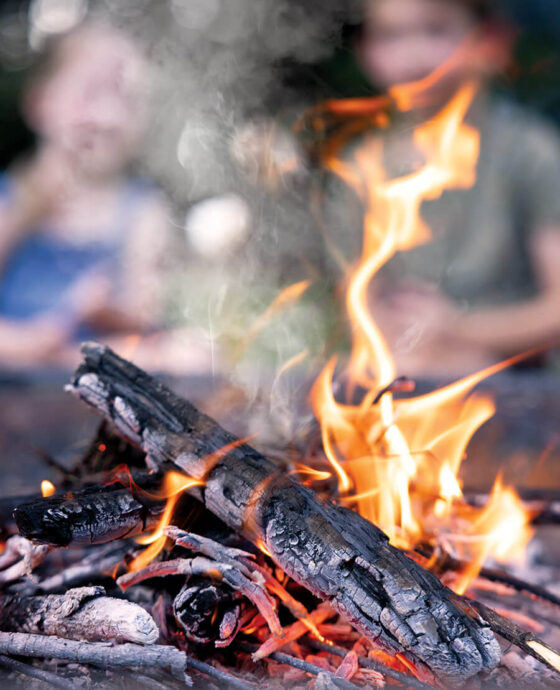
I started poking around in campfires early on. Before long, I was learning to cook over open flames, often with the same long stick I used to prod the logs. There were s’mores, of course, a rite I experienced in Girl Scout Brownies, where I discovered that if you wrap a stretchy wad of canned biscuit dough around the end of a stick cleaned (mostly) of bark and toast it over the campfire, it creates a hollow bread cup to fill with jelly.
On camping trips with my dad at Julian Price Campground on the Blue Ridge Parkway — only nine miles from our house yet a world away — we threaded hot dogs onto sticks to blister in the flames. Other times, Daddy fired up his little cast-iron hibachi to cook burgers or sticky barbecue chicken. As I rode my bike through the campground, I used the intermingled scents of woodsmoke and forthcoming supper as navigational beacons.
When it was too cold to camp, Daddy sat our hibachi on the fireplace grate in the den so that the smoke could trail up the chimney. After our hamburger steaks were done, he’d use the embers to start a fire that we’d watch and poke until it cooled and bowed out, signaling bedtime. The next morning, whether I’d slept under the stars or the bedcovers, my PJs and ponytail would hold traces of smoke. I crave this scent, its presence soft and cumulative, as though it has been wearing the same perfume for a long time.
I don’t believe my grandparents ever grilled a thing in their lives, but they’d work a woodstove. Even in houses that had robust central heat and modern appliances, they kept a woodstove in the den and a cookstove in the basement, just in case and just because. It’s not that my grandmother didn’t embrace the electric range — it’s that having a backup was prudent in the Blue Ridge Mountains, where blizzards often triggered power outages. One year, she and I fixed our entire Christmas dinner on that stove while the snow swirled outside. She told stories of her elderly aunts who were grandmothers by the time the power company strung a line to their homeplaces. They remained wary of such wizardry, with one of them often declaring, “I can taste that electricity in my beans!”
My dad still uses a woodstove in his workshop garage. When my daughter visits, the three of us cozy our chairs and dog beds around the flames. We take turns poking the fire and chunking in wood. Sometimes I set a pot of beans on top to simmer. Maybe my great-great-aunts were on to something: It wasn’t that they could taste the electricity in their beans, but rather that they couldn’t taste any smoke.
The effect of woodsmoke in a recipe is as much about aroma and infused sensory experience as it is about flavor. Ribbons of smoke can rise and meet us where we are, look us in the eye, and follow us around. Although I appreciate the mighty shout of smoke from a crackling cookfire, I prefer its whispered echo, the part that floats and lingers in the air and my thoughts.
photograph by Tim Robison
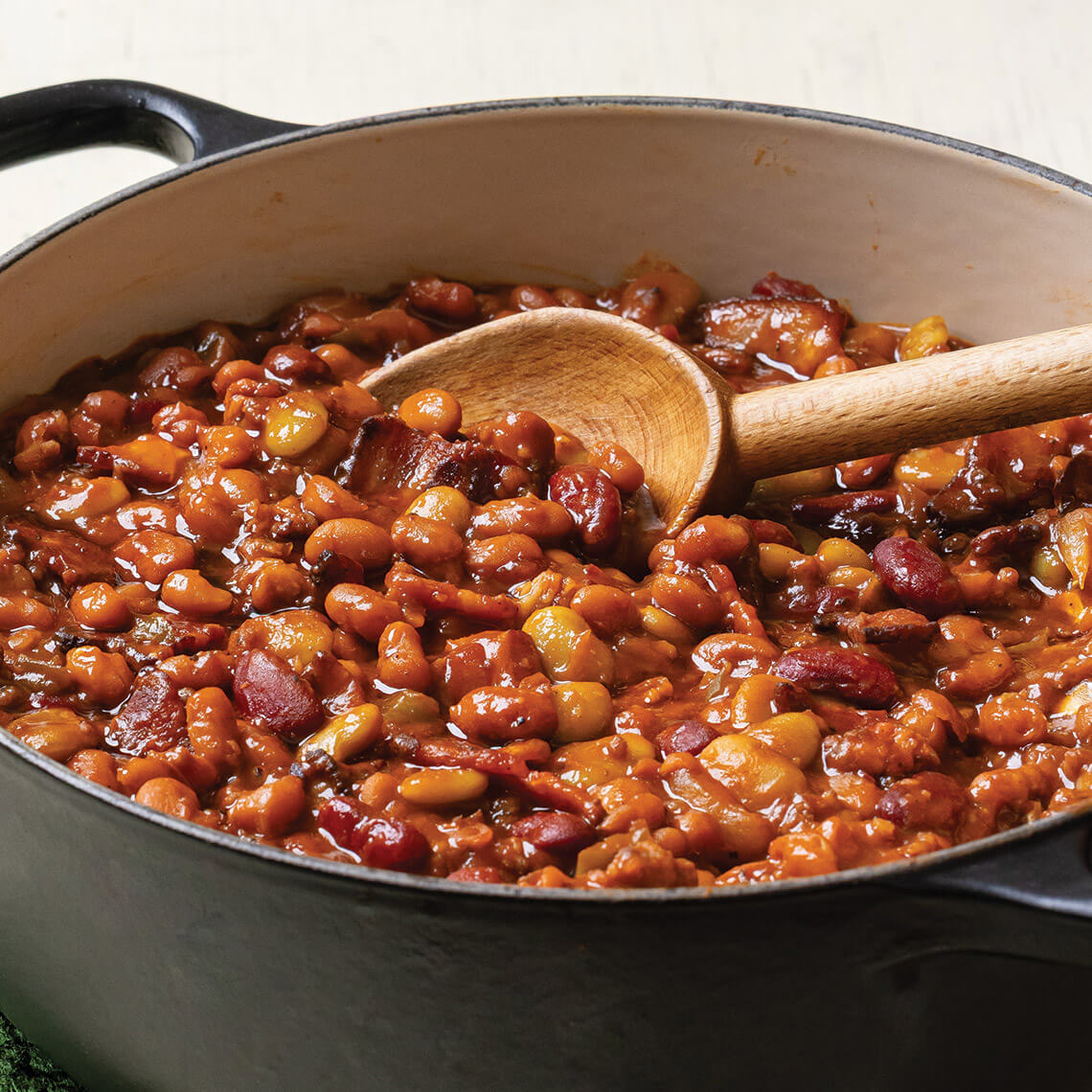
Meaty Baked Campfire Beans
This is no ordinary pot of beans. It’s a crowd-pleasing side dish that’s hearty enough to serve solo, making it a versatile favorite on the cookout, potluck, tailgate, and family reunion circuits. The recipe yields a lot, but the beans hold well for several days — and seem to get tastier over time. Any leftovers freeze successfully.
I make these in a large cast-iron pot that can go on a grill or nestle in campfire embers to pick up the unmistakable flavor of woodsmoke — but they’re delicious in the oven, too.
My mom’s baked beans recipe taught me to mix multiple kinds of beans. It’s not unusual for Southern-style baked beans to begin with cans. We Southern cooks are skilled at doctoring up store-bought items to make them into our own homemade creations.
I most often use hot breakfast sausage in this recipe, although ground beef works well, too, as does pulled-pork barbecue or diced burnt ends to amp up the smokiness. Canned chipotles add another delicious dose of smoky flavor, but if that sounds too spicy, substitute 2 to 3 teaspoons of fragrant smoked paprika.
Makes 12 to 16 side dish servings or 6 to 8 entrée servings.
4 ounces smoky bacon, cut crosswise into ½-inch strips
1 medium onion, diced (about 1 cup)
1 medium green bell pepper, cored and diced (about 1 cup)
Salt to taste
1 pound bulk breakfast sausage
2 (15-ounce) cans pork and beans, drained but not rinsed
1 (15-ounce) can butter beans aka giant lima beans, drained but not rinsed
1 (15-ounce) can kidney beans, drained but not rinsed
1 (15-ounce) can pinto beans, drained but not rinsed
1 cup thick, tomato-based barbecue sauce
½ cup packed dark brown sugar
½ cup unfiltered apple cider vinegar
1 tablespoon dry mustard
2 tablespoons chopped canned chipotles in adobo sauce
Preheat the oven to 325°.
In a large cast-iron skillet or pot over medium heat, cook bacon until rendered and crisp, about 15 minutes, stirring often. With a slotted spoon, transfer bacon to a bowl, leaving behind the grease.
Add onion, bell pepper, and a pinch of salt, and stir to coat. Cook, stirring often, until they start to soften, about 3 minutes. Add the sausage and cook until browned, about 5 minutes, breaking it up with a wooden spoon. Stir in beans, barbecue sauce, brown sugar, vinegar, dry mustard, and chipotles.
Transfer to oven and bake uncovered until beans are bubbling and the sauce is thick and syrupy, about 90 minutes. Stir every half hour. Remove from oven and stir in the reserved bacon. Let sit covered for at least 15 minutes before serving warm. The beans will continue to thicken a bit as they cool.
print it